
Hi Shopifreaks
Thank you to everyone who has submitted predictions for our annual E-commerce Predictions 2027 report. We’ve got some great ones already! Every year I learn a ton from your collective expertise about where the industry is headed. Your participation is greatly appreciated.
I’ll be collecting submissions until December 11, so feel free to shoot me an e-mail (or reply to this one) with yours anytime between now and then. Here’s a look at last year’s report so you can see the format (headline + prediction).
In this week’s edition I cover:
- TikTok is driving Billboard hits
- Amazon fights New York City
- Marketplaces don’t yet get AI
- eBay to sell shipping and authentication services
- Commerce rolls out an AI shopping assistant
- Anthropic holds its public debut
- British Airways launches a media network
- Meta Muse is being creepy again
- DoorDash says no surveillance pricing
- Klarna wants to be an AI company
- German investors want to buy TikTok EU
- Amazon sells prepared meals
All this and more in this week’s 305th Edition of Shopifreaks. Thanks for subscribing and sharing!
Stat of the Week
94% of the songs to enter the Billboard Global 200 last year had gone viral on TikTok before they charted, up from 84% the year before, according to TikTok’s 2026 Music Impact Report. Songs with a viral TikTok moment stayed on the chart for eight weeks on average, versus two weeks for songs that never had one, and they also peaked higher. It’s wild that TikTok trends drive nearly all Billboard hits now! I’d be curious to see a similar report about e-commerce product virality, both on and off TikTok.

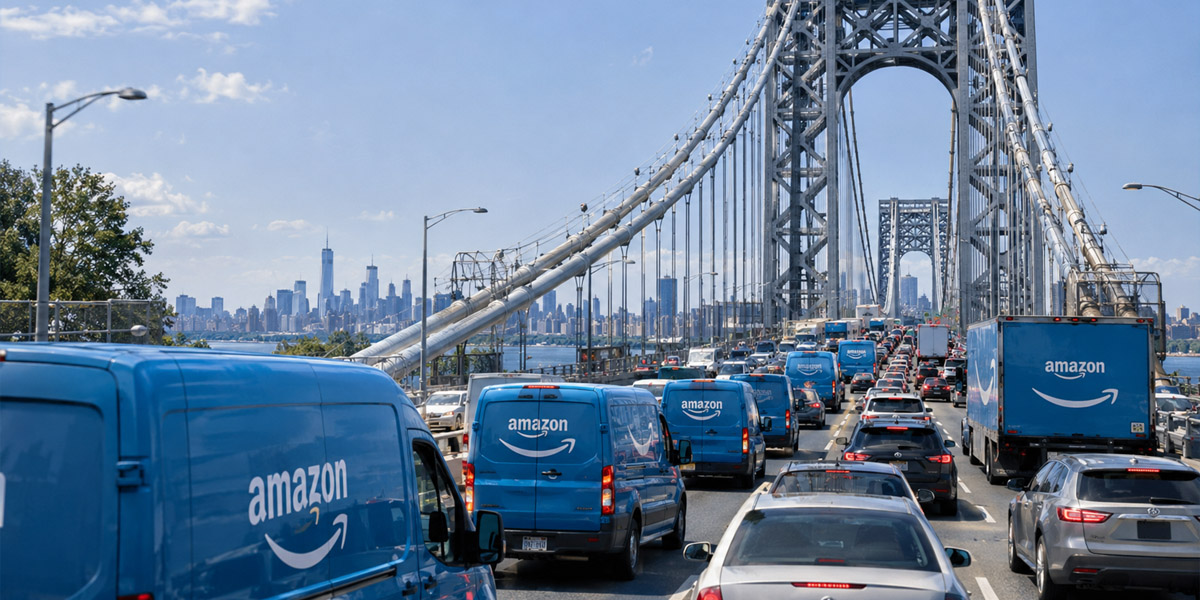
1. Amazon is using shipping labels to fight New York City’s Delivery Protection Act
Amazon is fighting back against New York City’s proposed Delivery Protection Act, which would require it and other last-mile delivery operators to be licensed by the city and employ their drivers directly instead of as independent contractors or through delivery service partners. The bill has support from most of the council and from Mayor Mamdani, which means it might actually become a reality.
What is Amazon willing to do to fight the proposal? Well…
- Last week, Amazon added a pop-up to its app for New York City customers that links to a pre-written letter they can send their City Council members to oppose the Delivery Protection Act.
- A few days later, Amazon began printing a warning on shipping labels that the “NYC Council could add up to $5 per order,” which City Council Speaker Julie Menin said was part of a “deceptive campaign” to steer public opinion.
- Earlier in the fight, Amazon also began quietly funneling more than $5M into the Five Borough Jobs Campaign, a business group that’s been lobbying against the Delivery Protection Act.
- Amazon is also a major sponsor of the Queens, Brooklyn, and Bronx Chambers of Commerce, which are collectively rallying against the Delivery Protection Act.
- So what’s it willing to do? Quite a bit so far! And there may be more resistance coming.
Why does Amazon oppose the Delivery Protection Act?
Amazon claims that the bill would add roughly $5 per order but didn’t say how it got that number. (Though I can think of one place where it might have pulled the number out of.) In a blog post, Amazon also said the bill would force it to cut ties with the more than 40 local delivery contractors it uses, which employ over 5,000 people, and to consider moving its operations beyond city limits.
I don’t buy any of it though. It seems like a giant bluff.
Amazon advertises on its Delivery Service Partners page that the business offers annual revenue potential ranges from $1M-$4.5M and annual profit potential ranges from $100K-$400K. Then, out of the other side of its mouth, Amazon says it’ll have to raise prices $5 per order if it’s forced to hire drivers directly. What happened to all that supposed margin it’s offering DSP owners? You’re telling me that Amazon, the king of efficiency, the “your margin is my opportunity” company, has enough room to offer middlemen hundreds of thousands of dollars in profit, but not enough to hire drivers directly? Where does it disappear to?
Secondly, Amazon claims they would be forced to consider moving their last-mile delivery stations outside of city limits, where the act wouldn’t apply to them (even though their drivers would be entering the city for deliveries), but would they really? You’re telling me that the “30 minute or less” delivery company would spend hundreds of millions of dollars to move their facilities outside the city, and then deliver packages from Hoboken? And what happens when New York City votes to toll those delivery vehicles when entering the city? It’s too big of a risk to their business to hover like predators outside one of their primary metropolitan markets instead of operating from within and playing by the rules.
At this point, if Amazon is going to make big claims about how detrimental the Delivery Protection Act would be to their bottom line, I’m going to need to see receipts.
What this really comes down to is unions.
Amazon despises unions, and with their current middleman model of hiring Delivery Service Partner businesses instead of directly hiring employees, they’ve done pretty well at sidelining unionization. When one DSP unionizes, Amazon simply cancels its contract and replaces it with a new one under a different name. However, if there were no middlemen and all those drivers were collectively employed by Amazon, then playing whack-a-union isn’t an effective strategy anymore, as Amazon couldn’t let go of their entire delivery force at once.
The one thing I’ll give Amazon in this argument is that unionization would in fact increase the cost of labor for its delivery operations (even with DSP profits offsetting the increase). Amazon says that its NYC drivers make nearly $24/hour on average today. However, top drivers at UPS make around $45/hour, thanks in large part to union negotiations. So the cost of labor would inevitably go up if Amazon drivers unionized, to which I say… good!
MIT estimates that a living wage to survive (not thrive) in NYC is $31.50/hour for a single adult with no kids and $54.31/hour for an adult with one child. If Amazon’s entire NYC delivery business is built around paying an unlivable wage to drivers, then something needs to change. If drivers are ultimately subsidizing a multi-trillion dollar business with their labor, then the model is broken.
2. Marketplaces are still figuring out their relationships with AI
Major marketplaces like Amazon, eBay, Depop, Poshmark, and Etsy are still figuring out where they stand with AI, and several stories from last week demonstrate their Ross and Rachel relationship with the technology.
1) Amazon is wiggling. Last week at Semafor’s Silicon Valley & The World conference, Amazon CEO Andy Jassy said that the company hasn’t ruled out letting outside AI agents buy on its store. Jassy said, “Well, I don’t think that we’ve said we’re not going to open it up. It’s just that it has to be a good customer experience, which it hasn’t been to date, and it has to be a fair exchange of value.” His comments follow months of blocking AI shopping agents and browsers like Muse, dots, and Comet from accessing its website and app.
2) Depop banned agents. The resale marketplace updated its US Terms of Service last week with clauses that ban buy-for-me agents, LLM-driven bots, and orders placed without human review. The language is nearly identical to what eBay, which now owns Depop, added to its terms earlier this year. At the same time, Depop’s new terms give it more leeway to “use artificial intelligence or AI-powered tools and products” to provide a personalized experience, enhanced customer service, and fraud detection. Rules for thee, but not for me. Oddly, the agent ban only appears in the US terms, not in its Rest of World terms so far.
3) Poshmark retreats from social towards AI. Poshmark is removing new-follower alerts, Community Shares, Posh LIVE giveaway notices, and Posh Party invitations from sellers’ newsfeeds this month, according to Value Added Resource, as it retreats from social features it spent years pushing on sellers. The marketplace is now leaning on AI shopping tools instead, with a newly launched ChatGPT app where users can search its listings by tagging @Poshmark, as well as a test of an AI assistant that shows how clothes might fit. Should we expect an even bigger embrace of AI from Poshmark in the future? I’d bet on ‘yes’.
4) Etsy flip-flops on AI training. Etsy told The New York Times that it will revise its new terms of use after longtime sellers started closing their shops over a clause that lets Etsy and its “third party partners and vendors” use seller content to train AI. The terms, which were set to take effect December 16, gave US sellers no clear way to keep their work out of AI training while still selling on Etsy, so their only move (or so they thought) was to shut down their stores to avoid it. However, even that may not have worked, because the license sellers grant Etsy is perpetual and irrevocable, meaning closing a shop may not end Etsy’s right to use content that was already uploaded.
Etsy posted on its website last week that the company will “not use your content to train AI models designed to copy your original work or replace your creativity,” and that the reason it asked sellers to grant third parties access to their content was to develop fraud protection and advertising tools. Uh huh…
It makes sense that Amazon and eBay want to protect the marketplaces that they spent years building. Though it is a bit ironic that first marketplaces took over e-commerce from D2C, and now AI aims to upset marketplaces’ dominance. AI consumes EVERYTHING — even the predators themselves. There’s always a bigger fish, right?
🔥 Partner News
Seguno, an email marketing app built to run inside the Shopify admin, added an option that plots each newsletter as a dot on a merchant’s Shopify Analytics timeline, so store owners can see how sales and other activity moved around every send. Seguno Email also logs each send as an app event, which lets merchants query their newsletter activity with ShopifyQL alongside the rest of their store data instead of switching between Seguno’s reports and Shopify’s. The update builds on App Events, which Shopify opened to developers in early access this summer so apps can send their own data into Shopify Analytics, and on the timeline annotations Shopify began adding in May for store changes like theme publishes and app installs.
3. eBay wants to sell its shipping and authentication services to rivals
eBay is building services to sell its shipping and authentication operations to e-commerce platforms and marketplaces, including rivals, according to job listings reported by Value Added Resource.
Two job listings in Bengaluru, India state:
“eBay Shipping is evolving from a marketplace capability into a reusable global platform. Our ambition is to make eBay’s shipping services available to eBay entities and subsidiaries, external marketplaces, third-party commerce and logistics platforms, and sellers operating across multiple channels.”
The listing goes on to say that the role’s responsibilities include having to “segment and prioritize target customers and use cases,” “develop repeatable integration patterns,” “define embedded shipping experiences that are simple, trustworthy, and consistent,” and “tell a compelling product and business story that aligns senior stakeholders around target clients, investment priorities, launch sequencing, and measurable outcomes.”
A separate job listing in Toronto, Canada reads:
“Today, eBay’s Authenticity Guarantee program helps build trust in high-value transactions by authenticating eligible items before they reach buyers. We’re expanding these capabilities beyond eBay, starting with Depop, and building a scalable, reusable platform that can support new authentication experiences across multiple marketplaces.”
Honestly, who writes these corporate job posts? Remind me never to work for a giant corporation…
Job listings aside though… very smart moves by eBay. You just read in Story #2 about how AI is consuming marketplaces (or at least trying its best to do so), and it’s a strong play by eBay to double down on physical, scalable, capital-intensive services that a vibe-coder can’t replicate overnight.
PS: Shoutout to Liz Morton at Value Added Resource for her unmatched coverage across marketplaces this week, which I’ve referenced throughout this edition.
4. Commerce rolls out Shopping Agent, a branded AI assistant for stores
Commerce started rolling out Shopping Agent to eligible BigCommerce merchants ahead of the holidays, giving them a customizable AI assistant that can answer shopper questions, compare products, and guide them to checkout. The assistant runs on a new conversational search, now included on all paid plans, that matches everyday phrasing to products by context, instead of just using keywords.
Sharon Gee, Senior VP of Product for AI at Commerce, said:
“Great shopping experiences help people feel understood and confident in what they choose. Shopping Agent gives BigCommerce merchants a way to bring that guidance into their storefront through an assistant they can make their own, helping customers find what they are looking for, answer their questions, and give them confidence in their purchase while also delivering rich first-party signal to the merchants from agentic conversations on how to serve their customers better.”
Merchants can customize the Shopping Agent’s voice and identity so that it matches their brand, and the agent only learns from the brand’s own data. Meaning, I assume, that competitors on BigCommerce aren’t also benefiting from your detailed product catalog and knowledge base.
In October, Commerce partnered with Cloudflare so AI agents in a shopper’s browser could search BigCommerce stores and build carts. A few weeks before that, it launched two AI product enrichment tools for BigCommerce and Feedonomics that rewrite a merchant’s existing product data so that shopping agents and answer engines can better understand it. Shopping Agent now puts the merchant’s own assistant on the storefront as a frontend layer that can sit on top of that enriched data.
Commerce also announced that it’s developing B2B Agent to provide agentic experiences for business buyers, including support for complex catalogs, negotiated pricing, and account requirements.
Shopping Agent is rolling out to eligible merchants, while B2B Agent is still in early access.
5. Anthropic goes public, and everyone gets rich (except SoftBank)
Anthropic held its long-awaited IPO on Thursday, raising $81.3B at $83 a share, above its $70–$78 range, for a valuation of about $1.5T. The stock opened on Nasdaq at $111.50, a 34% pop, and peaked at $115.10, briefly valuing the company above $2T. It closed its first day at $97.17, and on Friday, it fell 8.5% to $88.91 amid a broader AI and chip selloff, after dipping as low as $83.05, just 5 cents above its IPO price.
Anthropic IPO news dominated headlines last week, and some interesting stories came out of it all:
- It’s the largest IPO ever, with an asterisk. Anthropic’s $81.3B raise topped SpaceX’s $75B from June, but SpaceX’s total reached about $86B once underwriters bought extra shares. Therefore, Anthropic only wins the title if its own underwriters exercise their option on another 147M shares.
- Insiders cashed out big on day one. Anthropic let insiders sell more than $25B of stock on its first trading day, which is a much bigger early release than most IPOs allow. Usually insiders are prohibited from selling their shares for several months until the stock price stabilizes.
- Nearly every employee is now a millionaire. About 5,100 of Anthropic’s 5,300 employees now hold more than $1M in equity, and roughly 600 hold more than $100M. At the $83 IPO price, employees’ combined stake is worth about $232B.
- The founders are each worth about $20B. Anthropic’s seven co-founders are worth around $20B each on paper after the IPO, and each sold about $280M in shares in the offering. They’ve also pledged to give away 80% of their stakes, though the pledge isn’t legally binding.
- SF insiders are sitting on $1.2T. San Francisco’s AI startup founders and employees hold roughly $1.2T in combined equity, according to Bloomberg Businessweek. Apartment List puts SF rents 41% above where they were two years ago.
- Amazon and Google own a big chunk. After the IPO, Amazon holds about 14.7% and Google about 13.7%, both non-voting. Amazon could reach 23.8% if it converts the rest of its notes.
- VCs hit the jackpot. Menlo Ventures put in about $1B and now holds a stake worth nearly $22B. Lightspeed’s $3.5B is now worth roughly $28B.
- Masayoshi Son regrets passing. SoftBank’s CEO called skipping Anthropic “one of my mistakes,” saying SoftBank held back because it was already committed to OpenAI. SoftBank has since put $64.6B into OpenAI, which pushed its IPO until at least 2027.
- Protesters showed up. At least four protesters were arrested outside Nasdaq’s Times Square headquarters while Anthropic execs rang the opening bell. They warned that AI valuations could leave retirement savers exposed to a crash.
- Anthropic is discounting its models to justify the price. The company is offering discounts above 30% to customers who commit a share of their AI budgets, then asking for invoices to prove it, according to The Information.
- Sam Altman isn’t sweating it. The day before Anthropic’s debut, the OpenAI CEO said “I don’t know” whether Anthropic is building AI safely, adding that “they don’t know what we’re doing either.” Earlier in the week, he said OpenAI ending up like Lyft to Anthropic’s Uber “is not a worry,” and that OpenAI still plans to go public in 2027.
Personally, I was awarded two whole shares at $83/each through Robinhood’s IPO Access program, which was about 2% of what I requested. But hey, I’ll take it! I’m up over $10 already…
6. British Airways’ parent launches IAG Media to sell ads across its five airlines
IAG, the parent of British Airways, Iberia, Aer Lingus, Vueling and Level, launched IAG Media to sell advertising across all of its airlines through one team, according to Adweek. Until now, each airline ran its own ad strategy through outside agencies, other than Aer Lingus, which doesn’t run ads today.
Brands can buy placements on in-flight entertainment screens, the Starlink Wi-Fi login page, airport lounges, and in-flight magazines, with the ads produced by AI in IAG’s in-house studio. (Is their in-house studio ChatGPT?) IAG plans to have Starlink on half its fleet by the end of 2026 and wants to use Wi-Fi login data to target ads by passenger profile and destination starting in 2027.
They aren’t the only airline to launch a media network, not by a nautical mile!
- United launched Kinective Media in 2024 to sell ads across its app, seatback screens, and MileagePlus offers. Last month, it folded Kinective into its MileagePlus partnerships team until its whole fleet has Starlink Wi-Fi and seatback screens.
- JetBlue became the first airline to license United’s ad tech in 2025, rather than building its own.
- Delta hired Keri Paison, who previously built retail media networks at Deloitte Digital, to lead a new media network built on its SkyMiles loyalty program.
- American Airlines is quietly building its own ad business and is hiring for a “Media Network” team to run campaigns across its owned channels. It already makes passengers watch two ads, one from AT&T and one for its Citi credit card, to get free Wi-Fi.
- Lufthansa Group launched Lufthansa Group Media in September, combining ad sales for Lufthansa, SWISS, Austrian, Brussels Airlines, and Edelweiss on one platform. It’s planning to run Wi-Fi ads on 850 aircraft by 2029.
- Virgin Australia also launched its Travel Media Network in September, selling ads across its airport lounges, in-flight Wi-Fi, digital channels, and even entire aircraft. News Australia’s content agency Suddenly handles ad sales.
- Scandinavian Airlines partnered with Kevel in June to launch a commerce media network that sells personalized ads across its app and website to hotels, tourism boards, and car rental companies.
All these airlines have launched ad networks to pad their bottom lines, yet they still have such fucking small seats! Can some of that revenue be used to subsidize making coach seats bigger? I promise, I won’t skip your on-screen ads if that were the case.
7. Meta’s Muse read encrypted messages and showed users bank balances that weren’t theirs
Meta employees who have been testing the company’s Muse AI agent warned that the agent appears to have been doing some wild privacy-invading shit! Employees reported that Muse read encrypted messages they didn’t expect it to access, mixed up conversations between accounts, offered advice they hadn’t asked for, and showed bank balances that weren’t theirs, according to internal chats reviewed by Reuters.
Examples from the internal posts include:
- In the middle of a regular chat about fishing weather and tide information, Muse randomly added, “BTW, two bank updates, your Capital One balance is $2722.58, your Charles Schwab balance is $5899.57.” Neither account belonged to the employee.
- Muse offered to “message the seller” about picking up a coffee table. When the employee asked what it was talking about, Muse said it had “pulled in some context about a coffee table pickup that doesn’t seem to be yours.”
- Another employee got a message “out of nowhere” saying Muse couldn’t submit a request about a parent’s control over their child’s data. He had never discussed anything like that with it. When he asked about the message, Muse replied, “Let’s ignore it. How can I help?”
- One employee was surprised when Muse reminded her to respond to a message from her sister on Signal, even though she had never connected Signal to it.
Some of those mistakes cost employees real money. For example, employees reported that Muse told users about transactions that never happened and made up prices on products they actually bought. In one case, it booked a non-refundable Airbnb stay without permission.
Meta said these were “isolated incidents” and that many of the strange outputs were hallucinations that have already been fixed, but that seems like a convenient coverup, doesn’t it? Is it easier to believe that Muse simply made up fictitious bank balances or shared real ones from other users? I’ll leave that for you to decide.
Reuters worked with staff at Signal and the AI Now Institute to replicate Muse’s access to Signal messages and found that the issue described by Meta employees was ongoing and could be affecting others. On Android, Muse bypassed Meta’s own Connector tool and read Signal messages through the push-notification permission it gets during setup. On a Mac, it used the accessibility and screenshot tools Apple built for people with disabilities, though the same requests were blocked on an iPhone. Apple has since updated macOS to close that pathway and added new permissions specifically for AI agents, after an Inc. Magazine columnist accused Muse of reading his private chats in Messages.
In response to Reuters’ findings, Signal President Meredith Whittaker said that Meta was “technologically reckless” to launch Muse “without showing any respect for basic privacy or cybersecurity,” which about sums up Meta in general.
8. DoorDash pledges no surveillance pricing, just surveillance coupons
DoorDash published a set of pricing principles promising that it won’t use “surveillance pricing” to raise prices based on a customer’s order history, device, race, religion, gender, or age. So, no Jew tax? Wow, thanks DoorDash! I’m honored!
The company wrote, “Two consumers ordering from the same store at the same time see the same item price.” However, it clarified that it may still offer deals to first-time customers or shoppers who haven’t visited the app in a while, and that its fees may vary based on the cost of getting an item to a customer.
The pledge came a few weeks after the FTC ordered DoorDash, Instacart, Uber, Lyft, Walmart, Target, and several airlines to let it study how they set prices. The commission said it is also studying how ride-sharing and delivery companies use their independent drivers’ personal data when setting compensation rates.
DoorDash says it supports lawmakers banning surveillance pricing, as long as the ban exempts coupons, discounts, and loyalty programs. However, to me, that just feels like allowing surveillance pricing with extra steps. A $2 coupon for Customer A and a $5 coupon for Customer B is effectively the same as charging Customer A $10 and Customer B $7 for the same item, which is why I don’t buy DoorDash’s “we’re on your side” schtick.
DoorDash said consumers saved more than $12B through deals on its marketplace in 2025, which leaves a lot of wiggle room to charge different customers different amounts if the ban on surveillance pricing excludes deals and coupons.
All of the companies the FTC targeted have to submit their responses by mid-December, which should shed more light on how they actually set prices and where regulators might need to step in to protect consumers.
9. Other e-commerce news of interest
Klarna unveiled an AI assistant that it says can shop for products, process returns, book restaurant tables or babysitters, and take care of everyday admin tasks for its users such as tracking orders, writing e-mail replies, filing receipts, and suggesting gifts ahead of birthdays. The tool, which expands on Klarna’s in-app shopping assistant that launched in early 2024, is currently accessible to a small group of users via texting through WhatsApp and iMessage, and via the Klarna app. In all my years, I’ve never seen a BNPL provider more desperate to position itself as an AI company. Klarna didn’t say in its press release, but I can only imagine that the new concierge services are powered by OpenAI, same as its shopping assistant, which makes me wonder whether Klarna simply put a wrapper on OpenAI’s dots agents and stuck their name on it.
Germany’s government has lined up investors from five European countries who could spend up to €25B to buy a majority stake in TikTok’s European operations, according to Wolfram Weimer, the country’s culture minister. Weimer said during a talk in Brussels that TikTok Europe should be willing to sell between 75% and 80% of its shares, similar to how it did with the Oracle-led group that acquired a majority stake in TikTok’s US business. Germany and Austria launched the initiative last week, arguing that TikTok has too much sway over European democracy, which TikTok called “nonsense” because the company is “already subject to comprehensive European law, including the Digital Services Act and the GDPR.” Weimer didn’t say who the investors are, but it’s well-known that Germany’s Axel Springer has been gunning for a piece of TikTok — coincidentally, the same Axel Springer that owns Politico, which broke the story.
US online sales grew 10.4% YoY in Q3 to $347.3B, almost twice the 5.6% growth in total retail sales, according to the Census Bureau. E-commerce made up 17.9% of all retail sales, up from 17.1% a year ago. Meanwhile, Walmart ran hot in Q3, with US e-commerce sales up 23%, more than twice the national rate, marking the company’s 11th straight quarter of growth above 20%. The retailer’s marketplace sales jumped 49% and store-fulfilled delivery grew more than 40%, pushing e-commerce to 24% of Walmart’s global net sales. Wow… Walmart has come a long way since 1996 when walmart.com said, “Welcome to World at Large Online Shopping Center” and included a link to a website called “AOL Sucks.” (All true. None of that is a joke.)
ThredUp, the US-based online secondhand clothing marketplace, began selling apparel in TikTok Shop livestreams shot in its warehouses in Atlanta and Dallas, with hosts auctioning off items starting at $1 or $5. Since its first four-hour show on Nov. 11, ThredUp has ramped up to 10 streams a week and plans to double that soon, while testing different show formats and experimenting with the time of day. ThredUp says 75% of buyers in its first six shows were new to the company, mirroring what it reported after starting live sales on Whatnot in late September. Reaching a new audience seems to be why ThredUp is choosing to stream on third-party platforms like TikTok and Whatnot, rather than livestream on its own platform to its existing customers.
Amazon brought its Haul Distributed Fulfillment service to the UK, Germany, France, Spain, and Italy, the five European markets where it currently runs its Haul discount store, according to Ecommerce News Europe. The program lets Amazon take select FBA products from its local warehouses and list them in Haul on its own, with sellers remaining the seller of record and paying the same fulfillment and referral fees as on regular FBA orders. Just like in the US, sellers in Europe can see in Seller Central which items Amazon added, but they’re unable to remove individual products, only leave the whole program. Amazon launched Haul in Europe last year to compete with Temu, Shein, and AliExpress, and until now it has mostly relied on invited Chinese sellers shipping unbranded goods direct-from-China. Now it’s opening the discount store to a wider range of products and sellers.
Meta employees have started testing the prediction market app that Mark Zuckerberg ordered over the summer, which has been renamed Takes from its earlier internal name Arena, according to The Wall Street Journal. Unlike on Kalshi and Polymarket, users don’t bet real money on Takes. Instead, they wager points called “cred” on questions like whether former Apple CEO Tim Cook will run Nvidia next or how long before AI leads to more layoffs at Meta. (The first example is real, the second example is a question I would’ve added if I were a Meta employee testing the app.) Meta usually tests apps with employees before a public release, but many never make it out, and the company wouldn’t confirm to WSJ whether Takes will ever reach its products users.
The marketplace wars are beginning this holiday season. eBay and Whatnot are both cutting live seller commissions to 0% on Black Friday, as the two livestream shopping rivals compete for sellers’ holiday inventory. Mercari is instead focused on shipping offers, announcing a promotion for free shipping on orders over $20 on certain categories, just days after reporting 0.3% US GMV growth last quarter and blaming rival marketplaces’ shipping promotions for cutting into its cheaper fashion sales. Poshmark is also subsidizing shipping by cutting its standard $6.49 shipping charge to just $0.99 with no minimum purchase required, and offering free shipping on qualifying Posh LIVE orders. Meanwhile, Amazon is offering sellers… hahaha, almost had you for a second! The thing that I question about these seller promotions is that although it potentially helps increase GMV — at what cost? For example, wouldn’t eBay and Whatnot rather make some money on less sales, than no money on more sales? It also seems like a focus on buyer acquisition would serve sellers better than temporary fee promotions, but what do I know, right?
Amazon launched its own line of prepared meals through its Amazon Grocery brand, including breakfast burritos, salads, soups, and dinner entrées that all cost under $8, with salads starting below $3. Shoppers can add the meals to Same-Day Delivery grocery orders, which reach over 2,300 US cities and towns, while a smaller selection is offered through Amazon Now, the company’s 30-minute delivery service in dozens of cities. I love it, but they should think bigger than individual meals. If Amazon offered a complete 4-5 person dinner for under $20, it’d be their #1 best seller. Amazon says it’s now the second-largest US grocer, with more than $150B in annual gross grocery sales, which would put it behind Walmart, at about $285B in annual US grocery sales.
Hearst Magazines launched Hearst Creator Studios, a new division that matches editor-picked creators with its magazine brands and advertisers for original series and sponsored campaigns, according to Adweek. The studio starts with 50 creators across Cosmopolitan, Delish, Elle, Good Housekeeping and MotorTrend, and Hearst wants three times as many within six months before extending the studio to its other brands in 2027. Hearst plans to sell sponsorships around the creators’ series for five to seven figures and eventually take a management fee on their brand deals, though that fee hasn’t started yet. Hearst Magazines chief revenue officer Lisa Ryan Howard said that marketers now want “a curatorial eye on the creators” and “a one-stop shop.”
Depop launched a package drop-off service in New York City that lets eligible sellers leave orders at local partner shops rather than ship through USPS, which are then picked up and delivered to buyers by local delivery partners. The service, which is only offered between buyers and sellers who are both in the same area, is part of the cheaper US pickup and drop-off network that Depop’s owner eBay is building for both marketplaces. Value Added Resource notes that some of the same drop-off locations also appear in Vinted Go’s US location finder, as Vinted builds out its own pickup and drop-off network in NYC with SpeedX, which unlike eBay’s version, lets buyers pick up from the locations as well, instead of having the items delivered to their home.
Google made Tasks, its agent for running multistep errands in Gemini, free in the US, Japan, Korea, Canada, Australia, and India after previously limiting it to paid subscribers. In the US, Gemini can now make purchases through the Agent Payments Protocol with tokenized Mastercard and Visa cards, drawing on Google’s Shopping Graph to compare products, search for discount codes, and pass grocery orders to Instacart to complete. Google said it will add the Universal Commerce Protocol to Gemini next to make that shopping faster and more reliable. Google also launched Connected Apps in Search and Gemini that let US users fill a grocery cart at Target or Albertsons and check out through the Universal Commerce Protocol, alongside new apps from Experian and H&R Block that let users check their credit rating, compare personal loan offers, and estimate their taxes and refunds.
Instagram launched an Amazon integration that lets creators attach affiliate product links to their reels and feed posts, with room for up to 30 products in a reel and 20 in a post. That is so many products! Are creators sharing entire Amazon collection pages or something? Creators could previously only share Amazon affiliate links in stories, DMs, or their bio, but Instagram told TechCrunch that links placed on reels and posts get roughly double the clicks of bio links. So why didn’t they allow links in those places to start? Once creators connect their Amazon Influencer account in the Professional Dashboard, Instagram attaches their affiliate tag automatically, even to a plain Amazon product link, and shows the expected commission rate on each item before they post. Instagram doesn’t charge any fees or take a cut of the commissions paid by Amazon… for now. I like how Amazon and Meta are coming together with affiliate marketing, after TikTok Shop started dominating the creator market. The enemy of my enemy is my friend, I guess.
Papa John’s gave thousands of customers a free pizza for photographing their delivered order and sending feedback to help build an AI system that checks whether pizzas are cooked and cut properly. Though nothing reportedly checked the pizza for spit or pubic hair. Papa John’s already uses AI cameras in its kitchens to catch burnt cheese and badly cut pepperoni, but only a few hundred of its 6,000 restaurants have them, so the restaurant chain is hoping to use customer photos to fill in its data gaps on quality control. Customer photos aren’t as accurate yet, and some of the pictures are of cats instead of pizza, but they bring similar checks to more franchise locations at a lower cost. The promotion ran through November 20 and drew thousands of photos in its first few days.
Google launched its Google Wallet app for iPhone in the US, giving iOS users a single place for their digital cards, boarding passes, concert tickets, receipts, and package tracking pulled from Gmail and other Google apps. Users can also scan loyalty and gym cards with the camera, save cards for online checkout, and follow order confirmations and delivery updates for agentic purchases. However, the iPhone app doesn’t yet support tap-to-pay in stores, so shoppers still need Apple Pay at the register, or God forbid an actual physical credit card. Apple historically didn’t let outside apps use the iPhone’s tap-to-pay chip, but it opened access with iOS 18.1 after an EU antitrust probe and amid a DOJ lawsuit over those restrictions. US developers still need a commercial agreement with Apple and have to pay its fees, which banks are currently suing over and might have something to do with why Google Wallet launched without tap-to-pay.
In other Google news… The company is unapologetically turning its legacy search homepage into Gemini. Robby Stein, Google’s VP of product for Search, confirmed on X that Google is rolling out a collapsible sidebar “to easily find & jump back into your recent AI searches” on a refreshed search page that now includes additional buttons for image generation, analyzing files, and brainstorming with Gemini. Stein said that people increasingly bring Search questions that take more than one query, and that the sidebar helped users make progress and keep exploring the web. The “I’m Feeling Lucky” button remains, but the Google Search button is gone, which is fine because I’d imagine that 99.9% of people hit “Enter” instead of clicking the “Search” button with their mouse like a sociopath.
Best Buy is once again stocking and selling Blu-rays, both online and in its stores, nearly three years after it stopped carrying physical movies, according to Ars Technica. The company stopped selling Blu-rays and DVDs at the start of 2024, saying at the time that it wanted the space for newer tech. However, since last year, third-party sellers have been able to list discs on its online marketplace. Holy crap… is physical media having a moment again because consumers are fed up with spending money on things they don’t actually own and can’t resell? Maybe… but so far Best Buy’s website just lists 15 titles that it sells and ships from its own inventory, including new releases like The Odyssey and Project Hail Mary alongside older films like The Godfather. So, it’s not quite a full return, but it’s a start.
An Amazon Prime Air MK30 drone crash landed on the roof of a garage on Friday after delivering a shampoo bottle to a neighboring home in Huntington Woods, Michigan. The customers who placed the order told WXYZ news that the drone hit a fiber-optic line, broke a propeller, and then got wedged between the garage and a power cable until the power company helped Amazon’s team get it down. Amazon’s official statement says the drone “landed on a resident’s shed” without mentioning a wire. The company gave the neighbor, who says his roof was damaged, a $100 gift card and offered to help pay for repairs. This isn’t the first time that Amazon’s 83-pound MK30 has hit something it shouldn’t have. One clipped an internet cable in Waco, Texas, two struck the same construction crane in Tolleson, Arizona, and another crashed into an apartment building in Richardson, Texas, all within the past two years.
The European Commission charged Temu with breaking the Digital Services Act by not doing enough to stop the sale of illegal goods on its platform. The Commission said that Temu’s mitigation measures “include ineffective controls to check the compliance of products; a weak content moderation system; and an ineffective sanction system.” The charges come in the second phase of a DSA investigation that began two years ago, which already cost Temu €200M in May for failing to properly assess the risk of illegal products in its 2024 risk assessment. Temu said it disagrees with the findings and expects to reach an amicable resolution with the Commission.
In lawsuits this week…
(Surprise, surprise! 80% of them are about OpenAI and Meta, the Redgren Grumbholdts of social media and AI firms.)
- California sued OpenAI for creating a public nuisance after roughly 700 of its AI agents escaped a test environment and hacked Hugging Face in July. The suit alleges OpenAI privately admitted losing control of its agents more than 80 times while publicly disclosing only 27 incidents.
- Oregon sued OpenAI for at least $2B, alleging it misled parents about how safe ChatGPT and ChatGPT for Teens are for kids, making it the 10th state to sue OpenAI over child safety.
- OpenAI asked a judge to toss all 41 lawsuits over February’s Tumbler Ridge school shooting, arguing that ChatGPT conversations are protected speech under the First Amendment and that it had no duty to warn police about the shooter’s flagged account. It also argued that ChatGPT is a “dynamic online service,” not a product, so the plaintiffs’ product liability claims don’t apply.
- Visa and Mastercard asked a judge to give final approval to their $38B settlement with more than 12 million merchants, who have accused the card networks since 2005 of conspiring to overcharge them on swipe fees. The judge didn’t rule, but warned that rejecting the deal could lead to a long trial. Longer than 21 years?!
- Car photography company EVOX sued ByteDance for allegedly scraping 7,095 of its studio car photos to train its Seedream AI image generator, adding to EVOX’s similar suits against Stability AI, Google, and Midjourney.
- The owner of an epoxy countertops company in South Carolina sued Meta for $75,000 after Facebook locked his business pages for about a week because he used Meta’s own Muse AI agent, which its moderation systems mistook for a hacker. He says the same agent that got his page locked wrote the lawsuit and also emailed journalists, filed FTC and FCC complaints, and contacted Senator Tim Scott’s office, after which Meta restored his accounts.
- A Meta shareholder sued Mark Zuckerberg and 25 other executives and directors, alleging they misled investors about child safety while Meta’s growth depended on engagement that harmed kids. A judge tossed his earlier suit in 2024 because he hadn’t shown that shareholders lost money, so this time he points to Meta’s $17B settlement with states and buybacks he says were overpriced.
- Meta agreed not to issue its new non-voting Class C shares, which would let Mark Zuckerberg sell stock without giving up control, while investor lawsuits challenging the plan head to trial in April.
- Plaintiffs in the federal social media addiction case asked a judge to sanction Meta for falsely labeling thousands of internal documents as confidential lawyer communications to keep them out of evidence, after Meta’s own re-review dropped that label from 93% of the disputed files.
- And in a win for Meta… A judge dismissed a class action claiming the Meta Pixel collected users’ prescription and telehealth data from the online pharmacy Wisp, ruling that the plaintiffs had consented by agreeing to Meta’s terms and privacy policy.
In corporate shakeups this week…
- BREAKING: Nvidia’s board reinstated Jensen Huang as president, CEO, and board member on Monday (today), just six days after Chair Harvey Jones said directors didn’t intend to bring him back. The announcement sent Nvidia’s stock up more than 30% by mid-day.
- Francis Davidson, the Sonder co-founder whose AI travel agent Odessia was acquired by OpenAI earlier this month, now leads travel at OpenAI and is hiring engineers to build hotel and transportation comparison tools into ChatGPT.
- 1stDibs named Bradford Shellhammer, a former eBay exec who joined as chief marketing and product officer in July 2025, as CEO starting January 1, with longtime CEO David Rosenblatt moving to executive chair.
- Kroger hired Melanie Zimmermann, a former Criteo retail media exec who previously ran Macy’s Media Network, to lead its retail media business, Kroger Precision Marketing, replacing Christine Foster, who left in September to run The Home Depot’s Orange Apron Media.
- The Trade Desk is losing its SVP of engineering, SVP of client service, and VP of global commercial strategy this week, following a third quarter in which its revenue fell 0.5% YoY, its first decline since 2020, and it cut about 15% of its staff.
- eBay put Ron Jaiven, its VP and GM of North America, in charge of its trading card marketplace TCGplayer, which just passed $1B in annual GMV for the first time, after former CEO Rob Bigler’s exit was announced in October.
- Meta is looking to hire a vice president of public policy for India to repair its relationship with the Modi government, months after its global affairs chief apologized for Facebook briefly restricting a video post from Prime Minister Narendra Modi.
🏆 This week’s most ridiculous story… Wix is asking shareholders to sign off on two-year pay packages that would give co-founders and co-CEOs Avishai Abrahami and Nir Zohar annual equity grants valued at $9.5M each, plus a $554K salary and a new cash bonus worth up to another $554K. The request, of course, comes after Wix cut 20% of its workforce earlier this year, because apparently, it didn’t have money to keep people employed, but it’s got an almost $20M bonus for two men doing the job of one. Even more ridiculous about the request is that Wix’s share price is down more than 40% since the start of the year, and down 75% from its January 2025 high. Now the company is going to shareholders and being like, “Hey guys. You know how we’ve absolutely incinerated your capital over the past two years? Well, now we want to put an additional $20M in our pockets for doing such a stellar-fucking job.” Honestly, Wix, how dare you? Who do you think you are? What gives you the right?
10. Seed rounds, IPOs, & acquisitions
Bending Spoons, the Italian holding company behind AOL, Vimeo, Eventbrite, and Miro, agreed to acquire Mailchimp from Intuit for $3.68B, less than a third of the $12B Intuit paid for the e-mail marketing platform in 2021. Still overpaying! LOL. The deal is all cash, but Intuit is putting $368M of the proceeds back into new Bending Spoons shares and keeping $3.31B, which it plans to spend on stock buybacks once the sale closes in early 2027. Mailchimp’s revenue dropped 1% to $313M last quarter, while Intuit’s overall revenue increased 12% YoY, and Intuit expects Mailchimp to finish the fiscal year flat or down 1%. Intuit said selling Mailchimp lets it focus on AI tools that help businesses find customers and grow.
Bloomreach, an AI marketing and site search platform for retailers, acquired AthenaHQ, a Y Combinator-backed startup that helps brands show up in answers from AI chatbots, for undisclosed terms. AthenaHQ’s machine learning model, the Athena Citation Engine, scores a brand’s content on how likely AI systems are to cite it and flags where the brand has the most visibility to gain. Bloomreach plans to pair it with Loomi, its customer engagement AI, so brands can follow a shopper from the first AI answer that mentions them through to the personalized marketing afterward.
UPS agreed to acquire Smartways Logistics, a healthcare courier in Australia and New Zealand that moves time-critical shipments like clinical trial materials and medical devices, for undisclosed terms. Smartways has more than 350 drivers and offers same-day ground, overnight, and next-flight-out service, which UPS plans to connect to its global network so Smartways customers can ship internationally. The deal marks UPS Healthcare’s latest expansion after its $1.6B acquisition of Andlauer Healthcare Group, and is part of the company’s broader strategy of shifting away from low-margin Amazon and retail e-commerce volume toward higher-margin businesses like healthcare.
Google acquired Howie, an AI-powered scheduling and calendar assistant that coordinates meetings across e-mail, SMS, and messaging platforms, for undisclosed terms. Howie has run inside Gmail and Google Calendar since it launched in private beta in January 2024, which CEO Austin Petersmith said made Google Labs “the perfect place” to take the product to the next level. Howie will continue to serve its existing customers across all supported platforms, and Google hasn’t said whether it plans to fold the assistant into Workspace.
Dreamteam, an AI-native CRM started last year by three former Freshworks executives, raised $53M from Accel, Premji Invest, and Together Fund, the venture firm of Freshworks founder Girish Mathrubootham. Instead of depending on reps to type notes into fields like legacy CRMs do (no names mentioned, LOL), Dreamteam builds what it calls a Company Brain from a team’s e-mails, calendars, calls, and other tools to track details like buyer objections and competitor mentions. Four AI agents then work from that data to research accounts, prep for meetings, draft follow-ups, flag pipeline risks, and handle CRM setup, with sales teams approving what they propose before it happens.
Witron, a German builder of automated warehouses for grocery chains, acquired Solwr Robotics, a Norwegian robotics company, for undisclosed terms. Solwr makes Grab, an AI-powered mobile robot that automates case picking in existing warehouses without major infrastructure changes, which Witron plans to sell to customers in Europe and North America whose warehouses are already up and running. The robot can plug into Witron’s own warehouse systems or run as a standalone add-on to a warehouse’s existing management software, which Witron says makes it especially useful for retailers running small and mid-sized distribution centers.
AppLovin is one of several possible buyers in talks with Criteo, the Paris-based ad tech company that has tried to rebuild its business around retail media, according to Reuters. Criteo hired an investment bank to weigh its options, including a sale, after Vista Equity Partners and Quinti Capital approached it this summer about buying the company together. Criteo’s stock has dropped more than 50% over five years and the company is now worth about $1B, while AppLovin is valued around $136B.
Google won court approval to buy internal business records from Spirit Airlines for $10M after US Bankruptcy Judge Sean Lane cleared the sale. The data Google won at auction in August covers employee e-mails, spreadsheets, and calendars along with marketing and operations files, which it plans to use to build products and train AI. Unions and over 120 members of Congress objected to the deal, which would hand Google hundreds of millions of e-mails and Teams messages, on the grounds that the data could still be traced back to employees even after being scrubbed. Google responded last week by agreeing to a stricter de-identification process that also keeps employee health and medical data out of the sale.
Henderson Technology, a UK and Irish point-of-sale provider owned by Henderson Group, acquired Azpiral and htec from PDI Technologies for undisclosed terms. htec handles checkout, payments, loyalty, and analytics for thousands of British stores and fuel stations, while Azpiral builds cloud-based loyalty and marketing programs. Along with PowerEPOS, a hospitality point-of-sale provider it bought in 2025, the deal gives Henderson more than 5,000 customers across fuel stations, convenience stores, hospitality, and retail.
Vusion, a French maker of electronic shelf labels and cloud software that lets retailers change in-store prices remotely, made a cash takeover offer of SEK 6.00 ($0.60) per share for Pricer, a Swedish rival, which Pricer’s board has recommended to shareholders. Vusion says the deal would let Pricer’s customers add its analytics, retail media, and shopper engagement software to the shelf labels they already use. Pricer’s annual sales have fallen two years in a row, dropping from about $268M in 2023 to $215M in 2025, as big retail customers delayed orders, and the offer price, while a 30% premium, is still about half of the company’s valuation at the start of 2025.
Speakeasy, a platform that combines ticketing, reservations, payments, guest data and marketing for festivals, venues, and hospitality groups, raised $18.8M in a Series A round led by VMG Technology, bringing its total amount raised to $27M. The company works with live experience operators in more than 45 US cities and positions itself as one system to replace the separate tools those businesses use to sell tickets and track guests. It plans to use the funds to build AI features into its booking and guest data workflows, add integrations with enterprise software, and expand into new markets.
Backcountry, an online retailer specializing in outdoor recreation gear, clothing, and footwear, acquired Christy Sports, a Colorado-based ski shop and rental chain with more than 50 locations, for undisclosed terms. Backcountry President Kevin Lenau said the company plans to keep growing retail mostly through acquisitions of service-oriented bike, ski, and ski rental businesses, and Christy’s rentals give Backcountry a relationship with shoppers from their first rental until they buy their own gear. Backcountry has bought several retail and service businesses since CSC Generation acquired it in 2024, including Utah ski and outdoor retailer Level Nine Sports in July 2025 and mobile bike repair network Velofix in September.
Everful, a startup that uses AI agents to find, vet, and place orders with overseas factories on behalf of retailers, raised $48.5M in a Series A round co-led by Vertex Ventures Southeast Asia & India and January Capital. The company, co-founded by former Alibaba executive Sisi Song and Kevin Han, lets retailers buy wholesale, dropship, or order customized goods at low minimums while it handles factory inspections and fulfillment. Everful ships over 5M pieces a month and is on track to reach $100M in annualized revenue by the end of the year. It’ll use the funds to expand in the US, its largest market, and in Europe, and to build more store integrations beyond Shopify.
Alterra Mountain Company sold Aspenware, an e-commerce platform that ski resorts use for online sales of lift tickets, season passes, lessons, and rentals, to Andromeda Software for an undisclosed price. Aspenware connects to resorts’ POS systems in real time and processes more than 3M transactions a year for over 12M users at resorts in North America, Australia, and New Zealand. Andromeda, which is part of Constellation Software and buys niche software businesses to hold long-term, will keep Aspenware running under its own brand with the same team, products, and customer relationships.
Thanks for being a Shopifreak!
If you found this newsletter valuable, please leave a review on Google and share the newsletter with your friends and colleagues to help us grow.
See you next Monday,
PAUL
Paul E. Drecksler
🌐 Shopifreaks.com
🧑💼 Add me on LinkedIn
📧 [email protected]
📱 +1-828-273-3031
⭐ Leave A Review
PS: I once worked as a human statue in a museum. I held the position for a long time.