Last month, when ChatGPT temporarily stopped adding a utm_source tag and referrer data to its links and OpenAI called it a bug, I predicted that it was secretly building an analytics dashboard for businesses, and that the referral data got stripped because OpenAI was running a test. Turns out it’s a whole lot more than that…
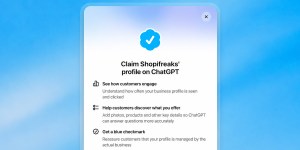
On Tuesday, OpenAI launched Businesses in ChatGPT in beta, a free program that lets companies claim their profile inside ChatGPT, control what it says about their business, feed it their products, see how often the chatbot surfaces their business, and track user engagement to their links. It has two parts: Business Hub, where businesses manage their listing, and Business Agents, where they can build their own branded AI agent to talk to shoppers inside ChatGPT. Here’s more information about both.
Business Hub
- Any eligible business with a website can claim its profile in countries where ChatGPT is available. You verify you’re connected to the business by phone, e-mail, a DNS record, or a Shopify integration, and then an admin completes an identity check through Persona. Verified businesses get a blue checkmark. How creative!
- Despite all the talk about Shopify this past week, you don’t need Shopify to claim your profile. Shopify merchants can simply skip some of the verification steps by connecting their store from Business Hub or the Shopify admin, while everyone else verifies manually through Business Hub’s backend.
- After they’re verified, businesses can edit their details and connect a product feed with prices and stock levels. Once again, it’s a faster onboarding for Shopify merchants, since most products on Shopify are already in ChatGPT through Shopify Catalog. Everyone else can upload a CSV that follows OpenAI’s product feed specification or point it to a hosted feed URL, similar to how they do in Google Merchant Center.
- The dashboard shows how often ChatGPT mentions the business, how many clicks they get, and the common topics in conversations that cite their website. OpenAI doesn’t share the actual chats, and businesses won’t see any data until they clear a minimum number of conversations.
- Local stores and restaurants can claim a profile only if ChatGPT already has a US listing for them, whereas online businesses can add a profile if they can’t find one. OpenAI can also create a listing for any business, whether or not the business ever claims it.
- OpenAI says claiming a profile doesn’t get the business better recommendations, and ChatGPT may still use other sources when it talks about the business. That’s fair, because otherwise these profiles would just become a second website for companies to make whatever claims they want about themselves.
Business Agents
- Once a business claims a profile, it can build its own AI agent inside ChatGPT that answers customer questions and helps shoppers explore products. Shoppers open it from the company’s profile, and the conversation happens in a separate, clearly labeled chat, not within a regular ChatGPT conversation.
- For now, only verified US e-commerce and online service businesses can build an agent. Even then, OpenAI reviews each business’s category and intended use before publishing, so verification alone doesn’t guarantee that a business gets an agent.
- Shopify merchants get the fastest setup again, with their catalog details flowing in automatically. They just have to preview and publish the agent.
- Businesses can pay to sponsor their agent and use it as the landing page for ChatGPT Ads. So the free profile reels them in, and the agent is where OpenAI makes money.
- OpenAI hasn’t given a timeline for opening agents to local businesses or other countries.
How does all this compare to Google?
Business Hub is essentially OpenAI’s Google Business Profile and Google Merchant Center rolled into one dashboard. The biggest difference, at the moment, is that OpenAI’s Business Profiles are not a review platform. Google Business Profile is built around customer reviews and other first-party data, and there’s nothing currently like that in Business Hub. ChatGPT gets its star ratings and reviews from elsewhere, mainly Yelp, which licensed its data to OpenAI earlier this year. My guess is that once OpenAI starts processing more checkouts through its chatbot (more on that later), it’ll subsequently begin soliciting its own reviews internally from buyers.
Smart moves by OpenAI.
Businesses want control over how they appear in AI search, and Business Hub provides the illusion of it. The hub also builds a direct relationship with business owners through its free profile and analytics tools, which becomes a short bridge to OpenAI’s advertising services. Plus, it’s about time that someone gave Google a run for its money in the business profile market, as they’ve run the show for decades.
The only way I see this going wrong for OpenAI is that they’re once again trying to control too much of the journey, same as they did with Instant Checkout. It appears that OpenAI’s goal is to facilitate: 1) Discovery (Organic & Paid), 2) Education (Branded AI Agents), and 3) Checkout — all through its platform. But not every business wants to feed their customers’ entire sales journey through a beta AI agent. What about my beautiful DTC website?
OpenAI is putting its AI agents front and center through its Business Hub, when it should be focused on building a pathway to its general advertising that takes users to businesses’ websites, because that’s what businesses want today. Though to be fair, when AI agents flop, it’s still got the Business Hub relationship with companies and can pivot.