Hi Shopifreaks
I’ve got a very big edition for you today covering major announcements from Amazon’s Seller Connect conference, accidentally revealed upcoming OpenAI features, and of course everything you missed last week between the White House and Beijing regarding the TikTok deal.
Before we begin, a quick request: I’m in search of high-volume retail partners (digital or brick-and-mortar) for a Fair Trade handmade wool sweater brand that I’ve worked with for many years. We’ve got thousands of sweaters and accessories ready to distribute for the season ahead. The brand was established in 1992 and currently sells wholesale to 1,000+ retailers throughout the U.S. and Canada. Now we’re also ready to expand into the EU.
The sweaters are designed in Canada and handmade in Nepal by women artisans, who work from home at their own pace and for their own profit. They manufacture high quality apparel, have a 30+ year reputation for excellence, and a great social mission. I’ve been working with this company for many years and couldn’t speak higher of their character and product quality.
If you know of any retailers that could be a fit, hit reply and let me know and I’ll make the connection. Thanks!
And now onto your regularly scheduled programing…
In this week’s edition I cover:
- Amazon’s new AI seller & ad creation tools
- Google Gemini is coming to Chrome in a big way
- Reddit wants a better deal from Google & OpenAI
- Amazon’s big warehousing move
- The FTC wants to hold senior executives liable
- Microsoft’s Copilot gets fashionable
- OpenAI accidentally reveals its new Orders tab
- More on the TikTok deal
- H-1B visa holders’ new struggle
- MrBeast’s faux pas with children’s data
All this and more in this week’s 244th Edition of Shopifreaks. Thanks for subscribing and sharing!
Stat of the Week
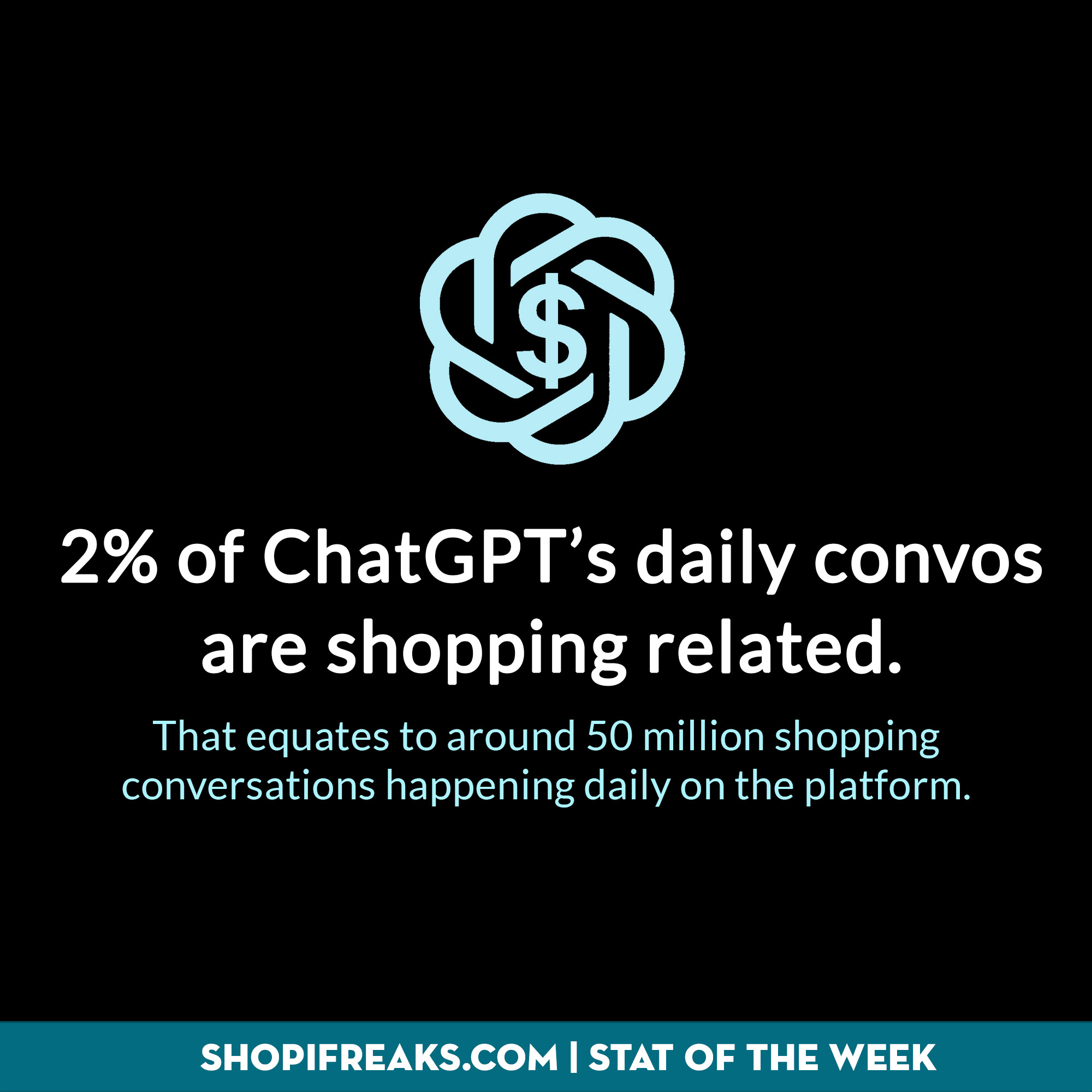
2% of ChatGPT’s 2.5 billion daily conversations, or about 50M convos, are about shopping-related queries each day, according to a first-of-its-kind study revealing how people are using the chatbot based on a large sample of real conversations. (Spotted by Juozas Kaziukėnas.) It was a fascinating study, and I shared a few additional highlights on LinkedIn if you’d like to learn more.
1. Amazon launches new AI tools for sellers
At Amazon Accelerate, its annual conference for third-party sellers in Seattle, the company revealed new AI tools for inventory management and ad creation, which I’ll cover below, as well as a ton of other announcements that I’ll cover throughout this edition.
First up, Amazon revealed new AI agents designed to help sellers complete tasks and manage their business.
New abilities include:
- Monitoring account health and inventory.
- Developing strategies and taking action when authorized to do so, such as flagging slow-moving products before they incur long-term storage fees and recommending whether it would make sense to leave the item as-is, lower the price, or remove it altogether.
- Analyzing demand patterns and preparing shipment recommendations.
- Flagging inventory listings that might violate new product safety regulations.
- Automatically ensuring that all of a seller’s products meet compliance requirements in every country they’re selling in.
Next up, Amazon released an AI chatbot that generates ads to match a seller’s branding.
The chatbot lives within Creative Studio and can conduct product and audience research, brainstorm ideas, develop creative concepts in a storyboard format, and produce AI generated videos and display ads.
Sellers can simply describe the type of ad they’d like to create, and the AI chatbot will pull inspiration from the seller’s brand guidelines, product pages, and other store details to generate a concept for a static advertisement or a video ad — going as far as writing a script, adding music, generating a voiceover, and laying out a storyboard.
On Amazon’s product announcement post, you can see an example of an outdoor retailer going through the process of having Amazon’s chatbot develop campaign concepts, generate lifestyle images, storyboard a video, and then output a final commercial.
Cool stuff! However we are quickly entering an environment where literally NOTHING you see on advertisements or product display pages will be real!
2. Google announces 10 new AI features coming to Chrome
Google is integrating its Gemini AI tool into Chrome browsers for all users in the U.S. starting this week, just weeks after getting clearance from a federal judge that it won’t have to sell its browser. In the coming months, it plans to add agentic capabilities that can perform multi-step tasks to the browser, such as shopping, booking appointments, and finding previously visited webpages and offering summaries of the content viewed. Google is also building a deeper integration between Gemini and other Google products like Calendar, YouTube, and Maps.
Here’s a recap of the 10 features that are currently released or coming soon:
-
Gemini in Chrome – now rolling out on desktop and mobile to Mac and Windows users in the U.S., with iOS and Android integration coming soon.
-
Agentic browsing assistant – Gemini will soon be able to complete tasks like booking appointments and shopping on your behalf.
-
Multi-tab support – compare and summarize information across tabs, like consolidating travel plans into a single itinerary.
-
Past page recall – ask Gemini to find sites you previously visited without digging through browser history.
-
Google app integration – deeper connections with Calendar, YouTube, and Maps that let you perform tasks like adding calendar events or looking for a specific spot in a YouTube video without leaving the page.
-
AI Mode in omnibox – search using Google AI Mode directly from the Chrome address bar, which it calls the “omnibox.”
-
Contextual AI questions – ask questions about the page you’re on and receive AI Overviews alongside the site content.
-
Expanded scam detection – Gemini Nano enhances Safe Browsing by spotting tech support scams, fake virus alerts, and fake giveaways.
-
Notification and permission filtering – AI reduces spammy notifications and adapts permission prompts based on your preferences.
-
One-click password changes – Chrome will let users change compromised passwords instantly on supported sites. (Good because Google tells me I have like 981 compromised passwords.)
OpenAI, Meta, and Apple have some catching up to do if they plan on competing with integrated AI tools like that! I look forward to giving some of those features a try.
In other Google agentic news… the company introduced a technical protocol called “Agent Payments Protocol” or “AP2” that uses “mandates” or “cryptographically-signed digital contracts” to serve as proof of shoppers’ instructions and standardize how AI agents conduct secure transactions with merchants. The open protocol was built in collaboration with 60 partners including Adyen, Mastercard, American Express, PayPal, Intuit, and Worldpay and is designed to work with traditional payments, stablecoins, and crypto, aiming to manage an estimated $136B in AI-driven transactions this year.
3. Reddit wants a two-way street deal with Google
Reddit is in early talks with Google to form its next content-sharing agreement, proposing a new kind two-way-street partnership that would encourage Google users to become active contributors to its online forums, helping the company grow and generate content for future training, according to Bloomberg sources.
Last year Reddit struck a $60M deal with Google, allowing it to crawl its site and use Reddit discussions to train its AI models and enhance search results. The deal was a one-way street, meaning Google paid Reddit and got to crawl and use its content — but did not directly encourage visitors to join the forum. However Reddit executives believe that these terms don’t adequately reflect how valuable their data is, and now want Google to encourage its visitors to participate in the conversation.
Reddit also plans to discuss with Google and OpenAI a future deal structure that could allow for dynamic pricing, where Reddit can be paid more as it becomes a more vital source of AI answers. (And will Reddit contributors be earning a chunk of that reward? We won’t hold our breath!)
Is Reddit overplaying their hand? Or is their user data really that valuable? Hit reply and let me know your thoughts.
In other AI licensing news… The Wall Street Journal reports that Meta held discussions with major publishers like Axel Springer, Fox, and News Corp about licensing their content to fuel its AI tools, marking a pivot from its recent pullback from paid news. The talks, which are still in early phases and may not lead to deals, follow Meta’s agreement to license content from Reuters in 2024 and mirror similar deals from rivals like OpenAI, which recently signed licensing agreements with News Corp, Axel Springer, and People Inc.
4. Amazon just made warehousing and fulfillment easier for sellers everywhere
Amazon is expanding its Multi-Channel Fulfillment service to support merchants’ sales on Walmart, Shopify, and Shein as part of its efforts to help brands “reach customers wherever they shop–while relying on Amazon’s fulfillment network to deliver for them.”
If you’re unfamiliar… Amazon’s Multi-Channel Fulfillment (MCF) is a service that lets merchants use Amazon’s fulfillment network to store, pick, pack, and ship orders placed on non-Amazon sales channels such as a brand’s own website, eBay, or Shopify. Sellers send inventory to Amazon’s warehouses, and MCF handles delivery, including options for 1-day, 2-day, or standard shipping, with unbranded packaging. It first launched in 2006 as an extension of Fulfillment by Amazon (FBA) and has since expanded globally.
Dharmesh Mehta, Amazon VP of Worldwide Selling Partner Services, wrote:
“When sellers use FBA and MCF, they have a single pool of inventory across their sales channels, driving, on average, 19% fewer out-of-stock rates and improved inventory turnover by an average of 12%. That means less wasted inventory sitting in warehouses, more products in customers’ hands, and stronger business results for sellers.”
Since its launch, MCF could technically fulfill any order from any channel as long as the seller manually imported the order into Amazon via Seller Central, spreadsheets, or 3rd party platforms. However now, Amazon is rolling out direct integrations with those platforms, so merchants don’t need to rely on third-party tools or manual imports.
Plus long term storage and transportation to Amazon fulfillment centers just got a major upgrade.
Amazon also announced that its expanding their Amazon Warehousing and Distribution (AWD) capabilities globally through a new service called Global Warehousing and Distribution (GWD), which enables sellers to hold products in bulk at lower cost near the point of manufacture, and then release the products to various destination countries when the time is right.
Mehta wrote:
“Once inventory is ready to move across borders, sellers have historically had to patch together a network of freight providers with their own timelines, limited visibility across them, and each provider managed independently. A missed connection at port or an unexpected delay could throw an entire selling season off track. That’s why we’re continuing to launch more direct arcs that connect the largest and fastest-growing manufacturing hubs directly with the most popular destination countries where sellers sell their products… That breadth of coverage means fewer handoffs, more predictable schedules, and a faster path to getting inventory positioned for same- and next-day Prime delivery.”
To simplify and speed up the customs experience involved with importing items, Amazon is using generative AI to help sellers pre-populate required fields, reuse information across documents, and flag potential mistakes, which it says is cutting their customs paperwork time by more than half.
5. Amazon executives could be held personally liable for violating consumer protection law.
The FTC won a partial summary judgment victory in its case against Amazon last week, which claims that Amazon tricked tens of millions of customers into signing up for Prime membership and made it hard to quit, in violation of the Restore Online Shoppers’ Confidence Act.
Amazon argued that it obtains consent to use a customer’s billing information at the same time it discloses Prime’s terms, but Judge John Chun ruled that “no reasonable jury could find in favor of Amazon” after viewing evidence showing Amazon’s purchase and billing flow.
Even more remarkable is that the FTC successfully supported with evidence that three of Amazon’s senior executives — Neil Lindsay, Jamil Ghani, and Russell Grandinetti — had direct authority and oversight over Prime enrollment and were aware of customer complaints, but continued the practices in question anyway, and now two of those execs may be held personally liable for any violations that are proven at trial.
The FTC has, on occasion in the past, pursued individual liability when it could show that management had control over practices and were indifferent to violations. However most prior examples involved smaller companies that were founder-operated. What makes this Amazon case unusual is that the FTC is targeting senior executives.
The outcome of the trial could set a major precedent in the U.S. and could bring some much needed accountability to senior executives at major companies.
Do you think senior executives should be personally held liable for their corporate decisions? Hit reply and let me know or join the conversation on LinkedIn.
6. Microsoft adds fashion discovery to its Copilot assistant
Microsoft partnered with Curated for You, an AI-powered lifestyle commerce platform, to integrate its fashion discovery into Microsoft Copilot — the Internet’s number one tool for staying fashionable. LOL.
The experience is now live, allowing users to ask questions like:
- What should I wear to a beach wedding?
- Outfit ideas for Italy
- How do I dress like Bill Gates?
- Jeans that make my butt look smaller
Copilot then responds by curating fashion ideas from partner retailers using Curated for You’s merchandising engine. Early retailers to join the pilot include REVOLVE, Steve Madden, Tuckernuck, Rent the Runway, and Lulus.
Jennifer Myers, Principal Product Manager for Microsoft Shopping, said:
“By infusing shopping with relevance and empathy, we’re turning Copilot into a style companion that understands your life. This partnership bridges lifestyle intent with real-time curation, helping users go from idea to outfit seamlessly.”
Curated For You has historically been a retailer-focused tool that integrates directly into storefronts. This deal with Microsoft Copilot is the first time they’re bringing their AI curation tools to a 3rd party AI company, and the first time they’ve enabled fashion aggregation across multiple retailers.
However this isn’t the first (nor the last) time Copilot has integrated with a 3rd party shopping tool. The company has previously partnered with Klarna for shopping recommendations and price comparisons, Zalando for fashion search and outfit inspiration, Expedia for flight and hotel search, OpenTable for restaurant reservations, Instacart for grocery shopping, Shopify for product discovery from independent brands, and a limited integration with Amazon to surface some of its products.
7. OpenAI accidentally reveals an Orders tab in ChatGPT
Sam Altman previewed an updated personalization page that now includes a dropdown menu with a range of personality types including “Cynic, Robot, Listener, and Nerd.” It also includes a Custom Instructions field where users can modify the chatbot’s outputs with requests like “avoid em dashes so my professor doesn’t know I’m cheating.”
Upon showcasing a screenshot of the new settings, Altman may have accidentally also revealed an Orders tab, which could be part of the company’s ongoing agentic commerce efforts and/or partnership with Shopify.
Here’s a quick recap of OpenAI’s recent e-commerce moves:
- OpenAI released Operator, an agent that can perform tasks on the web such as shopping, filling out forms, and booking travel based on users’ instructions.
- OpenAI introduced a new tool allowing retailers to create AI-powered shopping assistants in Shopify via the Storefront Managed Compute Platform and the OpenAI Responses API.
- The Financial Times reported that OpenAI was working on a way to take commission from sales that take place within ChatGPT.
- Rumors circulated in July that OpenAI was weeks away from launching its own browser. (Spoiler: It still hasn’t.)
Personally I think that the best way to complement OpenAI’s commerce efforts is to launch an e-mail and SMS inbox called InboxGPT. Check out my LinkedIn post to learn why.
In other ChatGPT news… OpenAI announced that it plans to implement a new age verification system to help place underage users into a more age-appropriate chatbot experience. To determine a user’s age, it will use an age prediction system that attempts to guess how old they are based on how they’ve previously interacted with the service.
8. President Trump extends the TikTok ban deadline, and more updates
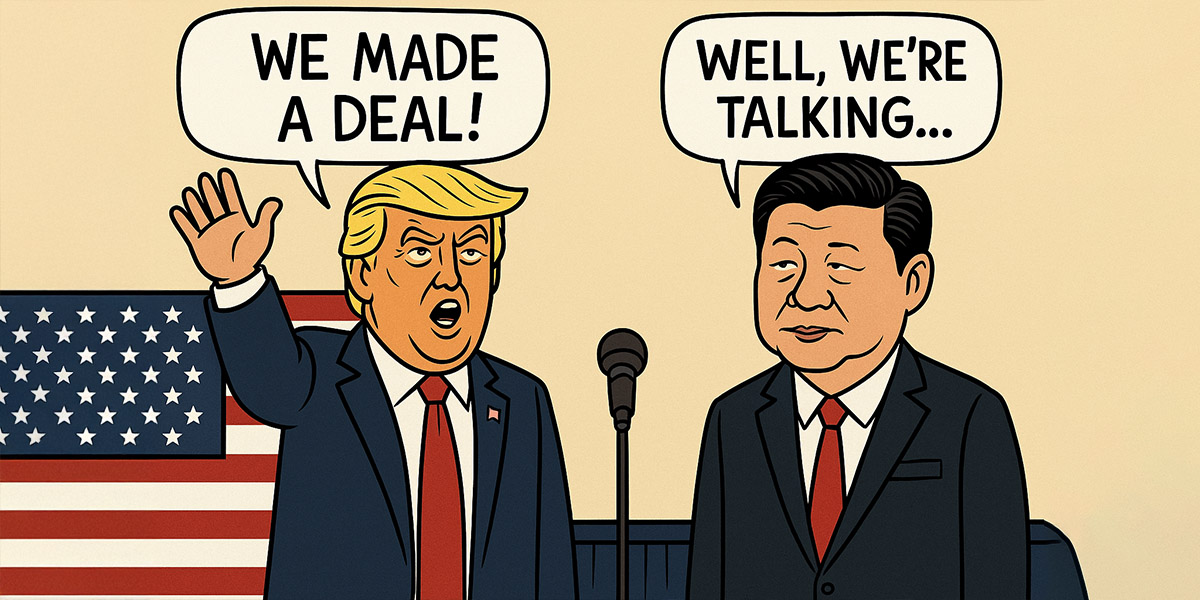
Last week I reported that the U.S. began a fresh round of trade talks with China focused on de-escalating tariffs and resolving the standoff over TikTok. As of last Monday, Sep 15th, U.S. trade representative Jamieson Greer said the two countries had struck a framework agreement on transferring TikTok to U.S.-controlled ownership, but that President Trump would have to finalize the deal with President Xi Jinping on Friday.
Here’s what has happened since:
- On Tuesday, President Trump extended the deadline for the fourth time, now until Dec 16th. Oh no, my Xmas Toks!
- The Wall Street Journal reported that 80% of TikTok’s U.S. business would be owned by an investor consortium that includes Oracle, Silver Lake, and Andreessen Horowitz.
- The Financial Times reported that Wang Jingtao, deputy head of China’s cyber security regulator, said the deal would include “licensing the algorithm and other intellectual property rights.”
- On Tuesday, Scott Bessent claimed that President Trump’s willingness to let TikTok shut down in the U.S. was crucial in negotiating the deal, after Beijing indicated that the U.S. version may still use a Chinese algorithm, and that this “turned the tide.” Man, Bessent really loves Trump! Dude won’t take credit for anything. Just dishes out praise to Trump.
- Bloomberg’s Dave Lee published an opinion piece explaining how the deal “falls short of addressing the national security claims that got us here in the first place. The black box for the all-important algorithm remains sealed.”
- Digiday’s Krystal Scanlon wrote an article about the ambiguity and uncertainness that the deal brings to U.S. small businesses and marketers.
- On Friday, President Trump wrote on Truth Social following a phone call with Chinese President Xi Jinping, that he and Xi “made progress on many very important issues” and specifically thanked Xi for “the TikTok approval.”
- Reuters revealed that the agreement will include ByteDance getting to choose one of seven board members for the new U.S. entity.
- The White House said on Saturday that the emerging TikTok deal with China will ensure that U.S. companies control the algorithm that powers the app’s video feed.
- President Trump hinted on Sunday that Lachlan Murdoch, the heir to billionaire Rupert Murdoch’s media empire, might be involved in the deal.
- The Wall Street Journal reported that the Trump administration is expected to collect a multi-billion dollar fee from investors for negotiating the TikTok deal.
- Today (Mon, Sep 22nd), the White House clarified that the app’s algorithm will be operated in the U.S. and overseen by Oracle. It also noted that the deal will not involve the Trump administration taking an equity stake in the company (but no mention of a commission for brokering the transaction).
- The White House also said today that the U.S. is confident that China has approved the deal and does not plan to have further talks about its details, but that additional paperwork is required from both sides to approve the deal.
ByteDance and Beijing have been cautious when commenting publicly on negotiations with the Trump administration over the app’s U.S. operations, publicly acknowledging the ongoing commercial talks, but making less definitive statements than Trump’s assertions that a deal is finalized.
Like I’ve been saying all along…. I’ll believe it when I see it.
9. Other e-commerce news of interest
Google, Amazon, and Microsoft advised H-1B visa holders abroad to return to the U.S. before new restrictions took effect at midnight, Sep 21st, according to leaked memos, following President Trump’s announcement on Friday that the administration would ask companies to pay $100,000/year for H-1B worker visas. The companies also told employees already in the U.S. not to travel until further notice, citing fears of a $100,000 reentry fee. The White House denied that a re-entry fee would apply and clarified that it was a one-time fee (not an annual fee), despite what Trump said, but the assurances did little to ease worker concerns.
Amazon announced that it’s investing more than $1B to raise wages and lower the cost of health care plans for its U.S. warehouse, fulfillment, and transportation workers, increasing the average pay by up to $1.90/hour to more than $23/hour. The company said it will also lower the cost of its entry health care plan to $5/week and $5 for co-pays starting next year, as well as reduce weekly contributions by 34% and co-pays by 87% for primary care, mental health, and most non-specialist visits for employees on the basic plan. The move makes for a good headline, but with over 1M workers in the U.S., the collective wage increase (which Amazon says will average $1,600/year for full time employees) barely lifts workers up to the break-even point for covering basic living expenses. Bump that wage increase 4x and then we’re talking!
MrBeast collected children’s data without obtaining consent from parents, according to The Children’s Advertising Review Unit, a U.S. self-regulatory program that monitors and enforces responsible advertising practices directed to children. The watchdog said when MrBeast asked his mostly-underage viewers to enter two sweepstakes without providing a way for them to list their parents’ information so that they could obtain consent, he potentially ran afoul of the federal Children’s Online Privacy Protection Rule, which requires parental consent before collecting, using, or sharing personal data from children under 13. MrBeast has since worked with watchdog to update his channel’s data collection practices.
Oracle is in talks with Meta for a multi-year cloud computing deal worth over $20B to power the training and deployment of its AI models, according to Reuters sources. The potential deal comes just a week after the Wall Street Journal reported on a similar, but substantially larger, $300B deal between Oracle and OpenAI. If both companies run their AI models through the same Oracle data centers and their ethernet cables accidentally touch, would that spark the AI apocalypse?
Meta is now allowing small businesses to offer a payment option within its WhatsApp Business App, with the ability to share QR codes that customers can scan to pay with their preferred payment method. The company also introduced at its second business summit in Mumbai a new feature that enables Indian users to call larger businesses directly from the app, as well receive calls from businesses they’ve requested to hear from, with support for video calls coming soon.
Walmart reported an unexpected $400M increase in general liability claim costs last quarter, tied to injuries and settlements like when employees get hurt on the job or customers trip and fall, which have become more expensive post-Covid. CFO John David Rainey said incidents are actually declining, but settlement costs have outpaced forecasts and will likely continue to rise, so they’ll need to take those rising costs into consideration with future projections. Retail analyst Mickey Chadha told Modern Retail that he doesn’t see the cost as substantial compared to Walmart’s overall profitability. Despite the expense, the company made $33.7B in gross profit last quarter, up 5.8%. I guess plaintiffs were due for a cost of living increase too.
Amazon FBA is ending its inventory commingling practice later this year, which means that sellers will be able to guarantee that the specific units they send to warehouses is what will ship for their sales. The decision ends a controversial practice by Amazon where it pooled identical items from different sellers under one barcode, which made it difficult to trace problems like counterfeits back to a specific seller. Amazon executives said the economics of commingling no longer worked and that since the company’s logistics network is now capable of storing products closer to customers, the speed advantage of pooled inventory has diminished.
Deliveroo CEO Will Shu is stepping down from the role following DoorDash’s acquisition of the company, which is expected to close on Oct 2nd. Shu launched the company in 2013 with his childhood friend Greg Orlowski and says that “taking Deliveroo from being an idea to what it is today has been amazing” but that “now is the right time for me to step down.” Exiting a company for billions certainly feels like the right time to me! DoorDash announced its deal to buy Deliveroo in May, valuing the company at £2.9B ($4B).
Google and PayPal signed a multiyear deal to integrate payment and AI capabilities across their platforms, aiming to advance agentic commerce and digital transactions. The partnership will embed PayPal’s checkout, Hyperwallet, and payouts solutions into Google products, expand PayPal’s role as a card payment processor for Google Cloud, Ads, and Play, and replatform PayPal’s infrastructure on Google Cloud. The two companies also plan to collectively advocate for standards like Google’s new AP2 (mentioned earlier) to support secure AI-driven commerce experiences.
Meta’s $799 Ray-Ban Display AI glasses debuted with glitches at the company’s Connect 2025 keynote, as Mark Zuckerberg’s live demos malfunctioned multiple times onstage. A cooking segment featuring the new LiveAI feature faltered when the assistant skipped steps, and a Neural Band demo failed to pick up a WhatsApp video call. Despite the missteps, Zuckerberg positioned the glasses as a major step toward wearable AI assistants that anticipate user needs. A lot of journalists criticized Zuckerberg for still doing live demos (unlike competitors which play prerecorded videos during keynote presentations), but I respect him for it. Tech releases used to be raw and uncut before CEOs started shining their apples before they fed them to you. We need more malfunctioning AI and broken windows on stage in my opinion.
eBay replaced its prominent “Leave Feedback” button in purchase history with a large “Resell” option in the app, frustrating buyers but reflecting the company’s push to grow its Enthusiast Buyer segment — which it defines as customers who shop at least six times a year, spend $800 annually, or also sell on the platform. The button streamlines relisting items but makes leaving feedback harder, leading some users to suspect that the move is tied-in with eBay’s automatic positive feedback rollout. eBay launched the Resell button in May 2024 to make it easier for buyers to quickly relist past purchases by auto-populating the listings with item details and photos, beginning with just apparel and later expanding to more categories.
Target is expanding its next-day delivery to customers in the 35 largest U.S. metro areas by the end of October, with over 20 more cities coming in 2026. The service is free for Target Circle 360 members on purchases of any size, for purchases made with Target’s Circle Card, or for any customer on orders over $35. Otherwise next-day delivery will cost $5.99. In August, I reported that Target would soon stop fulfilling online orders from 30-40 of its stores so that they can refocus teams on improving their drive-up and in-store experiences, a move that could prove to counter its next-day delivery efforts in those markets.
Yotpo published volume one of its new three-part series entitled The New Rules of Loyalty, which aims to reveal how brands turn “fleeting attention into lasting connection.” The series analyzed 1,000 brands and 45,000 shopper responses to discover what it takes to break away from boring loyalty programs and build brands that inspire loyalty through emotional connection. I normally don’t share reports or case studies in this newsletter (because they are often intrinsically promotional in nature), but this one’s worth checking out. I was just having a conversation with a brand last week about engaging and collaborating with their customers during the design of future apparel — and Yotpo covers this concept well in their Rule #2: Don’t Just Sell, Co-Create.
Amazon is banning used and collectible-condition toys for sale on its marketplace, effective immediately for new listings and allowing until Oct 30th to sell through existing toys. Many sellers are finding themselves in a bind, having already purchased Q4 inventory and supplies, only to have to scramble to find new places to sell their toys this holiday season. Additionally Amazon is now requiring annual testing or document verification from a Testing, Inspection, and Certification organization for children’s toys sold in the U.S. and Canada. One commentor speculated that Amazon is getting financial kickbacks or other incentives from major toy companies to clean their marketplace of used listings prior to the holiday season, however, it’s possible that the move is strictly to reduce liability, which used toys come with a lot of.
Affirm and Klarna will now be available for in-store purchases on Apple Pay, which is accepted at more than 85% of U.S. brick-and-mortar retailers. The move expands the relationship between the BNPL firms and Apple, which previously enabled the installment payment options for online purchases. Starting with iOS 26, Apple Pay users in the U.S. and U.K. can access Klarna’s installment options, while Affirm will roll out similar lending choices in the U.S.
Squarespace introduced Squarespace for Pros, in what it calls its “most significant investment to date in supporting professional designers and agencies,” during its annual Circle Day event. (They should collaborate with Target for Circle Days.) The platform adds advanced design tools like Finish Layer animations and font imports, integrated practice management for client collaboration, and built-in commerce features such as scheduling, payments, and invoicing. The company also revealed expanded perks in the Circle partner program and a new unified dashboard to further support freelancers and agencies with resources, commissions, and exclusive benefits.
Fiverr is laying off 30% of its workforce, or around 250 employees, so that it can double down on its use of AI to automate systems and streamline operations. CEO Micha Kaufman said, “We are launching a transformation for Fiverr, to turn Fiverr into an AI-first company that’s leaner, faster, with a modern AI-focused tech infrastructure, a smaller team, each with substantially greater productivity, and far fewer management layers.” Gee, I sure hope for Fiverr’s sake that their clients don’t adopt the same mentality and stop hiring as many freelancers…
Uber is planning to test using drones for Uber Eats deliveries in the U.S. in partnership with Flytrex, an Israeli startup that Uber is also investing in. Uber had trialed using drones for some of its food deliveries as far back as 2019, but abandoned the idea due to regulatory limitations at the time, later selling its Elevate aviation division to Joby. Now the regulatory environment around commercial drone use is loosening, which has renewed Uber’s interest in the space. I like the idea of drones delivering my food because they don’t eat my fries or spit in my drink.
Instacart CEO Chris Rogers said the company is urging retailers to align online prices with in-store pricing, calling affordability the key to retaining grocery customers. Data from the platform shows retailers that offer the same prices online and in their brick-and-mortar locations grow sales about 10 points faster and see better retention than those marking up products. Earlier this year, Instacart shared that Schnuck Markets, Heritage Grocers Group, and Lowe’s switched to offering the same prices online and offline, while Walmart Canada and Costco lowered its online markup.
Temu has been accused of avoiding corporation tax in the U.K. for the past two years, despite “enormous” revenues. Last year Temu reported pre-tax profit of £2.88M, while sales doubled to £46.6M, however the U.K.’s Fair Tax Foundation claimed that the company moved over £553.27M of U.K. revenues through its holding company Whaleco Technology in Ireland, before shifting the sales on again via Singapore tax havens and the Cayman Islands. Fair Tax Foundation CEO Paul Monaghan said, “Serious questions need to be asked as to why Temu has such a negligible economic and tax footprint in the UK despite its enormous sales… The registered office in London is essentially a shell, with no staff and no long-term assets.” Temu denied the claims and emphasized that it pays hundreds of millions of pounds in U.K. taxes via customs duties, VAT, and other levies — but in their hearts, they know it’s not the same.
Valu, an Egyptian fintech provider of installment loans and financing solutions, and Noon, the Middle East’s largest digital marketplace, executed Egypt’s first licensed BNPL transaction under the country’s new FinTech License framework. The rollout enables fully digital onboarding through Noon’s checkout, letting customers use Valu’s installment plans instantly with just a national ID and no app download or branch visit. Prior to Egypt’s recently created a FinTech License framework that explicitly covers BNPL, most installment and microfinance products operated under broader consumer finance or banking rules that left BNPL in a gray area, but now it’s fully legal and expected to grow in use.
The FTC and seven U.S. states are suing Ticketmaster and its parent company Live Nation over allegedly collaborating with brokers who buy tickets to sell them at a higher cost and misrepresenting the price of tickets using “bait-and-switch” tactics. The FTC wrote that even though Ticketmaster claimed to impose strict limitations on the number of tickets that individual customers could buy for an event, brokers routinely bought millions of these tickets and then resold them at a much higher cost to consumers. It also alleges that Ticketmaster profits from the practice by double-dipping on fees from the original sale and then again from the marked-up resale, while customers face higher costs. Guilty and everyone’s known it for a long time!
Meta is taking heat from parents in the U.K. for using suggestive photos of schoolgirls as young as 13-years-old to target men on Instagram and promote its Threads app. The children’s images were used by Meta after their parents had posted them on Instagram to celebrate their return to school, but the parents were unaware that Meta’s settings permitted it to use their images for advertisements. Meta calls posts like this “recommendation tools” and said it allows public posts to be used for this purpose, though one mother whose photo was used said her account was set to private.
🏆 This week’s most ridiculous story… Some international sellers on eBay and Etsy are jacking up their shipping charges to the U.S. to as high as $2,000 to deter Americans from buying their products and avoid dealing with the logistical hurdles that Trump’s tariffs have introduced, according to a 404 Media investigation. I’m honestly surprised that eBay and Etsy even let sellers add shipping charges that high. You’d think the shipping fee field would at most cap out at $999 before allowing that fourth digit, but I guess not. Why not just simply decline offering shipping to the U.S.? Is this one of those “if they’re stupid enough to pay it, I’ll deal with the tariffs” scenarios?
10. Seed rounds, IPOs, & acquisitions
Pattern, a Utah-based e-commerce accelerator that helps brands expand across marketplaces like Amazon, Walmart, and Mercado Libre, raised $300M in its IPO debut on the Nasdaq at a $2.5B valuation. The stock, which now trades under the ticker “PTRN,” opened at $13.50 after the company sold shares at $14 in its IPO and later closed up 11% at $15.63 on Friday. Pattern sells tens of thousands of products across health and wellness, consumer electronics, and beauty and personal care with brand partners that include Nestle, Panasonic, and Skechers.
Numeral, a San Francisco-based sales tax and VAT compliance platform for e-commerce & SaaS businesses, raised $35M in a Series B round led by Mayfield at a $350M valuation, bringing its total amount raised to $57M. The company plans to use the funds to grow its global coverage, expand its available platform integrations, and build new compliance automations to make filings more efficient — and likely spend at least $5M on more LinkedIn ads. (LOL, I see a lot of their ads.)
Nvidia invested $5 billion in Intel at $23.28 per share as part of a partnership to co-develop data center and PC chips, sending Intel stock up 22.8% to its best day since 1987. The deal, which follows recent investments by SoftBank and the U.S. government, will see Intel build x86 CPUs for Nvidia’s AI platforms and PCs powered by RTX GPUs, but does not currently involve Nvidia using Intel’s fabs. I recently got into Intel at an average cost of $20.00 / share, so I’m sitting pretty right now (but don’t ask me how my UPS investment is going).
Bed Bath & Beyond, the parent company of the Bed Bath & Beyond retail chain, Overstock, buybuy Baby, and a blockchain asset portfolio, acquired the Kirkland’s Home name and related brand assets from The Brand House Collective for $10M. The deal will convert Kirkland’s Home locations into Bed Bath & Beyond stores to drive a larger national footprint, while expanding Kirkland’s Home into the wholesale market to extend the 60-year-old brand’s reach to independent retailers nationwide. CEO Marcus Lemonis likely made a statement about “People, Process, and Product” — but don’t quote me on that.
SEON, a London-based fraud prevention and compliance company that helps businesses detect and block fraudulent transactions using machine learning and digital footprint analysis, raised $80M in a Series C round led by Sixth Street Growth, bringing its total amount raised to $187M. SEON analyzes tens of millions of customer interactions daily for banking, fintech, and SaaS customers including REvolut, Plaid, Nubank, Afterpay, Spotify, and Entain, and plans to use the funds to further global expansion and advance its AI-powered product development.
Alice Mushrooms, a Venice, California-based chocolate D2C chocolate brand that infuses mushrooms like reishi, cordyceps, and lion’s mane into dark chocolate to offer wellness-focused blends for sleep, focus, mood, and arousal, raised $8M in a Series A round led by NewBound, with participation from Unilever Ventures, LVMH Louis Vuitton Moët Hennessy, and other notable investors. The company will use the funds for assortment growth and retail expansion, hinting at an upcoming partnership with a mass-market chain that will bring its chocolates to 1,300 new locations nationwide. (Hmm, 1,300 stores…. I guess Kroger!)
Envive, a Seattle-based startup founded by ex-Amazon executives that develops AI agents for e-commerce, raised $15M in a Series A round led by FUSE, bringing its total amount raised to $19M since its inception in 2023. Envive specializes in building what it calls “the intelligence layer for commerce” via AI agents that help retail brands like Spanx, Coterie, and Supergoop! boost conversion, retention, and discoverability. It is expected to triple customer count and grow revenue by 5X this year.
ShopVision, a Vancouver-based AI platform that combines competitive intelligence and first-party data to help e-commerce brands optimize pricing, campaigns, and operations, raised $4.1M in a seed round led by Brightspark Ventures. The company’s tools are already used by brands like Men’s Warehouse, Herschel, and Craft Sports to speed up decision-making and optimize performance during high-volume shopping events like Black Friday and Cyber Monday.
Extuitive, an AI-first creative marketing and product innovation platform, spun out of Flagship Pioneering, that helps small businesses rapidly generate, test, and validate product concepts and ad creatives using AI agents and simulated consumer models, raised $20M in seed funding from Flagship to accelerate platform development and grow a pipeline of users. The company aims to make AI more accessible for small businesses by providing enterprise-grade tools like creative generation, simulated consumer testing, and real-time validation that were once only accessible to large corporations with higher budgets.
Claire’s, a youth-focused retailer focused on fashion accessories, jewelry, and cosmetics that recently filed for Chapter 11 bankruptcy, was acquired by Ames Watson, a private investment firm that turns around struggling retailers, for $140M. Ames Watson says it is “committed to preserving Claire’s heritage while positioning the company for sustained growth” and “will focus on exclusivity, customization, and cultural relevance.” Can they bring traffic back to malls while they’re at it? Because that might be what it takes to revitalize Claire’s, whose retail locations are primarily located in shopping malls.
HALA, a Saudi Arabian fintech that provides embedded financial services for micro, small, and medium enterprises, raised $157M in a Series B round led by TPG’s Rise Fund and Sanabil Investments, marking one of the region’s largest ever fintech Series B deals. HALA now serves more than 142,000 businesses and processes over $8B in annual transactions and plans to use the funds to expand lending products, launch new ventures, and extend its footprint beyond Saudi Arabia.
Envive, a digital commerce platform that builds agentic commerce agents designed to improve e-commerce conversion, search, sales, support, and SEO, raised $15M in a Series A round led by Fuse, bringing its total amount raised to $20M. The startup was co-founded by its CEO Aniket Deosthali, who previously led generative AI at Walmart. Its platform integrates signals from every user touchpoint including awareness, browsing, consideration, and post-purchase, and then directs action in real-time.
MarqVision, an AI-powered brand protection company that helps businesses detect and remove counterfeit products, copyright infringements, and unauthorized listings across online marketplaces, websites, and the metaverse, raised $48M in a Series B round led by Peak XV Partners, bringing its total amount raised to $90M. The startup is pushing for a new approach to brand protection that involves actively managing every digital and physical space where a brand is present, instead of simply defending against threats. 60% of its users currently come from marketing, e-commerce, and sales departments, as opposed to in the past when brand protection tools were predominantly used by legal and IP teams.
PayNearMe, a California-based payments platform that enables businesses to accept cash, debit, credit, and digital wallets for bills, online purchases, and retail transactions, raised $50M in a Series E round led by Atlantic Vantage Point, bringing its total amount raised to $168M. Alongside the funding round, the company announced that it has rebranded its platform to PayXM, still with the same mission to offer businesses the ability to manage a variety of payment methods and channels through a unified platform and single integration.
Verve Group, a global ad tech company that provides programmatic advertising, in-app monetization, and consumer privacy solutions, acquired Captify, a London-based ad tech company specializing in search intelligence, for €25.6M. The deal expands Verve’s demand-side capabilities by adding Captify’s search data into its audience intelligence platform, Helix, enabling it to offer brands consumer insights in real time.
Thanks for being a Shopifreak!
If you found this newsletter valuable, please leave a review on Google and share the newsletter with your friends and colleagues to help us grow.
See you next Monday,
PAUL
Paul E. Drecksler
🌐 Shopifreaks.com
🧑💼 Add me on LinkedIn
📧 [email protected]
📱 +1-828-273-3031
⭐ Leave A Review
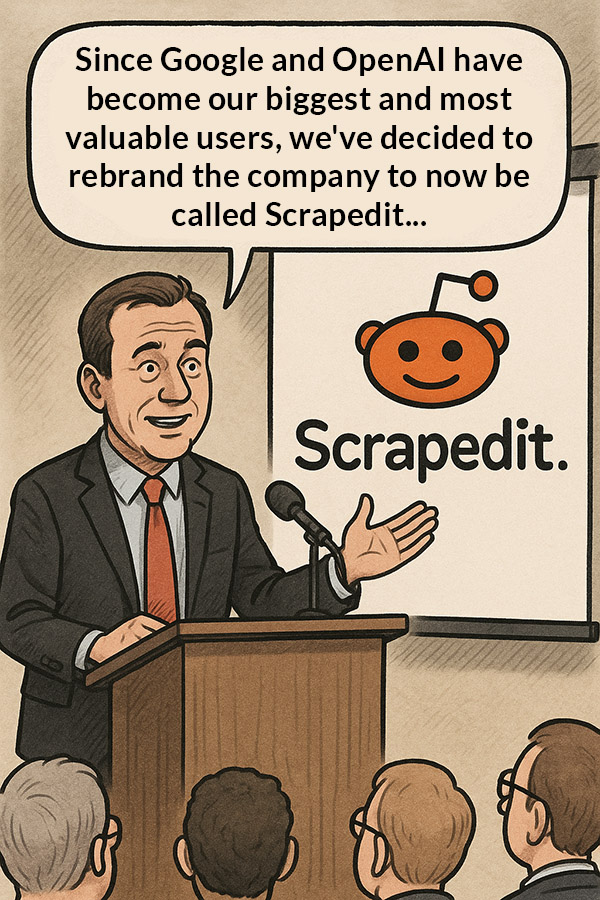
PS: Did you hear the rebrand announcement from Reddit?