
Hi Shopifreaks
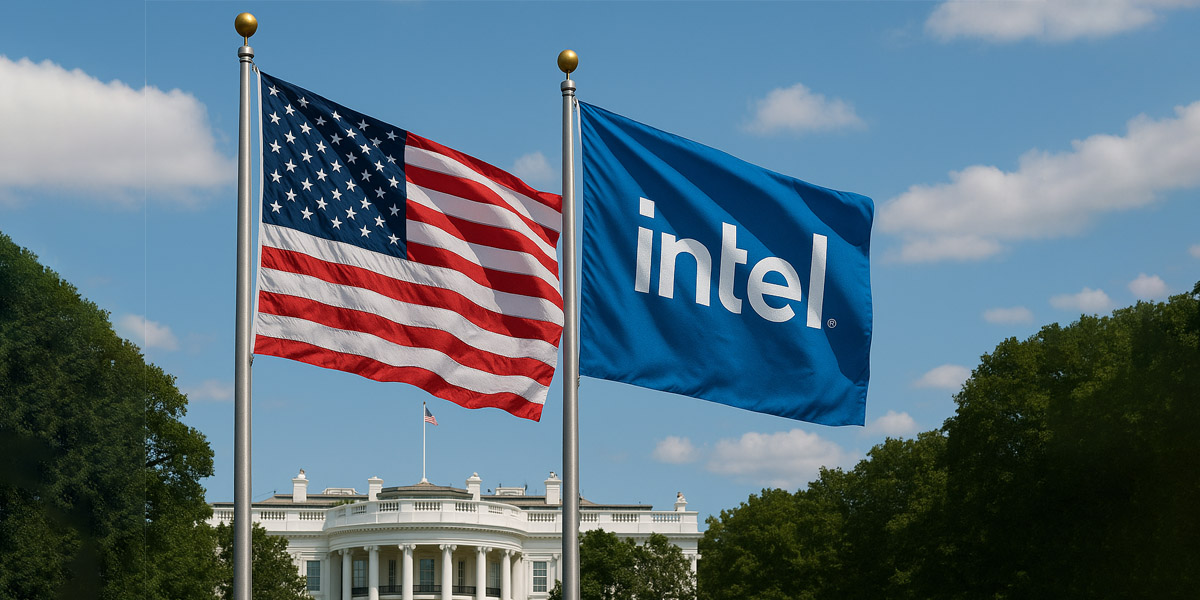
This is one of my biggest and most important editions of the year, covering everything from the U.S. acquiring a stake in Intel to leaked documents from The Trade Desk. I’ve also got a conspiracy theory for you that you will either find enlightening or insane. (Be sure to let me know which one.)
Before we get started though, I have two question:
- Will you be attending Alibaba’s CoCreate 2025 in Las Vegas this September? If so, hit reply and let me know and let’s be sure to meet up. This is the first e-commerce conference I’ve been able to attend since launching Shopifreaks in 2021, and I’m excited to finally put some faces to names and meet folks I’ve been able to connect with through the newsletter over the past 4 years.
- Are you getting value from Shopifreaks? If so, I kindly ask that you recommend the newsletter and share the sign-up page www.shopifreaks.com on your LinkedIn, X, or Slack channels. Your referrals have been my number one growth driver for this newsletter, and I greatly appreciate your help spreading the word. If you’ve got kind words to say, you can also drop me a review.
And now onto your regularly scheduled programming.
In this week’s edition I cover:
- Consumer AI usage in e-commerce
- The government’s Intel acquisition
- Google is helping to power the entire AI market
- TikTok moves to GMV Max
- Meta launches new AI ad options
- Best Buy launches its marketplace
- Trump plans to extend the TikTok ban deadline again
- Grok chats surface in Google search
- Amazon blocks more AI crawlers
- Omnisend sunsets its Product Reviews
All this and more in this week’s 240th Edition of Shopifreaks. Thanks for subscribing and sharing!
Stat of the Week
More than 50% of adults across the US, UK, Canada, and Australia use Gen AI for e-commerce tasks at least once a month. 65% opt for ChatGPT over Google for tasks like product research, personalized recommendations, and finding deals, according to an Omnisend study.

1. The U.S. government “bought” a 9.9% stake in Intel
The Trump administration announced Friday that it has taken a 10% stake in Intel, paid for through $5.7B in grants previously awarded to Intel under the 2022 U.S. CHIPS and Science Act, plus $3.2B awarded to the company as part of a program called Secure Enclave, a formerly classified initiative funded by Congress in 2024 that’s designed to support the trusted manufacturing of advanced microelectronics for U.S. government and defense use.
President Trump praised the company’s CEO Lip-Bu Tan on Truth Social, just two weeks after he called on Tan to resign over alleged China ties:
“It is my Great Honor to report that the United States of America now fully owns and controls 10% of INTEL, a Great American Company that has an even more incredible future. I negotiated this Deal with Lip-Bu Tan, the Highly Respected Chief Executive Officer of the Company. The United States paid nothing for these Shares, and the Shares are now valued at approximately $11 Billion Dollars. This is a great Deal for America and, also, a great Deal for INTEL. Building leading edge Semiconductors and Chips, which is what INTEL does, is fundamental to the future of our Nation.”
I was hesitant to cover this story in too much depth, given how this is an e-commerce focused publication and chip manufacturing is only adjacent to the primary topics I typically cover (chips –> AI –> e-commerce). However I had questions that I figured you might have too, so let’s try and answer some of them.
Is this legal?
Yes. The U.S. government can legally own stock in private companies through appropriated programs or emergency measures, though it’s uncommon. The government took similar moves with banks and automakers during the 2008 financial crisis. (Does that mean we’re in a crisis?)
Do other democracies do this?
Yes. Many democracies, including France, Germany, and Japan, hold partial stakes in private corporations, often in strategic industries like energy, transportation, or technology, to protect national interests or support economic stability. For example, France owns about 15% of Renault to maintain influence over its automotive industry and Germany owns about 15% of Deutsche Telekom, the country’s largest telecom provider.
Additionally, many governments run sovereign wealth or public investment funds, like Norway’s Government Pension Fund Global, Singapore’s Temasek Holdings, or Abu Dhabi’s Mubadala, which actively invest in private and public companies worldwide. The difference being that the direct investment in one company, Intel, is aimed at securing national security and domestic chip manufacturing rather than broad financial gain.
Does the U.S. government own stake in any other private companies?
Prior to this deal with Intel, no, the U.S. government did not hold equity stakes in other major private companies. Past stakes (like GM and AIG in 2008) were temporary and later sold off.
How does this fare for Nvidia and other chipmakers in terms of a competitive edge?
It could tilt the playing field. U.S. backing gives Intel financial stability and guaranteed government contracts, while rivals like Nvidia, AMD, and TSMC may see it as unfair support that distorts competition.
On the opposite side of the coin, Intel said that the U.S. government’s stake in the company could actually pose some risks to its business, potentially harming international sales and limiting its ability to secure future government grants. Sales outside the U.S. accounted for 76% of Intel’s revenue last year, with 29% of total revenue coming from China.
Trump may have taken 10% of Intel, but competitors aren’t immune to the Trump Tax completely. Earlier this month, Trump persuaded Nvidia and AMD to pay the U.S. government 15% of their revenues from some sales to China in return for securing export licenses there.
Did Intel want this or were they strongarmed by Trump?
Tan said, “I don’t need the grant, but I really look forward to having the U.S. government be my shareholder.” Then again, what else is the CEO supposed to say?
Does the government control Intel now?
No. This investment is structured as passive ownership, meaning the government holds non‑voting shares and agrees to vote with Intel’s board on shareholder matters.
What do Democrats think of the move?
Senator Bernie Sanders expressed support, stating that if chipmakers profit from generous federal grants, “taxpayers of America have a right to a reasonable return on that investment”.
Senator Mark Warner said, “U.S. leadership is critical for both our economy and national security. Taking an equity stake in Intel may or may not be the right approach, but one thing is clear: allowing cutting-edge chips to flow to China without restraint will erode the value of any investment we make her at home.”
Other democrats aren’t aren’t as pleased with the move, calling it “socialism” or “Marxism.” For example, former Obama undersecretary of state Rick Stengel said, “Trump’s strong-arming Intel for gov’t equity is something Mao and Stalin would be proud of.”
What’s next? Could this set a precedent?
Potentially, yes. The Intel stake could set a precedent for the U.S. to take ownership positions in other strategic tech or defense companies. President Trump actually said today that he’s determined to do similar deals “all day long” with other companies.
What are your thoughts? Hit reply and let me know or join the conversation on LinkedIn.
2. Competing AI companies increasingly rely on Google’s infrastructure
Does Google offer the best AI tools on the market? Maybe it doesn’t have to in order to earn a major piece of the business. More and more AI competitors are beginning to rely on Google for its infrastructure, meaning Google doesn’t necessarily need you to be using its Gemini products for it to benefit from the AI gold rush, which is not a bad position to be in today’s market. Here’s what’s new:
1) Meta signed a six-year $10B cloud computing deal with Google to use Google Cloud servers, storage, networking, and other services, possibly a temporary move to fill a gap in processing power as it spends hundreds of billions of dollars to build several of its own massive AI data centers.
2) Google inked a similar deal with OpenAI back in May.
3) But that’s not all OpenAI has been relying on Google for. The Information reports that OpenAI has been using scraped Google search results from SerpApi to help power ChatGPT responses, particularly for current events, despite Google having denied its direct request for access. OpenAI supplements the scraped data with its own web crawler and Microsoft’s Bing API, but executives admit that replicating Google’s search accuracy currently remains out of reach for the company.
4) Apple is in early talks to use Google’s Gemini AI to revamp its Siri voice assistant, according to Bloomberg sources, who say that Apple recently approached Google to develop custom AI models to power a redesigned Siri next year. Apple, which is admittedly behind in the AI race, is still debating whether to stick with in-house Siri models (which is becoming more difficult as its best AI engineers keep getting poached by competitors) or switch to an external partner, which it hasn’t yet chosen. They also discussed potential partnerships with Anthropic and OpenAI earlier this year.
As the AI race continues, Google is positioning itself well — not just as a runner, but as the track itself that the rest are running on.
3. TikTok’s move to GMV Max is getting backlash from advertisers
Starting September 1, TikTok will require all brands advertising products on TikTok Shop to use its AI-powered GMV Max tool, which completely automates campaign management to maximize sales, removing granular controls that advertisers previously had such as the ability to manually select audiences by age, gender, and location, control bidding strategies like CPC of CPA, and choose placements, such as on TikTok’s feed versus partner apps.
Now merchants can only set budgets and ROI targets, and the algorithm takes over from there to determine ad placements, creative boosting, and spending.
The move was officially announced a few months ago, and beginning in July, GMV Max became the default and only supported campaign type for new TikTok Shop ads using the Sales objective. Now the mandate is no longer limited to Sales objectives, and TikTok is preparing to make GMV Max the only way to run TikTok Shop ads at all.
Many smaller sellers have embraced the tool, appreciating features like ROI Protection that issue credits if returns fall below 90% of goals, but larger advertisers are frustrated by the forced shift and lack of visibility into campaign data.
Ad buyers say GMV Max limits insights into geography, audiences, and influencer performance, making it harder to integrate TikTok results into broader marketing strategies. Agencies also argue that TikTok credits all Shop purchases during a GMV Max campaign to the tool, whether or not an ad was viewed, creating doubt around measurement accuracy.
Despite complaints, TikTok has positioned GMV Max as a time-saving solution for smaller sellers who rely heavily on TikTok Shop sales, with early adopters reporting strong results. Bigger advertisers who miss having more granular control over their campaigns will simply have to deal with it.
Last week I reported that Etsy was beta testing new ad tools for sellers that offer the option to use different strategies for advertisers spending at least $25/day. I criticized the company for its “spend more money and trust us, bro” ad management tools, which TikTok is now leaning towards as well. The difference being that Etsy never offered more granular control over ad spend, whereas TikTok is taking it away.
While ad platforms can argue that they’re making it easier to advertise and that their AI can handle optimization better than humans, they are also simultaneously removing insights into how campaigns are actually performing, which isn’t a great move in terms of transparency for the industry at large.
4. Meta adds new AI-powered ad options for the holiday season
Meta rolled out a series of new AI-driven advertising and shopping features ahead of the holiday season, focused on helping brands merchandise through Reels and creators, diversify ad creative, and connect online and in-store sales to improve campaign performance.
Here’s what’s new:
-
Creator Filters Expansion – New language and region filters in Instagram’s creator marketplace to make it easier for businesses to find relevant creators worldwide.
-
Creator Catalog Ads – Brands can now combine partnership ads with Advantage+ catalog ads, including an intro card and automatic conversion of single media ads into catalog ads.
-
Creator Testimonials – Advertisers can add creator endorsements as featured comments within partnership ads on Instagram.
-
Reel Product Discovery – Meta is testing “show products” optimization that automatically turns single media Reels ads into shoppable catalog formats.
-
Swipe-Up Info Cards – Facebook Reels ads are adding more swipe-up details like advertiser page information to encourage reconsideration and conversions.
-
Video Catalog Ads – Advantage+ catalog ads in carousel format can now include product videos on Instagram Reels to help drive higher conversion rates.
-
Flexible Media Placements – Ads can be dynamically delivered into new placements if AI models predict stronger performance, with early testers seeing a 23% conversion lift.
-
Creative Insights – New reporting tools in Ads Manager will show which creatives work, which don’t, and offer recommendations to avoid ad fatigue and duplication.
-
Related Media Suggestions – AI recommends existing media to include in new ad sets, helping to boost the amount of ad creatives.
-
Omnichannel Ads Expansion – Now available globally, these optimize for purchases across online, in-store, and app channels while highlighting maps and discounts.
-
Global Shops Ads – Shops ads expand into new international markets (Mexico, Canada, Germany, France, Spain, Italy, Japan) and now support subscription businesses.
-
Email Signup Offers – More businesses can highlight promotions in exchange for email addresses in Facebook ads, with tests showing up to 4.6x more sign-ups.
Honestly, there are some impressive additions! Meta says it hopes these new features will help marketers “sleigh” sales with AI this holiday season.
Which ones look the most promising for you? Hit reply and let me know.
In other Meta AI news… The company is bringing its AI translation tool to more users on Facebook and Instagram, which automatically dubs your Reels into another language and uses AI to make its dub match up with the sound of your voice and movement of your mouth. That’s pretty wild!
5. Best Buy officially launches its third-party marketplace in the U.S. (again)
Best Buy launched its long anticipated third-party marketplace in the U.S. as of Aug 19, 2025, more than doubling the number of products available through its website and introducing new brands and categories to its assortment. I first revealed the company’s plans back in January 2025, but now it’s actually done it.
As you might remember, Best Buy previously attempted to run a third-party marketplace in the U.S. from 2011 to 2016, but eventually shut it down because it only brought in 1% of revenue and created confusion among buyers who thought they could return products sold by third-party sellers to Best Buy stores. (Which in hindsight, customers should have been allowed to return items to Best Buy stores, and now they can with marketplace 2.0.)
Best Buy CEO Corie Barry told investors on an earnings call earlier this year not to expect a huge marketplace that has everything. Instead, this will be a “curated, tailored marketplace to the customer that is coming to shop with us and those deeper assortments that you would hope you could provide” — and that’s what they’ve so far delivered.
At launch, Best Buy’s marketplace has about 500 sellers, which the company says it vetted down to the ones who can provide a high-quality customer experience and match its return policy. It soon plans to introduce licensed sports merchandise to its product line up in partnership with Fanatics, including accessories like phone cases and mini football helmets, with more partnerships on the horizon.
The new marketplace is powered by Mirakl, a software company that also powers third-party marketplaces for companies like Macy’s, Nordstrom, and Kroger, as well as Best Buy Canada, which has been running a third-party marketplace with Mirakl since 2016.
While they never should have gave up their third-party marketplace efforts a decade ago (imagine where they’d be if they hadn’t), I’m glad that Best Buy is re-throwing their hat into the marketplace ring. I believe that the more marketplaces the better for sellers, as it creates a more competitive landscape that can ultimately drive down seller fees and advertising costs amongst competitors.
6. President Trump extends TikTok ban deadline and joins TikTok
President Trump called national security and privacy concerns related to TikTok and ByteDance “highly overrated” on Friday and said that he’ll keep extending the deadline for the ban until there’s a buyer. Trump told reporters:
“We’re gonna watch the security concerns. We have buyers, American-buyers. Until the complexity of things work out, we just extend a little bit longer.”
President Trump has issued three successive extensions:
-
First extension: On January 20, 2025 (his first day back in office), Trump signed an executive order delaying enforcement of the TikTok ban by 75 days, pushing the deadline to April 5, 2025.
-
Second extension: On April 4, 2025, he signed another executive order delaying enforcement by another 75 days, moving the deadline to June 19, 2025.
-
Third extension: On June 19, 2025, Trump granted a third delay, this time for 90 days, extending the deadline further to September 17, 2025.
- Fourth, fifth, sixth, seventh, eighth extensions: Now, based on his recent comments, it seems that the deadline will be extended indefinitely until the Trump Administration, ByteDance, and Beijing agree on terms of a sale — which I’ve predicted since the beginning is never going to happen. Furthermore ByteDance has never publicly confirmed that they’re even entertaining a sale, and in fact have said the opposite — that they’re not going to sell — on multiple occasions.
To make matters even worse (or better, depending on how you view things)… The White House joined TikTok on Tuesday and began sharing video clips of President Trump and his staff, portraying them as strong and effective American leaders. For example, one clip shows Trump declining phone calls from congressmen and threatening lawsuits during a press conference and another showcases Press Secretary Karoline Levitt ripping a NYT reporter after he asked a question at a press conference.
All this from a President who originally initiated the calls to ban TikTok nationally in 2020 during his first term, citing the danger of the Chinese Communist Party potentially accessing American user data. Accessing White House data is apparently fine though.
Meanwhile, China is laughing at America. The CCP published an editorial in the state-owned media outlet China Daily, first applauding the White House for creating an official TikTok account, and then gloating at the inconsistency between the White House’s actions and Congress’s ban of the app for security reasons. It wrote:
“TikTok’s appeal and effectiveness as a communication channel has not been lost on even the White House. That the White House launched its own account on the app less than one month before the third extended deadline expires only serves to expose the hypocrisy of the U.S. side’s alleged ‘security’ charges against TikTok.”
Look, I don’t support the TikTok ban in general. I support a pipe dream of secure and privacy-focused mobile operating systems, apps, and Internet infrastructure that doesn’t allow for ANY company (Chinese or American alike) to access American data. Banning TikTok is like putting a Band-aid on a much bigger issue.
I also support stable economic and advertising environments for the tens of thousands of small business owners who rely on TikTok to fuel their business growth in the U.S. — without them having to wait 75 or 90 days at a time to see if TikTok will still be a viable platform for them to market their businesses on this holiday season and ongoing. And that, my friends, is what we don’t currently have.
In other TikTok news… the company denies rumors that the app has been unbanned in India, after brief website access sparked media reports of a possible comeback in the country, more than five years after it was banned. A TikTok representative told TechCrunch, “We have not restored access to TikTok in India and continue to comply with the Government of India’s directive.”
7. Grok chats exposed in Google search results
Another one bites the dust. xAI is taking heat for publicly publishing the chat transcripts of hundreds of thousands of conversations between its chatbot Grok and its users, and making them visible and indexable by Google, without the user being explicitly aware.
When a Grok user clicks the “share” button on one of their chats, a unique URL is created that allows them to share the conversation via e-mail, text, or other means. However what most didn’t realize is that the URL is also made available to search engines, which could then index and surface the chats in their results pages.
A search for Grok chats shows that Google indexed more than 370,000 user conversations about topics ranging from simple business tasks like writing blogs to attempting to hack into a crypto wallet. Some chats even revealed the name, personal details, and even passwords shared with Grok, as well as image files, spreadsheets, and text documents uploaded by users.
Does this sound familiar?
If so, it’s because I’ve covered almost identical news in recent editions involving OpenAI and Meta AI chats. Both companies fell under scrutiny for allowing literally the exact same thing.
And what’s even more ridiculous is that Grok posted (and Elon Musk reposted) back in July that Grok didn’t have this type of public sharing feature that made chats visible to Google — even though it did!
Ready for a conspiracy theory?
Google must be doing this on purpose. After making international news earlier this year for indexing private conversations from Meta AI and then ChatGPT a month later, they continued to let it happen with Grok? Who’s next — Anthropic and Mistral?
Either Google is stupid (which it’s not), or it’s intentionally allowing this to happen to bring negative publicity to their AI competitors and position Gemini as a safer alternative.
What’s frustrating is that I’ve not seen anyone point the finger at Google in any of the major coverage of these stories.
For example, Fast Company wrote, “Google indexes any content available on the open web and site owners are able to remove pages from search results,” — speaking about Google as if it’s some mindless black hole that sucks up and spits out all Internet content indiscriminately unless probed by the website owner not to do so. However that’s not true!
Google exerts an incredible amount of control over which websites it indexes and subsequently populates in its search results. They are not blameless in regards to surfacing users’ personal AI conversations with ChatGPT, Meta AI, and now Grok. Even if it was an accident the first time, no-one at Google thought after the Meta AI debacle — “maybe we should see if this is happening with other AI chatbots too?”
Still don’t believe my theory that Google is doing this on purpose? Try this one on for size…
The first time this happened wasn’t actually with Meta AI earlier this year. It was with Google’s own Bard AI (which was the predecessor to Gemini) back in 2023! Google not only published and index the chat conversations, but it went as far as surfacing the answers as snippets in its search results. So what is this now — Google making it just as bad for everyone else?
Do you think my theory has merit or am I grasping at straws on this one? Hit reply and let me know or join the conversation on LinkedIn.
8. Other e-commerce news of interest
Amazon updated its robots.txt file to block six additional AI-related crawlers from companies including Meta, Google, Huawei, and Mistral, expanding earlier restrictions on bots from Anthropic and Perplexity, as spotted by independent analyst Juozas Kaziukėnas. The move is part of Amazon’s ongoing effort to prevent AI firms from using its product and pricing data to train models or enable shopping tools that could bypass its storefront and threaten its $56B ad business. While robots.txt rules are voluntary and much of Amazon’s data has already been scraped, the company is taking a harder line than rivals like Walmart and eBay, as it develops its own shopping AI tools like Rufus.
Omnisend announced that it will be discontinuing its Product Reviews feature for Shopify merchants as of Sep 19, 2025, which it only launched in April 2024. The company is instead partnering with and recommending that merchants switch to Yotpo, which recently announced that it would be sunsetting its e-mail and SMS marketing platform at the end of the year. While some SaaS companies in the Shopify ecosystem are still pursuing an all-inclusive model, offering features that have traditionally required multiple apps under one roof, others are stepping away from diversifying their feature portfolio to double-down on their core services. The recent moves demonstrate the risk for merchants of putting too many eggs in one app developer’s basket.
UPS is offering voluntary buyouts to select U.S. operations managers as it streamlines its network and reduces volume tied to Amazon. Eligible employees can apply between Aug. 26 and Sept. 9, with separations occurring through July 2026 Packages include cash based on tenure, healthcare, and outplacement services. The move follows lower-than-expected attrition from 74 building closures, and comes alongside an existing buyout program for full-time drivers offering $1,800 per year of service with a $10,000 minimum payout.
At eBay Open 2025, sellers said the clear message was that eBay is “all in on AI,” with new tools like AI-powered messaging responses, image-based “magical” listing, and description generators. While many of these features require seller opt-in, eBay is also increasingly inserting AI between buyers and sellers without disclosure, including AI-generated FAQs in search results, description summaries on Facebook Marketplace, and item detail highlights on listing pages. Sellers raised concerns about accuracy, potential “Item Not As Described” claims, and IP risks after eBay revealed it may use AI to strip watermarks from images before sending them to Google.
Target will soon stop fulfilling online orders from many of its stores so that they can refocus teams on improving their drive-up and in-store experiences. Michael Fiddelke, the company’s current COO and incoming CEO, told investors that Target stopped some stores in Chicago from fulfilling e-commerce orders as part of a test, diverting those orders to bigger locations, and plans to do the same in 30-40 more markets by the end of the year. The move aims to address concerns that online fulfillment created too many out-of-stock scenarios and hurt customer service. I’m sure the racism related boycotts against the company and its retreat from DEI didn’t help either.
Hertz struck a deal with Amazon to begin selling pre-owned vehicles on Amazon Autos, starting with customers within 75 miles of Dallas, Houston, Los Angeles, and Seattle, before expanding to 45 locations nationwide. Shoppers can browse, e-sign paperwork, and complete purchases online, then pick up vehicles at Hertz locations. The deal boosts Hertz’s retail car sales business, which sells hundreds of thousands of vehicles annually, while expanding Amazon’s growing autos platform, which recently added used cars.
Elon Musk tried to get Mark Zuckerberg on board of his unsolicited $97.4B offer to purchase the non-profit that controls OpenAI earlier this year, according to court filings made on Thursday, but neither Zuckerberg nor Meta signed the letter of intent or participated in the bid. As part of its filing, OpenAI urged the judge to order Meta to share any documents and communications related to Musk’s bid in order to “shed light on the motivations for the bid.” Meta asked the court to deny the subpoena and instead require OpenAI to seek documents directly from Musk.
Meta announced internally that it is splitting its AI division known as Meta Superintelligence Labs into four groups: one to focus on AI research, a second one exclusively for exploring superintelligence, a third one on products, and a fourth on infrastructure like data centers and other AI hardware. How about a fifth for the metaverse? Remember that? LOL. New York Times sources said that the reorganization is likely to be final one for some time and is aimed at better organizing Meta so it can get to its goal of superintelligence and develop AI products more quickly to compete with others.
TikTok is rolling out a new feature called Campus Verification to more than 6,000 universities that is designed to help college students connect with their classmates. How do you like them apples, Meta? The feature invites students to add their graduation year and enter their school e-mail address and then populates a list of other verified student users from their same class for them to follow and connect with. Meta launched a similar concept in 2020 called Facebook Campus, but shut the program down a couple of years later due to quitting everything too soon.
Meta plans to unveil new smart glasses, codenamed Hypernova, at its Connect conference in September, marking its first consumer-ready glasses with a display. The $800 device will feature a small screen in the right lens for displaying simple visual content like messages and will pair with a wristband that interprets neural signals to control the glasses through hand gestures. Alongside Hypernova, Meta will also release a third-generation of its voice-only smart glasses, as it seeks to expand its wearable ecosystem and gather developer support for AI-powered applications.
EU officials are exploring the possibility of issuing its upcoming digital euro on public blockchains like Ethereum or Solana, versus on a closed system as previously expected. Advocates say a public chain could boost adoption and cross-border use of the euro, while critics raise concerns over transparency, since public blockchains record transactions openly. The debate follows the U.S. passage of the Genius Act, which eased the launch of dollar-pegged stablecoins and raised concerns that such tokens could undermine Europe’s financial stability and global influence.
Last week I shared that eBay will begin automatically leaving positive feedback for sellers if they use a tracked service, deliver on time, and no issues are reported. This week Liz Morton of Value Added Resource updated the story to report the counter side to that news, which is that it will also be harder to get certain types of feedback removed. eBay announced that moving forward, if a buyer’s comment includes both removable and non-removable content, it’ll give the customer the option to edit the removable part so their feedback is published. Additionally, sellers will no longer see automatic removal of negative or neutral feedback in cases involving free returns or partial refund deductions for used or damaged items, potentially leaving sellers vulnerable to abusive buyers.
In hires this week… Target named Michael Fiddelke, its current COO, as its next CEO, who will succeed Brian Cornell on Feb 1st. Cornell, who has been at the role since 2014, will transition to executive chair on Target’s board of directors. Wow, quite the leadership shakeup. Also Meta hired another senior Apple AI engineer named Frank Chu, who will join the company’s Superintelligence Labs, despite the division being under a hiring freeze, marking the sixth Apple AI researcher to defect to the company in the past seven weeks. Lastly OpenAI poached Sheeladitya Mohanty from Meta, where he led Meta AI and Facebook marketing in APAC, and appointed him their new Marketing Lead for India, as part of the company’s attempt to grow engagement in the country.
In layoffs this week… TikTok is planning to layoff hundreds of content moderators and security staff in London and Southeast Asia, as it begins to automate more of that work with AI. Meanwhile, speaking of AI, Cisco is laying off 221 workers, primarily software engineers, despite a revenue surge and the CEO’s claim that AI wouldn’t cost jobs. Filings for the layoffs were made on the same day that Cisco announced Q4 earnings that showed revenue was up 8% YoY to $14.7B.
X agreed to settle thousands of cases brought by former employees who sued the company for severance after Elon Musk dismissed them during his 2022 takeover. After acquiring Twitter, Musk reduced its workforce to fewer than 2,000 employees from around 7,500, and a class-action suit filed in 2023 claimed that he owed the fired workers about $500M in severance payments. Musk’s legal battle with former senior Twitter executives over $128M in severance payments is continuing however.
Samujjal Purkayastha, a former Meta product manager alleges the company bypassed Apple’s App Tracking Transparency rules by using “deterministic matching” to track users without consent and inflated Shops Ads performance by counting gross sales (which included shipping and taxes) instead of net sales like industry peers, overstating results by up to 19%. The whistleblower, who says he was fired for raising concerns, also claims Meta secretly subsidized ads with a $160M budget authorized by Mark Zuckerberg when testing ways to bypass Apple’s rules. The case adds to Meta’s history of bullshitting ad metrics and raises questions about Apple’s ability to enforce its privacy rules.
Bonanza is facing a proposed class action lawsuit alleging that the marketplace allowed third parties to collect personal information from its users through the use of pixel trackers operated by Google, Meta, Microsoft, Klaviyo, Pinterest, and Criteo, in violation of the California Invasion of Privacy Act. The lawsuit claims that users didn’t consent to the installation or use of the trackers and that Bonanza did not comply with their own posted privacy policy regarding this kind of tracking. It’s important to note that the suit is being brought by the law firms Nathan & Associates and Ross Cornell, which filed an almost identical suit against Etsy last month. So while Bonanza have very well copy/pasted their privacy policy from a free privacy policy generation website and have no idea what any of it means, the suit itself could also be bit of a digital ambulance chase.
Andrew & William Tate filed lawsuits against Meta and TikTok for “emotional distress, business interference, and misappropriation” for being kicked off of the platforms in 2022 where they both “commanded an audience of tens of millions, generated significant revenue through lawful online enterprises, and were among the most visible public figures on TikTok’s platform.” The brothers, who face rape and sex-trafficking charges in Romania and the U.K and criminal investigations in the U.S., are seeking $50M for themselves and for “the people everywhere who have been lied about, banned, cancelled.” Honestly, fuck the Tate brothers, but I do enjoy and support when Big Tech gets legally challenged, especially over their arbitrary enforcement of ambiguous deplatforming rules.
🏆 This week’s most ridiculous story… A freelance writer named Jolissa Skow discovered that someone was pretending to be her in order to write for a large publication for the past several years! The Fake Jolissa had been using her name, bio, photos, writing samples, and even her home address since 2023 and was a regular participant in the company’s Slack. The whole time, the entire company was engaging with Fake Jolissa, who never got on camera during meetings, citing a fabricated speech impediment disability that would happen when on camera. Eventually the Real Jolissa found out and contacted the company, which took immediate action — but damn. Background check much?
9. Seed rounds, IPOs, & acquisitions
Klaviyo acquired Gatsby, a social automation platform that helps brands convert interactions like DMs, mentions, tags, and follows into owned customer data like email & SMS subscribers, for an undisclosed amount. The acquisition fits with Klaviyo’s omnichannel ambitions, expanding its ability to unify customer data so that brands can connect touchpoints and take real-time action within a single platform. Gatsby features will begin rolling out to Klaviyo customers in the coming months. Anyone else predict another Klaviyo price hike on the horizon?
Blue Yonder, a supply chain management software company that provides AI-driven solutions for planning, fulfillment, and logistics operations, acquired Optoro, a reverse logistics technology company that helps retailers and brands manage, resell, and recycle returned and excess inventory, for an undisclosed amount. The deal builds on Blue Yonder’s 2023 acquisition of Doddle, which had stronger European and Asian presence but limited U.S. reach, expanding its reverse logistics capabilities in North America. The acquisition also aligns with Blue Yonder’s strategy to integrate AI and data-driven insights into supply chain and returns operations for its global retail clients.
Pattern, a Utah-based e-commerce accelerator that helps brands expand across marketplaces like Amazon, Walmart, and Mercado Libre, filed for an IPO to raise around $400M under the ticker “PTRN” on Nasdaq. The company reported 35% revenue increase to $1.14B and net income of $47M for the first half of 2025, up from $841M and $35M during the same period last year. Goldman Sachs and J.P. Morgan are leading the IPO, which will allow both the company and existing shareholders to sell.
Character.AI, the chatbot startup whose founders left to join Google in a $2.7B deal last year, is exploring options that include a potential sale or raising new funding at a valuation above $1B. The company, now led by former Meta and Brex executive Karandeep Anand, has about 20M monthly users and is projecting $50M in annualized revenue by year-end, up from $30M last month. Despite growth, it faces heavy operating costs for running open-source models, legal challenges including lawsuits and a Texas investigation, and the loss of its original founders and technical staff.
Priority Technology Holdings, a U.S. fintech that provides integrated payments and BaaS for SMBs and enterprise clients, acquired Boom Commerce, a payments technology company that provides merchant services and payment processing solutions, for an undisclosed amount. The deal marks Priority’s third major acquisition in the past two years and adds to its ability to attract enterprise customers and sell value-added services. Alongside the acquisition, Priority announced it secured a $50M loan that it will use to buy receivables and fund its expansion into new financing solutions.
Zurich Insurance Group, a Swiss insurer offering property, casualty, and life insurance products, acquired BOXX, a cyber insurance company that helps businesses and consumers protect and insure against cyber threats, for an undisclosed amount. BOXX, which serves nearly one million customers across five continents, will be integrated into Zurich Global Ventures but continue operating under its own brand. The acquisition builds on a partnership since 2021 and enhances Zurich’s digital-first strategy to deliver prevention, protection, and recovery solutions worldwide.
Keychain, an AI-powered manufacturing platform that helps consumer packaged goods companies streamline production, optimize supply chains, and accelerate product development, raised $30M in a Series B round led by Wellington Management and BoxGroup, bringing its total amount raised to $68M just 18 months since launch. Keychain’s AI-powered manufacturing platform connects over 30,000 manufacturers with more than 20,000 brands and retailers through strategic data matching and automated workflows and now facilitates over $1B in manufacturing projects monthly, with plans to expand into new verticals like beauty and personal care.
Klarna entered into an agreement with Nelnet, a student loan servicing company, to purchase up to $26B of its US-based BNPL loans on an ongoing basis, allowing the Klarna to free up capital, reduce balance sheet risk, and focus on U.S. growth ahead of its IPO. In exchange, Nelnet receives a steady pipeline of BNPL receivables to diversity its portfolio and generate returns, with Klarna retaining origination and customer servicing, while Nelnet takes on the credit risk.
Bluefish, a New York-based AI marketing platform that helps Fortune 500 brands optimize and monitor how they appear in AI-driven search, raised $20M in a Series A round led by NEA, bringing its total amount raised to $24M within a year of its launch. Alongside the funding round, the company introduced its new Custom AI Audiences feature, which allows brands to manage their AI performance with greater precision. In the past six months, Bluefish has grown revenue tenfold and counts Adidas, Tishman, Speyer, and Omnicom as enterprise clients.
Lowe’s acquired Foundation Building Materials, a a construction materials distributor specializing in wallboard, suspended ceilings, metal framing, and complementary products for commercial and residential projects, for $8.8B. The deal follows its acquisition of Artisan Design for $1.33B in April, which was followed by Home Depot’s acquisition of specialty building products distributor GMS in June for $4.3B, and accelerates Lowe’s expansion into serving the professional builder market.
Canva, an Australian online drag-and-drop visual design platform, allowed its employees to sell shares to new and existing investors including Fidelity and JPMorgan, raising its valuation to $42B ahead of its planned IPO, up 30% from $32B in 2024, rivaling Figma’s $34B valuation after July’s listing. Canva reported over $3.3B in annualized sales and over 240M active monthly users ahead of its IPO.
A1 Media Group, a Tokyo-based media and advertising technology firm offering marketing consultancy, media representation, and digital ad planning, raised $4.7M in a Series B round from eBay Ventures. The deal aims to promote innovation in cross-border e-commerce in the Asia-Pacific region and strengthen eBay’s marketing infrastructure in the Japanese market. The funds will be used to grow an ecosystem among SMBs in the region who do not have marketing infrastructure.
Guess, a Los Angeles-based fashion brand known for its denim, apparel, and accessories, agreed to be taken private in a $1.4B deal led by co-founders Maurice and Paul Marciano, CEO Carlos Alberini, and Authentic Brands, which will acquire 51% of Guess’ intellectual property. Shareholders will receive $16.75 per share in cash, a 26% premium to the prior close, after shares had fallen 38% over the past year. The move gives Guess greater flexibility to pursue long-term strategy without public scrutiny and follows other recent apparel M&A deals, including Skechers, Foot Locker, and Dockers.
Shein is considering moving its base back to China to help convince Beijing authorities to sign off on its plans to go public in Kong Kong, according to Bloomberg sources. The company, which is currently headquartered in Singapore, consulted lawyers about setting up a parent company in mainland China, hoping to finally seek IPO approval after several failed attempts in New York and London. The move would allow Chinese authorities to tax Shein’s income and exert greater oversight over its data, both key conditions for an overseas listing.
Alibaba received initial approval from the Hong Kong Stock Exchange to spin off its autonomous driving unit, Banma Network Technology, through an IPO, reducing its stake in the company from 44.72% to 30%. The deal aims to highlight Banma’s value as an independent smart vehicle systems provider, boost its visibility, attract new partners, and expand access to capital, and would mark Alibaba’s first major spin-off since its canceled Cainiao listing in 2024.
Thanks for being a Shopifreak!
If you found this newsletter valuable, please leave a review on Google and share the newsletter with your friends and colleagues to help us grow.
See you next Monday,
PAUL
Paul E. Drecksler
🌐 Shopifreaks.com
🧑💼 Add me on LinkedIn
📧 [email protected]
📱 +1-828-273-3031
⭐ Leave A Review
PS: This week’s comic relief is brought to you by Datch Haven at this ecommerce life.
