
Hi Shopifreaks
Holy crap I’ve got a big issue for you today! There was so much e-commerce news this week that half of my feature stories are curations of multiple updates and announcements about a particular company or event. This is truly a jam-packed edition!
Honestly, there’s so much e-commerce news lately, I don’t know how you possibly keep up with it all. Oh wait, I do… Shopifreaks! Tell your friends…
In this week’s edition I cover:
- OpenAI testing product feed ads
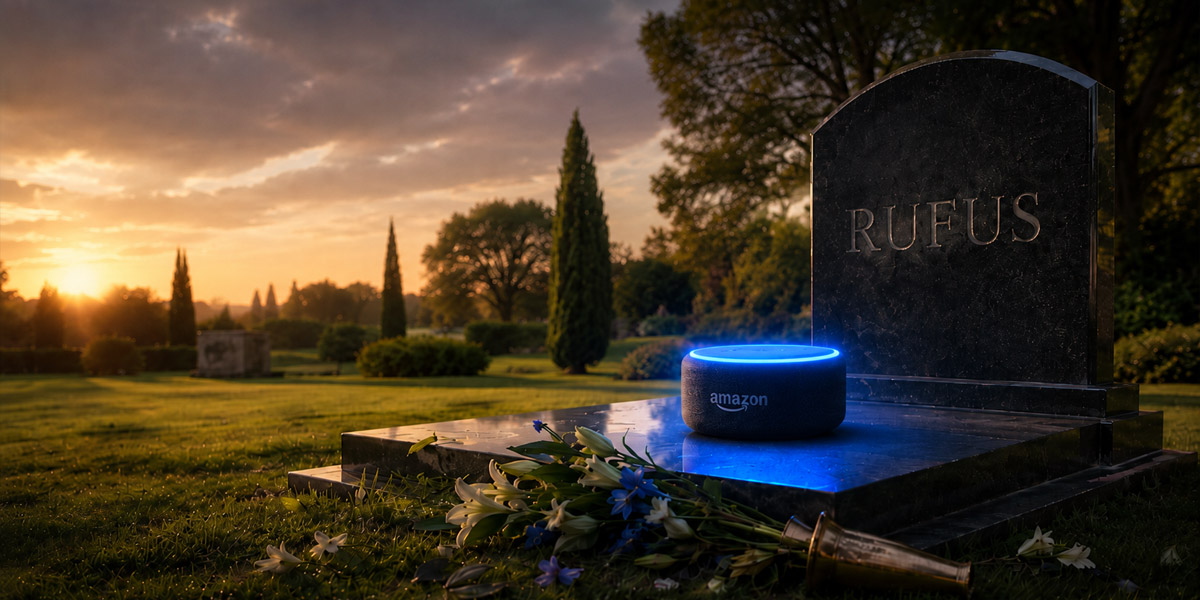
- Amazon replaces Rufus with Alexa
- President Trump went to China
- Highlights from YouTube’s Brandcast 2026
- OpenAI wants to sue Apple
- TikTok World 2026 announcements
- Amazon Now launches in dozens of U.S. cities
- The final week of the Musk vs Altman trial
- Affirm announces embedded BNPL for banks
- eBay rejects GameStop’s $56B takeover offer
- Your Anthropic shares might not be real
- Meta employees fight the man
- Eric Schmidt got booed over his AI comments
All this and more in this week’s 278th Edition of Shopifreaks. Thanks for subscribing and sharing!
Stat of the Week
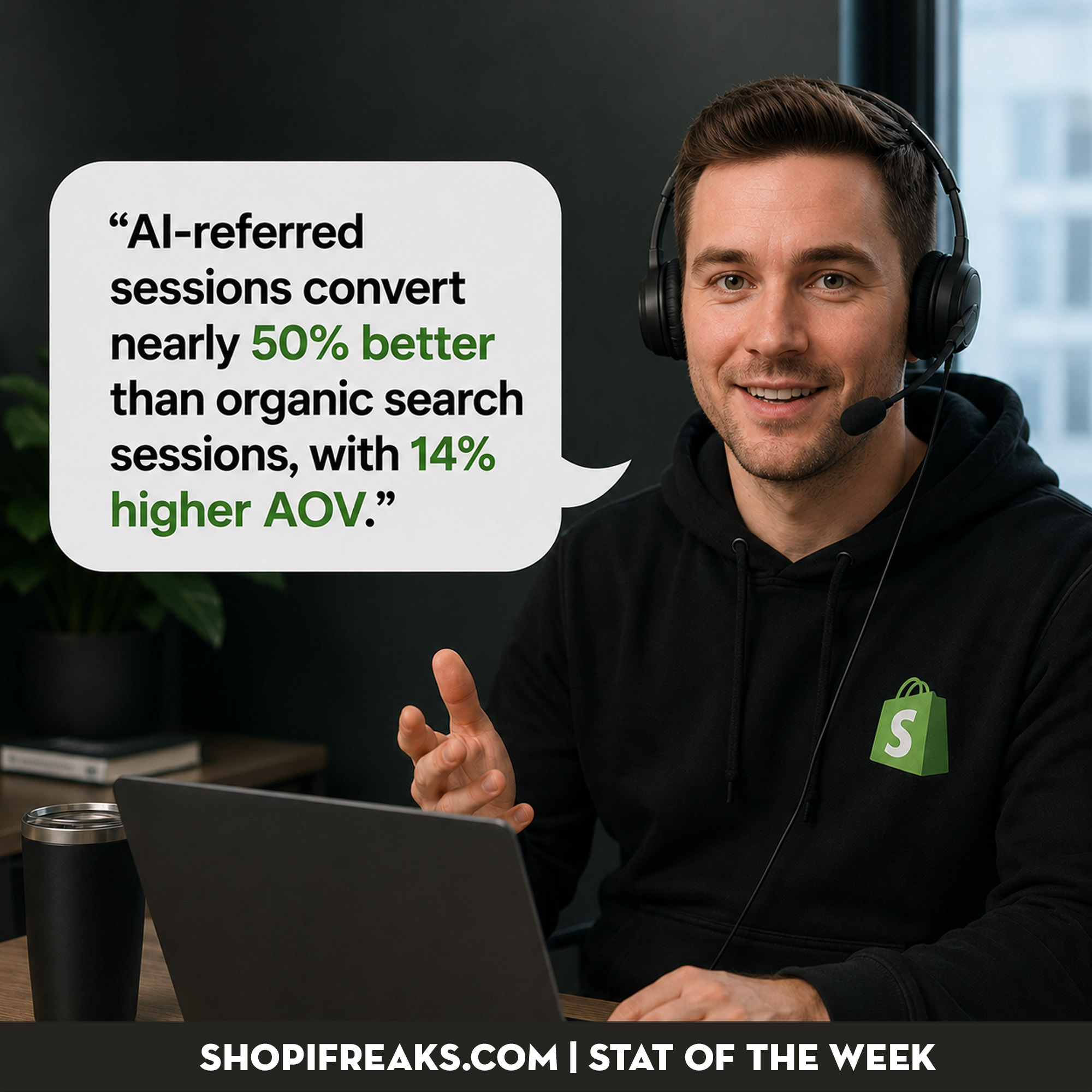
Shopify released early data showing that shoppers arriving at its storefronts from AI search platforms like ChatGPT, Perplexity, Gemini, Copilot, and Claude convert at nearly 50% higher rates and carry 14% higher average order values than those arriving from organic search. AI-referred orders on Shopify grew nearly 13x YoY in Q1 2026, while referral sessions from AI chatbots grew more than 8x in the same period, though organic search still refers more sessions to Shopify merchants than all tracked AI platforms combined. Shopify attributes the quality gap to “journey compression,” where AI search collapses the discovery and consideration phases of shopping into a single conversation, with more than half of AI-referred sessions starting on product detail pages compared to about 20% for organic search.
1. OpenAI launches product feed ads in ChatGPT
OpenAI added a new “product feed” campaign option to ChatGPT that lets merchants generate ads directly from their product catalogs rather than building them one by one, similar to Google Shopping or PMax campaigns. Retailers have been able to upload their product catalogs to ChatGPT since around September 2025 so that it could ingest their product data to surface in organic answers, but there was no option to connect that data to paid ads until now. Brands had to build each product ad one by one.
Here’s how it works, according to Digiday:
- Merchants connect their product catalog
- They set filters for which products are eligible for advertising
- ChatGPT generates ads from product names, images, and attributes
Seems straightforward enough. Where was this BEFORE launching and sunsetting Instant Checkout? LOL
Digiday notes that ads from product feed campaigns still appear in the same placement as other ChatGPT ads, below the organic answer and clearly labeled as sponsored. OpenAI appears to be testing the campaigns with ad partners like Criteo, and no public launch has been announced yet.
I’ve given OpenAI a lot of crap throughout their e-commerce journey — all of it well-deserved. However, it finally feels like they’re starting to get on the right track with a solid plan and product roadmap to become a formidable player in e-commerce product discovery.
In recent months the company has launched a CPC ad format (adding to its initial CPM option), released a much-needed conversion tracking pixel, rolled out a Shopping Research tool that lets users compare products across the web before they buy, and inked partnerships with major adtech firms like Criteo to scale its ads platform. Now these are moves that I can get behind!
2. Amazon sunsets its Rufus chatbot and launches Alexa for Shopping
Amazon is sunsetting its Rufus shopping assistant and replacing him with Alexa for Shopping, an AI agent that merges Rufus with Alexa+ and taps into users’ shopping history to answer questions, compare products side by side, create personal shopping guides, and schedule purchases when an item hits a target price. The tool will be inserted directly into Amazon’s search results, with a chat window appearing when users browse for products, and can be summoned via a cursive A icon on Amazon’s website and app or through Echo Show displays, with no Prime membership required.
What users share with Alexa on their Echo and other Alexa-enabled devices will now inform their shopping experience on Amazon, and their Amazon browsing and purchases will flow back to Alexa across all their devices to create a more personalized experience over time. Alexa for Shopping also taps into Amazon’s “Buy for Me” agentic feature to handle purchases from non-Amazon retailers, replacing Rufus as the engine powering those off-Amazon transactions.
Daniel Rausch, Amazon’s top Alexa executive, threw shade at OpenAI and Google when commenting on Alexa for Shopping during a recent CNBC interview:
“As I’m using it, I’m just realizing why other AI efforts have struggled with shopping because it’s not just scraping web results and then putting things in a conversation. I’m not surprised others have basically had to undo a bunch of features. It’s just not worth it. Shopping is not something you do as a side quest.”
It’s kind of funny that he used the “side quest” terminology, which was coined (at least in the e-commerce space) by Shopify in 2023 when the company ditched its in-house logistics operations. Though I digress.
When Amazon first launched Rufus in February 2024, I wrote:
“Has Alexa been delegated to turning on / off the lights in your home and starting / stopping your Spotify playlist, while all the cool new AI shopping features get implemented elsewhere? Alexa has become a household name during the past decade, and in my humble opinion, everything AI-powered at Amazon should be ‘Alexa.’ She should follow me around the entire Amazon ecosystem as my personal assistant and gateway to shopping, customer service, and product comparison on Amazon.”
Apparently Amazon has begun to agree with me. Then again, maybe it was always the plan to cut off his balls and transition Rufus into Alexa. Perhaps they launched Rufus as an initial test to see how customers would react to an AI assistant without accidentally souring the Alexa brand name if the tests went poorly. Either way, it’s a smart long-term move to create a cohesive AI presence across Amazon’s house of products.
3. President Trump and a ragtag group of tech and finance executives went to China
President Trump visited Beijing on Wednesday for his first state visit to China since 2017, marking the first time a sitting U.S. president has visited China in nearly a decade. The President was accompanied by a ragtag group of CEOs and executives including Apple’s Tim Cook, Tesla’s Elon Musk, Nvidia’s Jensen Huang, BlackRock’s Larry Fink, Goldman Sachs’ David Solomon, Citigroup’s Jane Fraser, Boeing’s Kelly Ortberg, Meta President Dina Powell McCormick, and GE Aerospace’s H. Lawrence Culp.
The trip follows a trade truce reached at last October’s Busan summit in South Korea, where both countries agreed to suspend their most damaging tariffs of the 2025 trade war, which at one point saw the U.S. impose 145% tariffs on Chinese goods and China retaliating with imposing 125% tariffs on American goods. That truce expires in October 2026, and this recent trip to China was expected to set the stage for future negotiations.
Here’s what came out of the two-day summit:
- Trump announced that China agreed to purchase 200 Boeing aircraft, with the potential to expand to 750 planes “if they do a good job,” along with up to 450 GE jet engines. China’s last major Boeing order was during Trump’s 2017 Beijing visit when the country agreed to buy 300 planes, but orders dried up shortly after as relations soured. China has not officially confirmed the 200-jet order, but Boeing has as of this morning.
- China committed to $17B/year in U.S. agriculture through 2028 including soybeans, beef, and poultry. China is also restoring market access for U.S. beef and resuming poultry imports from U.S. states deemed free of bird flu.
- A new “Board of Trade” and “Board of Investment” will oversee future tariff and investment discussions. Both countries agreed to establish these two new bilateral mechanisms to handle trade and investment issues. Does that mean no more surprise tariff announcements from Trump?
- China agreed to “address U.S. concerns” over its export controls on rare earth minerals and critical minerals, which it leveraged aggressively last year to neutralize Trump’s tariff escalations. However, no specific commitments on lifting the export controls were announced.
- Both leaders agreed to a “constructive China-U.S. relationship of strategic stability” framework that will guide bilateral relations for the next three years and beyond. Didn’t we used to have that? Trump invited Xi to visit the U.S. on September 24, before the October expiration of the current trade truce.
Here’s what did not come out of the summit:
- Xi warned Trump that mishandling Taiwan would put U.S.-China relations in “great jeopardy” and called it the “most important” issue in the bilateral relationship, but Trump made “no commitment either way” on stopping U.S. weapons sales to Taiwan. On Iran, both leaders agreed they want the Strait of Hormuz reopened, but no commitments emerged from China on pressuring Tehran to end the war.
- Trump said he didn’t discuss tariffs or computer chips. He said aboard Air Force One, “They’re paying tariffs, they’re paying substantial tariffs, but we didn’t discuss.” When asked about computer chips, Trump said it “didn’t come up.” Was Trump waiting for Xi to bring up those topics or something? Or was this just like a casual visit where whatever happens happened?
- No movement on de minimis, Shein, or Temu. The status quo still holds, which means every package from China remains subject to a 54% duty or $100 flat fee, and the broader $800 de minimis exemption that previously let small parcels enter the U.S. duty-free remains suspended for all countries.
- Nvidia did not secure Chinese approval to sell its H200 AI chips in China. Trump said Friday that China has opted to “develop their own” chips, which I’m sure will be both cheaper and faster. That statement contradicted his comment earlier that same day, when he said the topic “didn’t come up.”
Overall, the consensus from analysts is that this was a “stabilization” trip rather than a breakthrough. The underlying trade war hasn’t been resolved and the tariff truce hasn’t been formally extended. Still some work to do.
4. YouTube unveiled Buy with Google Pay and a creator matchmaking program
YouTube announced a slate of new media, creator, and advertising updates at its Brandcast 2026 event in New York City last week. Highlights from the event include:
- Buy with Google Pay brings two-click checkout to Connected TV. Viewers can now complete purchases directly on their TVs using payment information stored in their Google Account, without having to switch devices or open a separate browser. YouTube reports that conversions from CTV ads grew more than 200% YoY in Q1 2026, and the new feature is designed to compress the path from ad to checkout even further.
- Custom Sponsorships uses AI to match brands with cultural moments. The new tool dynamically surfaces videos tailored to a brand’s desired cultural moment, eliminating the need for advertisers to manually select channels and content categories. YouTube also has a dedicated team manually matching its new Creator Shows slate with brand partners for long-term sponsorship deals.
- Affiliate Partnerships Boost lets brands amplify organic creator content. The new tool lets brands pay to promote videos that already feature their products through YouTube Shopping affiliate links, driving additional sales while creators earn more revenue. I absolutely love this one! Anything that positions Creators to earn more revenue from their content is a win in my book. The tool is currently available only to a small creator group with plans to expand.
- Masthead got a Custom Content Shelf. YouTube’s premium homepage Masthead ad placement now allows marketers to curate additional content alongside their hero creative, giving brands a way to build more immersive campaigns on the platform’s biggest ad slot.
- Multimodal Video Creation pulls Gemini, Nano Banana, and Veo into the ad creation process. The new tool lets advertisers move from creative brief to final video production with just a few prompts, using Google’s latest AI models to eliminate production time.
- Creator Shows launched with new exclusive series. YouTube is positioning creators as “the new Hollywood” with a lineup of brand-sponsorable series including Kareem Rahma’s “Keep the Meter Running,” Alex Cooper’s Met Gala docuseries “Before the Steps,” Trevor Noah’s world tour, Cleo Abram’s “HUGE* If True,” Erling Haaland’s “Road to World Cup,” and Johnny Harris’s “The Human Element.”
- Costco and Dollar General joined Google’s Commerce Media Suite. Advertisers can now use first-party retailer data from Costco and Dollar General within Display & Video 360 to target high-intent shoppers across YouTube and the wider web, with SKU-level reporting available.
- YouTube doubled down on its “creators sell” pitch with new stats. The company cited internal data showing viewers are 13x more likely to search for a brand and 5x more likely to buy when a creator talks about a product, with Coach’s creator-led “Explore Your Story” campaign cited as a case study that drove a 60% jump in Gen Z brand awareness and a six-fold increase in consideration in a single quarter.
CEO Neal Mohan declared “the YouTube Era,” framing Brandcast 2026 as a milestone where YouTube has officially overtaken traditional TV, with executives positioning the platform as a full-funnel destination where brand building and performance marketing can coexist on a single platform. YouTube generated $36.1B in global ad revenue in 2024 and grew it to approximately $40B+ in 2025, with total YouTube revenue (ads + subscriptions) surpassing $60B for the first time, according to Alphabet.
5. OpenAI may sue Apple for not integrating ChatGPT deep enough into iOS
OpenAI is preparing possible legal action against Apple, including a potential breach of contract notice, over its two-year-old ChatGPT integration partnership, which failed to meet its expectations, according to Bloomberg sources.
OpenAI believed that the companies’ partnership would encourage more users to subscribe to ChatGPT, and expected a deeper integration across more Apple apps and prominent placement within Siri, but says none of that happened. The company claims that Apple designed the integration in a way that requires users to speak or type the word “ChatGPT” when entering a command into Siri in order to get results from OpenAI, and that responses have been more constrained than those available through ChatGPT’s standalone app, appearing in a small window with limited information.
To make matters worse, OpenAI is set to lose its unique role within Apple software when iOS 27 launches on June 8 with chatbots from Anthropic and Google joining the platform through its upcoming Extensions feature. Not to mention, the deal that Apple made with Google last year to power Siri with Gemini models, an arrangement that OpenAI was also bidding for.
I’ve got to rant for a second because this is ridiculous…
1) Apple required users to speak or type the word ‘ChatGPT’ to call its chatbot.
Do you mean the exact same way that ChatGPT requires users to type “@Etsy” or “@Expedia” to call apps within their ecosystem?
2) “We have done everything from a product perspective. They have not, and worse, they haven’t even made an honest effort,” said an unnamed OpenAI executive.
Have you, OpenAI? Because during this 2024-2026 window that you partnered with Apple, you pretty much handed a healthy chunk of your market share to Anthropic and Google, you pissed off half your userbase by retiring their favorite model, and your chatbot (allegedly) contributed to multiple deaths via suicide, mass shootings, and otherwise. Are those indications that you’ve “done everything from a product perspective?” Or have your users and the market said otherwise?
3) OpenAI said it isn’t interested in working with Apple on new models because it felt burned by the initial relationship. The unnamed executive said, “We already took this leap of faith with you, and it didn’t work out well.”
Do you mean, the same leap of faith that Stripe, Shopify, Etsy, and other companies took on you to develop Instant Checkout, which you scrapped without a moment’s hesitation?
On top of all that, OpenAI acquired a devices startup co-founded by former Apple design chief Jony Ive and has actively recruited engineers from Apple’s hardware team with multi-million dollar compensation packages, with plans to release its own phone. Yet Apple is to blame for the relationship going sour? Good grief…
6. TikTok rolls out new products and ad updates at TikTok World 2026
TikTok announced a wave of new products this week, with many of the announcements coming out of its sixth annual TikTok World event in New York City, including updates across advertising, AI, in-app travel booking, gaming, and counterfeit protection. Highlights from the announcements include:
- TikTok GO expanded to the U.S. and Japan. Users can now book hotels, attractions, tours, and other local experiences directly in the app via partnerships with Booking.com, Expedia, Viator, GetYourGuide, Tiqets, and Trip.com. Creators are able to earn commissions through their content on bookings made through TikTok GO, which originally launched in Indonesia in April 2026.
- TopReach got a creative sequencing update. The advertising offering, first announced in March, now merges its two high-visibility placements TopView and TopFeed into a single one-day-reach buy so the two ads complement one another for varied audiences, similar to Snapchat’s Total Snap Takeover offering.
- Branded Buzz launched for creator-led campaigns. The new tool lets advertisers alert eligible TikTok One creators with specific campaign parameters and brand guidelines, with interested creators then submitting video responses. It’s designed to help brands generate buzz around product launches and big campaign moments, with L’Oreal Brazil pulling in more than 40M views in two weeks after testing it during the holiday season.
- Search Hubs gives brands top-of-search real estate. The new brand-controlled destination appears at the top of TikTok Search results, designed to meet consumers at the moment they’re ready to discover, learn, or shop.
- Symphony AI added new generation tools. The advertising suite now includes enhanced image and video generation powered by the Seedance 2.0 video model Dreamina, plus new Voiceover Avatars that use licensed actors’ avatars to voice scripts in over 30 languages and Product Avatars that showcase products on users’ screens.
- Smart+ Campaigns got three AI upgrades. TikTok’s AI-driven performance advertising product, launched in late 2024, now includes a centralized asset management hub with real-time diagnostics, automated recommendations generated from campaign performance data, and a tool that selects and optimizes brand assets by evaluating advertisers’ inputs and creator partnerships.
- An MCP server is opening TikTok Ads to outside AI agents. Marketers can now connect AI systems like Claude and ChatGPT directly to the platform, enabling third-party AI agents to autonomously develop and manage campaigns and create custom workflows for advertisers.
- Growth Max for Mini Games launched for game developers. The new offering gives developers a way to drive direct engagement through interactive promotions inside TikTok’s mini games ecosystem.
- Mini Series is letting entertainment brands monetize episodic content. The new offering invites brands to charge for episodic content within the app, joining the platform’s push into mini-drama series that have been generating buzz on TikTok.
- TikTok Real launched to fight counterfeits on TikTok Shop. The new IP protection program draws on insights from more than 300 intellectual property experts worldwide to detect counterfeit listings, adding a brand verification module that lets brands review authorizations submitted by sellers. The program currently covers approximately 100 brands with more added on a rolling basis, after TikTok rejected over 70M counterfeit product listings in the first half of 2025.
- TikTok’s ad-free subscription launched in the U.K. The £3.99 ($5.44) per month plan for users 18 and older lets subscribers skip ads and opt out of having their data used for advertising, while helping TikTok comply with GDPR and generate new subscription revenue. The move follows similar rollouts by Meta on Facebook and Instagram in the U.K. last year.
TikTok generated $34.6B in global ad revenue in 2025 and is expected to grow that to $43.5B this year, with the company now reaching roughly 2B monthly active users worldwide and 136M users in the U.S. alone.
7. Amazon launches 30-minute delivery across dozens of U.S. cities
Amazon officially launched its 30-minute “Amazon Now” delivery service across dozens of U.S. cities, with thousands of items available, including fresh groceries, household essentials, healthcare items, baby and pet products, electronics, and alcohol. What, no weed?
Amazon Now soft-launched in Seattle and Philadelphia in December 2025, before expanding to international markets at the start of 2026 and eventually making its debut in dozens of U.S. cities this month including Atlanta, Dallas-Fort Worth, Austin, Houston, Minneapolis, Orlando, Phoenix, Denver, and Oklahoma City.
The service costs $3.99 per order for Prime members or $13.99 for non-members, plus a small basket fee of $1.99 (Prime) or $3.99 (non-Prime) for orders under $15, and is available in most areas 24 hours a day — which is quite remarkable. Remember when Walmart used to be 24 hours? Can that please come back?
Notably, Amazon Now is more expensive in the U.S. than in other markets where the service is already operating. Prime members in Brazil and the UAE get free Amazon Now delivery on orders, while non-Prime members in Brazil pay just $1.04 per order compared to the $13.99 Americans get charged. To be fair though, the cost of labor, gas, and general overhead is significantly higher in the U.S.
Amazon Now is made possible through a network of smaller fulfillment hubs ranging from 5,000-10,000 sq ft that are strategically placed closer to where customers live and work. That way drivers don’t have to go back and forth to Amazon’s larger distribution facilities, which are often on the outskirts of town, for every delivery.
The move puts Amazon in direct competition with Instacart, DoorDash, Uber Eats, Grubhub, and Walmart’s Express Delivery service. However, Amazon Now’s $3.99 Prime fee is higher than what Instacart and DoorDash charge their paying members, who typically get free delivery on qualifying orders, but roughly on par with Walmart Express Delivery’s surcharge, though Amazon’s 30-minute delivery window beats Walmart’s 1-hour promise.
8. Musk vs Altman trial comes to an end, with jury to deliver a verdict today
For the past two editions, I’ve been keeping you up to date on what’s been going down at the Musk vs Altman trial, one of the biggest lawsuits of the year. As a reminder, Elon Musk is suing OpenAI and its leadership for betraying the company’s original nonprofit mission when they converted it into a for-profit venture. Musk, who donated $38M of OpenAI’s earliest funding before leaving the board in 2018 over a power struggle with Altman, is seeking up to $150B in damages and an order forcing OpenAI to unwind its for-profit conversion, as well as the removal of Altman and Brockman from their leadership positions. Read my May 4 and May 11 coverage to catch up on what you missed.
Well, on Thursday, the three-week trial came to an end with attorneys from both sides delivering their closing arguments. The jury will begin deliberations today (May 18, 2026) and deliver an advisory verdict that Judge Yvonne Gonzalez Rogers can then adopt or override, after which there will most certainly be an appeal from either side. At the time of publishing this edition, news of that verdict has not been released. However, follow my LinkedIn Page for an update later today (or potentially later this week).
In the meantime, I’ll catch you up to speed on what you missed last week during the trial:
- OpenAI quietly changed its governance structure during its 2025 for-profit transition to make it harder to fire CEO Sam Altman, according to court documents released by Elon Musk’s expert witness on Sunday. Under the new bylaws adopted in October 2025, a two-thirds supermajority of the for-profit entity’s nonemployee directors is now required to fire the CEO, compared to the previous structure that only required a simple majority (over 50%) of the nonprofit board.
- OpenAI co-founder and former chief scientist Ilya Sutskever, who left the company in May 2024 to co-found a competing AI research lab called Safe Superintelligence, testified that his stake in the company is worth roughly $7B, making him one of the largest individual shareholders. Sutskever said he had been thinking about concerns with Altman for a year before he convinced the board to briefly oust him.
- Microsoft CEO Satya Nadella took the stand on Monday and testified that Elon Musk never contacted him with concerns that Microsoft’s investments in OpenAI were violating any special terms of commitments. Nadella defended the company’s $13B+ investments in OpenAI as commercial rather than charitable donations and said he was “very proud” that Microsoft took the risk to invest when “no one else was willing” to bet on OpenAI. Nadella also addressed Altman’s 2023 firing, calling the board’s handling of the situation “amateur city” and saying he was “pretty surprised” by the decision, though he denied demanding that the board reinstate Altman as CEO.
- OpenAI chief futurist Joshua Achiam testified that Elon Musk called him a “jackass” during a February 2018 all-hands meeting after Achiam pushed back on Musk’s plan to race toward AGI, which Achiam and others viewed as “reckless.” Achiam said Musk told around 60 employees he was leaving OpenAI because Tesla would soon compete for elite AI talent, creating a “conflict of interest,” and that Musk lacked confidence in OpenAI’s path and wanted to “pursue AGI in his own way” out of fear someone else would do the wrong thing with it. Achiam said his colleagues later gifted him a gold “jackass” trophy inscribed “Never stop being a jackass for safety.”
- Sam Altman took the stand on Tuesday and pushed back against the notion that Musk genuinely cares about OpenAI, testifying that “Mr. Musk did try to kill it,” and adding that Musk launched a competitor called xAI, tried to poach OpenAI’s talent, and engaged in “business interference.” Altman also admitted under oath that there were “some times in my life when I did not” tell the truth and that he had been called a liar by business associates. Then again, I’m sure Altman and Musk could go tit for tat with non-truth-tellings if Musk was also pressed on the stand.
- During closing arguments, Musk’s lawyer Steven Molo told the jury that “the credibility of Sam Altman is central to this case” and that Musk’s roughly $38M in early funding was diverted into a for-profit AGI play that enriched OpenAI insiders and Microsoft.
- OpenAI’s lead trial lawyer Sarah Eddy countered that Musk “effectively abandoned” the nonprofit in 2018, attached no binding conditions to his donations, and only sued after launching rival firm xAI.
- Musk was not present during the closing arguments, despite being ordered by the judge to do so, because he was visiting China with President Trump.
Stay tuned!
9. Other e-commerce news of interest
Affirm announced plans for Affirm Edge, a new product that enables banks and credit unions to offer Affirm’s BNPL and installment loans directly inside their native apps. The product will be sold through tech resellers FIS and Fiserv, with Affirm originating and servicing the loans, while customers will be able to see their purchasing power and browse Affirm’s marketplace without leaving their bank’s app. The move targets a $140B addressable market based on 130M active US debit card users and puts Affirm in direct competition with lenders like equipifi, Amount, and Alliance Data, which offer similar embedded BNPL programs for financial institutions.
eBay rejected GameStop’s $56B takeover offer, with eBay’s board calling the unsolicited bid “neither credible nor attractive” due to uncertainty around the financing plan, operational risks, and GameStop’s governance. Cohen had offered $125 a share (50% cash, 50% GameStop stock) representing a 20% premium, but investors responded skeptically given that GameStop’s $10B market value is less than a fourth of eBay’s, and the company planned to borrow $20B to finance the acquisition. The rejection leaves Cohen with the option to pursue a proxy fight to replace eBay board members, which he previously said he would do if the board turned down his offer.
Apple is exploring ways to better incorporate AI agents into its App Store without letting them bypass its rules around privacy, security, and most important to Apple — billing, according to The Information sources. Apple’s rules are designed to prevent apps from bypassing its fees and distributing unvetted software, both of which AI agents can do by spinning up smaller apps on the spot to perform tasks after Apple has already approved the parent app. Sources shared that Apple is designing a system that adheres to its privacy and security standards while still embracing the agentic trend. No other details were provided about the solution, though they may be revealed at Apple’s upcoming developer conference in June.
Amazon employees are “tokenmaxxing” to inflate their AI usage, creating extraneous AI agents on the company’s internal MeshClaw tool to climb the leaderboard, as the company pressures them to maximize AI adoption. Employees claim Amazon has a target of 80% of developers using AI each week and tracks token consumption on an internal leaderboard, though an Amazon representative said no such company-wide metric or competitive leaderboard exists, only personal dashboards. Why is it that companies can’t seem to afford the slightest bit of labor overages, but have no problem blowing up their AI token expenses? Amazon told employees that their tokenmaxxing would not be a factor in their performance reviews, however, multiple employees told the Financial Times that they worried managers watched it anyway, with one saying that there was “so much pressure” to use the tools.
The European Commission is planning to take action against “addictive design” features on TikTok and Instagram including endless scrolling, autoplay, and push notifications, with new regulation expected later this year, according to EU Commission President Ursula von der Leyen. The Commission is also investigating platforms that allow children to go down “rabbit holes” of harmful content like videos that promote eating disorders or self-harm, and has developed its own age verification app that can be integrated into member states’ digital wallets and enforced by online platforms. Leyen said, “No more excuses – the technology for age-verification is available.” The crackdown follows the EU’s recent finding that Meta breached the Digital Services Act by failing to keep children under 13 off its platforms.
Anthropic warned investors to avoid eight secondary marketplaces of the company’s shares, telling investors that buying the stock won’t work because the firms offering access to unauthorized shares are “in violation of our transfer restrictions.” Marketplaces mentioned include Hiive, Forge Global, Sydecar, Open Door Partners, Lionheart Ventures, UpMarket, Unicorns Exchange, and Pachamama. (Unrelated but interesting: Pachamama translates to “Mother Earth” in Quechua, a native language used in Ecuador, and I see the word quite often down here.) The company also warned investors against accepting unsolicited offers for shares or requests to pay using cryptocurrencies, adding that anyone sending an Anthropic stock certificate to the general public “is very likely engaged in fraud.” Just to clarify, Anthropic does allow secondary trading, but only through authorized channels like company-led tender offers or pre-approved direct sales.
Omnisend launched a Model Context Protocol (MCP) integration that lets merchants tap the platform directly inside ChatGPT to analyze marketing performance, identify revenue opportunities, and create campaigns using plain-language prompts. Users can ask questions like “What drove my revenue over the last 7 days?” or prompt the tool to “Create a reactivation campaign for customers who haven’t purchased in 30 days,” after connecting their Omnisend account within ChatGPT and approving access. The launch comes a few months after Klaviyo rolled out its own ChatGPT app in January that offers similar functionality.
Meta employees are circulating flyers in meeting rooms, on vending machines, and even on top of toilet paper dispensers at U.S. offices to protest the company’s Agent Transformation Accelerator program, which installs software on employee computers to track mouse movements, clicks, and keystrokes to train AI agents. (As a reminder that was my “Most Ridiculous Story” from Edition #275 a few weeks ago.) The flyers, which ask “Don’t want to work at the Employee Data Extraction Factory?,” cite the U.S. National Labor Relations Act and direct workers to an online petition to fight the surveillance. The petition website reads, “Collecting and repurposing this kind of data raises serious concerns around privacy, consent, and trust in the workplace.” Meanwhile, workers in the U.K. are organizing a unionization campaign with United Tech and Allied Workers to fight the power. The backlash around the surveillance program is intensified by Meta’s planned May 20 layoffs, during which the company will cut 10% of its workforce.
Amazon denied a recent Reuters report that said the company was developing an AI-focused phone codenamed Transformer that is designed to sync with Alexa and serve as a portal to Amazon’s digital services. The company said, “Do you think we’re as fucking dumb as OpenAI?” Okay, not really, but they were probably thinking it. Amazon’s devices and services head Panos Panay told the Financial Times that building a new smartphone is “just not the goal” and that there’s “no clear path that makes sense.” Panay also said that there were “so many new form factors that are important that need to be focused on,” leading me to believe that Amazon is instead prioritizing the development of other devices to complement or replace the phone, including wearables like smart glasses, pins, or 1980s style headbands that feature dual-facing cameras, voice-activated AI, and bold, neon colors for that authentic vintage workout look.
Google published a new guide called “Optimizing your website for generative AI features on Google Search” that consolidates the company’s advice on how site owners should approach AI Mode, AI Overviews, and other generative AI features within Google Search. The document covers SEO best practices, creating “non-commodity” content with a unique point of view, building a clear technical structure, and optimizing for local business and e-commerce details. Google also includes a section busting common myths about AI optimization, including that site owners do NOT need LLMS.txt files, special markup, “chunked” content, content rewritten for AI systems, inauthentic mentions, or an over-focus on structured data, essentially saying that good SEO is still good AI optimization. The guide has received pushback and criticism from SEO experts for spewing advice that benefits Google and not actually webmasters. It’s also important to note that while Google has historically been (and still is) the authority on search optimization, since it essentially designed the category, it’s one of many players in the AI space, and its advice doesn’t necessarily reflect best practices for all AI platforms.
Revolut is offering each of its 10,000+ employees £1,000 to bring in new business customers, though exact details about how the bonus works weren’t disclosed. The company plans to launch business banking alongside its retail product in every new market it enters in 2027, introduce credit products for businesses next year, and build a dedicated new business growth and onboarding department, as it targets an IPO valuation of $150B to $200B as soon as 2028. CEO Nik Storonsky declared business banking the company’s top priority in a memo to staff on Friday and asked employees across all departments to push for sales and send pitches directly to him to “deliver on these aggressive targets.” Revolut Business accounted for just 16% of the company’s £4.5B in revenue in 2025, despite having almost 800,000 business customers (up 33% from the prior year).
Google is testing a new reCAPTCHA system that replaces image-based verification tests with requiring the visitor to scan a QR code on their mobile phone to prove they are human. The new system, which has been in development since October 2025 and just now being spotted in the wild, works through Google Play Services on Android phones or through a dedicated reCAPTCHA app on iPhones. First off, I hate it. Secondly, how dare you Google? I can’t stand the 2FA movement that has plagued desktop browsing for the past decade. It’s bad enough that I need my phone to login to literally every service I use. Now I’ll need it to simply view a webpage that I have no account with? Ridiculous! Aside from the cumbersome process, many folks have raised concerns about how the reCAPTCHA update effectively links your phone identity to your browsing activity regardless of what desktop device you’re using. This is exactly what I meant when I posted on LinkedIn yesterday about Google inching towards closing the open web.
In lawsuits this week…
- Anthropic’s proposed $1.5B settlement with authors over pirated books used to train Claude hit a delay after a US District Judge declined to grant final approval and pressed lawyers for more detail on attorneys’ fees and lead plaintiff payments.
- Sezzle scored a partial win in its antitrust lawsuit against Shopify after a US District Court judge allowed its claims that Shopify abused its monopoly power to move forward, dismissing only a narrower claim that Shopify illegally forced merchants to bundle Shop Pay Installments with its platform.
- Santa Clara County, California sued Meta over allegations that the company “knowingly facilitates and profits from billions of scam advertisements,” particularly against seniors and families on Facebook and Instagram, building its case on a report last year from Reuters.
- TikTok will have to face Massachusetts’ lawsuit alleging that the platform is intentionally designed to be addictive and harmful to young users after a state judge rejected the company’s argument that it is shielded by Section 230 of the Communications Decency Act.
- Snap, YouTube, and TikTok settled the first lawsuit of its kind alleging that social media addiction has cost public schools massive amounts of money, brought by Kentucky’s Breathitt County School District, with terms undisclosed. Meta is still facing trial in the same case, which is viewed as a bellwether for over 1,200 similar lawsuits filed by school districts nationwide.
- Amazon is facing a proposed class action lawsuit filed by consumers seeking refunds for hundreds of millions of dollars in higher prices passed on to them from Trump tariffs that the US Supreme Court ruled unlawful in February, with the suit accusing Amazon of failing to seek government refunds like other companies have in order to “curry favor with Trump.”
- Shein accused Temu of copyright infringement “on an industrial scale” as a two-week trial opened at London’s High Court, with Shein claiming Temu lifted thousands of images shot by its staff to market direct copies or near-identical matches of Shein’s own products. The trial stems from a case Shein filed last year.
- OpenAI is being sued by Vandana Joshi, the widow of a victim killed in the April 2025 Florida State University mass shooting, who claims ChatGPT contributed to the tragedy by advising the shooter on the optimal location, time of day, gun type, and ammunition to maximize casualties.
- OpenAI is also being sued by the family of 19-year-old University of California, Merced sophomore Sam Nelson, who died of a drug overdose in May 2025, with the lawsuit alleging that ChatGPT recommended a dangerous combination of kratom, Xanax, and Benadryl without warning that the mix could be fatal.
- Meta and Google must face a class-action lawsuit alleging Meta secretly tracked Android users’ browsing activity through its analytics pixel and linked it to their Facebook and Instagram accounts between September 2024 and June 2025, with Google accused of negligence for designing Android in a way that allowed it.
- Google’s $50M settlement of a 2022 racial discrimination class action filed by Black employees received final court approval last week, with the suit alleging the company steered Black workers into lower-paid roles and deemed Black job candidates “not ‘Googly’ enough.” Damn, what exactly does being “Googly enough” even mean in this context? White or Indian, apparently?
- Amazon MGM Studios was sued by post-production vendor Joe Eckardt, owner of Unbreakable Post, who alleges he was blackballed from at least $1M worth of work after refusing to pay kickbacks to Frank Salinas, the head of unscripted post-production at the studio.
In layoffs this week…
- Amazon cut a “small number” of roles in its Selling Partner Services organization this week, the team that works with millions of third-party merchants on onboarding, logistics, and account support. The reductions follow roughly 30,000 job cuts announced in waves last October and January, plus a small round of cuts in Amazon’s robotics division in March.
In corporate shakeups this week…
- DeepIntent, a healthcare-focused demand-side platform, named Ian Colley as its new CMO, succeeding Adam Kapel who left the company in 2024, after Colley departed The Trade Desk where he served as CMO for the past seven years.
- Anthropic is hiring an “Applied AI Claude Evangelist” with an annual salary between $240,000 and $315,000 to work with startups, venture capitalists, and accelerators to help them adopt Anthropic’s products. Forward Deployed Engineers, a role Palantir created in 2011 to combine solutions and integration engineering, have become one of the most in-demand jobs in tech, with job postings up 800% between January and September 2025.
- Alentr, a contextual AI pricing governance platform, named Richard Jackson as its new Chief Revenue Officer, joining from BigCommerce where he led agency channel partnerships across Northern Europe.
- Roblox named John Ciancutti as its first-ever Chief Growth Officer to lead its discovery team and international expansion, joining from Amazon where he led product and engineering for Amazon Music.
The Dutch central bank De Nederlandsche Bank announced it is moving its essential cloud services from Amazon, Google, and Microsoft to Schwarz Digits, the data services arm of the Lidl supermarket group, originally built to support the retailer’s grocery business but now a secure data services provider to European businesses and governments. Nice pivot! Dutch Justice and Security Minister David van Weel called it “an important step in reducing our dependence on parties outside Europe and strengthening our digital resilience.” The move is part of a broader trend of European companies seeking to decouple their digital assets from American infrastructure, driven in part by the 2018 US Cloud Act, which can require American tech operators to hand over data to US authorities even when stored in Europe.
Meta offered to give rival AI chatbots free access to its WhatsApp Business API for one month while it discusses ways to resolve EU antitrust concerns, which could cost the company a fine of up to 10% of its annual global turnover if not resolved. In January, Meta banned all other AI assistants from sending messages through WhatsApp, and then later amended the new policy in March, after taking heat from the EU, to allow rivals to send messages for a fee. As the EU continues to push against the anticompetitive behavior, Meta is offering more allowances, including the free month offer, which EU regulators called a “step in the right direction.”
Walmart asked Flipkart to defer its IPO and any other external fundraising for the foreseeable future to instead focus on reaching EBITDA breakeven before the end of financial year 2027. The decision was made during Walmart CEO and President John Furner’s first visit to Bengaluru since assuming the role in February, where he met with Flipkart’s leadership team. Walmart currently owns 80% of Flipkart and 71.8% of PhonePe, an Indian digital payments platform that spun out of Flipkart in 2022, but is in no hurry to go public with either company. It first wants to bring some classic Walmart-style fiscal responsibility to the businesses before allowing the public markets to infuse the companies with fresh cash.
Amazon India expanded health and insurance coverage to nearly 90,000 delivery associates across its operations network, with mediclaim coverage increased up to ₹1.5 lakh, OPD expenses of up to ₹10,000 now covered, and group personal accident coverage expanded up to ₹10 lakh. The wellness benefits cover associates and up to three family members annually, including unlimited multilingual virtual doctor consultations, two free in-person OPD visits per family each year, and discounts on diagnostics, pharmacy, dental, and eye care. My first thought, of course, was: Why not offer the same in the U.S.? The answer, I’m guessing, is that although Amazon India uses the same DSP-based gig worker structure as the U.S., where drivers are technically employed by third-party delivery partners rather than Amazon, doing the same in the U.S. would undermine the legal structure that protects Amazon from being treated as a joint employer of DSP workers. The move is likely also for competitive reasons, as Amazon faces intense competition for drivers from quick commerce players like Blinkit, Zepto, and Swiggy.
Brazil’s President Luiz Inacio Lula da Silva signed an executive order to eliminate federal taxes on foreign purchases worth up to $50, reversing a highly unpopular tax in the country that he himself imposed in August 2023 after receiving pressure from Brazilian retailers who argued they couldn’t compete with foreign platforms like Shein and Temu that were shipping cheap goods into the country without the same tax burden as domestic retailers. The move is one of many that Lula is taking to win support with voters, which also includes initiating a government-backed consumer debt renegotiation program that offers up to 90% discounts on renegotiated debts. Talk about “buying” an election! Yet at the same time, I reported last week that Brazil held firm at the WTO General Council meeting in Geneva in its opposition to a four-year extension on a global moratorium on e-commerce tariffs, arguing that the country is losing billions of dollars a year by not being able to tax digital purchases. So taxes on foreign goods or no taxes? Brazil can’t seem to make up its mind.
🏆 This week’s most ridiculous story… Former Google CEO Eric Schmidt was practically booed off stage during his commencement address at the University of Arizona on Friday after he began talking about AI and its impact on the workforce. As the shouts intensified, Schmidt said, “I know what many of you are feeling about that. I can hear you. There is a fear. There is a fear in your generation that the future has already been written, that the machines are coming, that the jobs are evaporating, that the climate is breaking, that politics are fractured, and that you are inheriting a mess that you did not create.” He went on to call those fears “rational,” before saying, “The question is not whether AI will shape the world. It will. The question is whether you will have shaped artificial intelligence.” Statements which I’m sure were not at all that reassuring to a generation entering a job environment that may prove to be worse than what Millennials walked into.
10. Seed rounds, IPOs, & acquisitions
Shein is acquiring Everlane, a U.S. apparel retailer known for its minimalist basics and “radical transparency” pricing model that breaks down the cost of every garment, from its majority owner, L Catterton, in a deal that values the D2C company at $100M, according to Puck. The deal was approved by the board on Saturday, and common stock shareholders were informed on Sunday morning that they will not receive a payout. It’s a strange acquisition, given that Everlane was built on sustainability and timeless apparel design, while Shein is effectively the antithesis of those things. What’s next? Chick Fil A acquires a hamburger chain?
Anthropic is in early talks with investors including Dragoneer, Greenoaks, Sequoia Capital, and Altimeter Capital to raise an additional $30B at a valuation of more than $900B, surpassing OpenAI’s most recent $852B valuation, according to FT and Bloomberg sources. The deal would come just three months after Anthropic raised $30B at a $350B valuation and as the company is on track to exceed $45B in ARR, up roughly 5x from the $9B pace recorded last year. The deal is expected to close as soon as this month.
equipifi, a fintech that lets banks and credit unions offer BNPL natively inside their digital banking experiences, raised $34M in a Series B round led by Left Lane Capital, bringing its total amount raised to $49M. The platform competes with third-party BNPL providers like Affirm and Klarna by embedding installment lending directly into the institutions consumers already trust, which coincidentally is a feature Affirm just launched last week. The company plans to use the funds to grow its partnerships with financial institutions, deepen product capabilities, and double headcount over the next year.
Nectar Social, an AI infrastructure platform for marketing that combines social intelligence, community management, creator workflows, and conversational commerce into a single operating system, raised $30M in a Series A round led by Menlo Ventures and its Anthology Fund created in partnership with Anthropic. Founded by sisters Misbah and Farah Uraizee, both former Meta leaders, Nectar’s autonomous agent ingests brand conversations across Meta, TikTok, LinkedIn, Reddit, and X and responds to customers in real time in the brand’s voice, while flagging issues and surfacing revenue opportunities for the companies. The platform currently powers more than 10M conversations per week for brands including e.l.f. Beauty, Babylist, and Figma.
HubSpot co-founder and CTO Dharmesh Shah disclosed on LinkedIn that he bought 10,000 shares of HubSpot for roughly $1.8M, his first HubSpot stock purchase since 2022, alongside purchases the same day by CEO Yamini Rangan and board chair Lorrie Norrington. Shah said the move is a bet on HubSpot’s long-term vision after a stock decline despite the company adding 10,800 net new customers in the quarter to reach roughly 300,000 customers with revenue growth of 20%+. Regarding whether AI agents will disrupt HubSpot, Shah said agents won’t rewrite a CRM but will instead use platforms with strong “Agentic Experience” alongside great user experience, arguing “headless is great, but we don’t think completely humanless is a good idea.”
Publicis Groupe agreed to acquire LiveRamp, a data collaboration platform whose technology lets different companies share and build new data sets and models together using data clean rooms, for $2.2B in an all-cash deal representing a premium over its roughly $1.8B market cap. LiveRamp will continue to operate independently and work with its current clients, which include Publicis competitors, and the company’s CEO Scott Howe and 1,300 employees staying on after the deal closes, pending regulatory approval.
Cerebras Systems, an AI chip startup that designs processors built to compete with Nvidia GPUs for AI training and inference workloads, raised $5.5B in its IPO on Thursday by pricing shares at $185, above its initial range of $115 to $125 that was later raised to $150 to $160, and increasing the offering to 30M shares. The stock then opened to public trading at $385, more than double its IPO price, as retail investors bid up the price, eventually closing at around $311 per share, and later in the week falling into the $280s. Co-founder and CEO Andrew Feldman compares AI compute capacity to an all-you-can-eat buffet and says the company will focus on “part of the buffet only” before taking on more demand, since it hasn’t yet grown big enough to handle multiple fast-growing model makers at once.
OpenAI Chief Financial Officer Sarah Friar told Bloomberg TV that the company may raise more capital after completing its recent $122B private fundraising round at an $852B valuation, depending on demand, revenue growth, cash flow, and the gap between the computing power OpenAI needs and what it can afford. Friar said public markets could be an attractive fundraising avenue over time since they are “significantly bigger” than private markets, calling compute a “huge competitive advantage” in a market where “there’s not a lot of compute in 2026” and describing demand as “a vertical wall.” I guess, let’s see what happens with this Musk vs Altman case first.
Thrive Capital bought roughly $100M in Shopify shares, framing the move as a bet on how AI will drive gains in e-commerce, after Shopify’s stock fell nearly 40% so far this year. Thrive is also an investor in companies that have partnered with Shopify on AI shopping tools including Stripe and OpenAI, and has previously made bets on other public companies including Figma, Carvana, and StubHub. The investment comes after Shopify projected slowing revenue growth in the current quarter and said AI costs had offset some efficiency gains in its software business, and after OpenAI shuttered Instant Checkout, which it had worked with Shopify to launch.
Anthropic is in advanced talks to acquire Stainless, a developer tools startup that automatically generates SDKs and client libraries from OpenAPI specifications, for at least $300M, marking a premium to its last valuation of $150M in December 2024. Stainless sells software that takes complicated APIs and uses AI to automatically generate software development kits that make it easier for developers, non-technical people, and AI agents to build applications from those APIs, and works with customers including Anthropic, OpenAI, and Google, as well as non-model companies like Cloudflare and Cerebras. If the deal closes, Anthropic would own a primary way developers access OpenAI and Google models.
365 Retail Markets, a self-service commerce technology provider that offers self-checkout, smart store, and software systems for vending, foodservice, and other unattended retail settings, completed its acquisition of Cantaloupe, a competing platform in the space, for an undisclosed amount. The deal combines Cantaloupe’s payments, remote machine monitoring tech, and global device network with 365’s self-checkout, smart store, and software systems, while creating a combined platform that services nearly 40,000 customers.
Insider One, an AI customer engagement platform that manages marketing workflows across channels, acquired Bluecore, an anonymous shopper identification and behavioral data platform, for an undisclosed amount. The deal strengthens the company’s position in autonomous customer engagement by expanding its retail data infrastructure and identity resolution capabilities through Bluecore’s Transparent ID Network, which processes more than 10B daily shopper events.
Roadrunner, a platform that helps businesses configure what they’re selling, price it, and generate quotes for complex deals, disclosed that it has raised $27M in funding, which includes a seed round led by Kleiner Perkins and a Series A led by Founders Fund. The startup is pioneering a new system called PQA (“prompt, quote, approve”) that uses AI to generate quotes and manage approval processes, positioning itself to capture a slice of B2B sales transactions the way credit card networks take 2-3% of consumer payments, which Kleiner Perkins describes as a “blue ocean” market.
Blackstone, global investment firm and alternative asset manager, agreed to acquire a majority stake in Skroutz, Greece’s leading e-commerce marketplace with nearly 9,000 merchants, from CVC Capital Partners Fund VII in a deal that values the company at €635M including debt. The transaction is expected to close in the second half of 2026 subject to regulatory approvals, with the deal effectively doubling CVC’s initial investment in Skroutz, while CEO George Chatzigeorgiou and the founders will retain meaningful ownership and stay on to run the company.
White Circle, a Paris-based AI control platform that monitors AI behavior in real time within enterprise workflows, raised $11M in a seed round from backers including OpenAI’s Romain Huet, Anthropic’s Durk Kingma, Mistral cofounder Guillaume Lample, and Hugging Face cofounder Thomas Wolf. The startup’s main product sits between a company’s users and its AI models, checking inputs and outputs against company-specific policies and flagging or blocking requests like generating malware, hallucinating, leaking sensitive data, or taking destructive actions inside a software environment. Its platform has processed more than one billion API requests and is already used by vibe-coding startup Lovable along with several fintech and legal companies.
Amp, a public benefit corporation that buys extra compute capacity from data center operators and pools it into a shared “AI grid” for startups, universities, and other organizations that lack the resources to compete with Google, Amazon, and OpenAI for AI compute access, raised more than $1.3B from investors including Andreessen Horowitz, Y Combinator, and various cloud computing providers. The company is led by former Andreessen Horowitz partner Anjney Midha, who has positioned Amp as a response to hyperscalers and well-funded AI labs that he says are “hoarding the infrastructure for themselves,” leaving smaller players without the compute they need to compete.
Greenboard, an AI-powered financial compliance automation platform that helps banks and fintechs automate regulatory monitoring, audits, and reporting workflows, raised $15.5M in a Series A round led by Base10 Partners. The company currently serves more than 500 financial institutions and recently launched Greenboard Go, a conversational compliance platform that takes an “expert in the loop” approach to AI where humans oversee outputs, which the company believes is a necessary safeguard in a sector where regulators require auditable processes and AI mistakes can carry significant legal and financial consequences.
Jiji, a Nigerian classifieds marketplace, acquired Bikroy, the largest online classifieds platform in Bangladesh, from Saltside Technologies for an undisclosed amount, marking its first expansion deal outside Africa. The acquisition came 13 months after Jiji entered the South Asian market as Bikroy’s direct competitor, continuing the company’s “compete-then-buy” playbook of entering a market organically, building competitive pressure, and then acquiring the largest player. Bikroy has more than 10M app downloads since its 2012 launch, serves over 400,000 monthly buyers and more than 100,000 monthly sellers, and processes more than $3B in annual GMV in a country of 175M people.
Vapi, an enterprise voice AI platform that helps businesses build, deploy, and manage voice agents at scale, raised $50M in a Series B round led by Peak XV, bringing its total amount raised to $72M. The company reports more than 1M developers using the platform, over 2.7M unique agents created, and more than 1B calls made, with enterprise customers including Amazon Ring, New York Life, Intuit, Kavak, and ServiceTitan. The company competes with other independent voice AI providers like ElevenLabs, as well as in-house efforts from OpenAI and Google.
Thanks for being a Shopifreak!
If you found this newsletter valuable, please leave a review on Google and share the newsletter with your friends and colleagues to help us grow.
See you next Monday,
PAUL
Paul E. Drecksler
🌐 Shopifreaks.com
🧑💼 Add me on LinkedIn
📧 [email protected]
📱 +1-828-273-3031
⭐ Leave A Review
PS: I ordered a deck of cards from Amazon two weeks ago and it still hasn’t arrived. It must have gotten lost in the shuffle. Customer service told me they’re dealing with it.