
Hi Shopifreaks
Happy Cyber Monday! I hope you had a wonderful Thanksgiving and enjoyed some time off with your friends and family — or traveled to a remote beach in the Philippines by yourself — whichever suits your fancy!
🎉 Before we begin today’s edition, I’m excited to present to you a new pitch from my video series 90 Second Pitches — a channel that helps you discover innovative e-commerce technology from the most promising startups. You can subscribe to the channel on YouTube & LinkedIn.
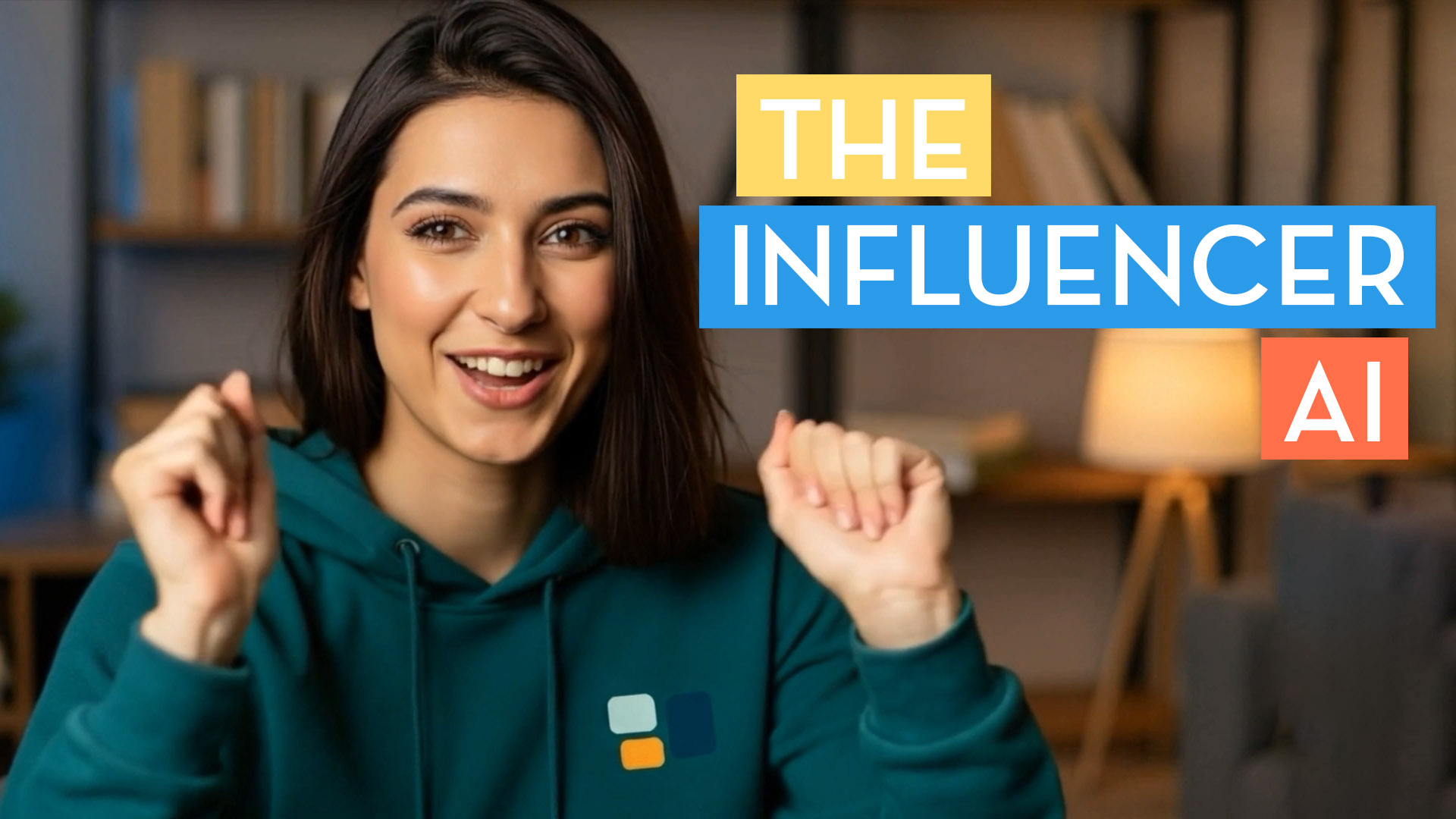
Today’s 90 Second Pitch comes from Zeeshaan Lakdawala, co-founder of The Influencer AI, a platform that enables you to create photorealistic consistent digital avatars to showcase your brand’s products, or a digital clone of yourself. I made a clone avatar of myself (check it out), and it looks just like me — only more handsome and in better shape! 😂
With the Influencer AI, you can create digital influencers that can model your clothing, hold your products, and be used to create unlimited photos and videos for your website or social media. Unlike other popular AI video generation tools, these digital influencers remain consistent across all of your media — meaning your influencer won’t suddenly change hair color or look like a completely different person between images and video!
Watch Zeeshaan’s 90 Second Pitch below and then let him know in the comments if you’re going to add The Influencer AI to your tech stack.
90 Second Pitch: ▶️ Watch On LinkedIn | ▶️ Watch On YouTube
The Full Interview: ▶️ Watch on YouTube
If you’d like to give The Influencer AI a try, Zeeshaan is offering 18% off your first month with the promo code FORSHOPIFREAKS, valid between now and Dec 15th.
Want to pitch your startup? Hit reply and show me what you’re working on! I’ve got a lot of great pitches coming your way soon, and I’d love to feature your e-commerce app or SaaS solution too. Hope you enjoy the new series!
And now onto your regularly scheduled programming.
In this week’s edition I cover:
- OpenAI’s new Shopping Research mode
- ChatGPT ads are headed your way
- PayPal and Perplexity launch Instant Buy
- What’s up with the TikTok deal?
- Walmart tests sponsored prompt ads
- Amazon workers protest AI and working conditions
- Black Friday sets record sales numbers
- Shopify salespeople are on a mandatory side quest
- Etsy search is killing sales
- TikTok’s new USPS shipping label requirements
- Meta’s too big to criticize
- Deloitte changes its slogan to “AI makes progress”
All this and more in this week’s 254th Edition of Shopifreaks. Thanks for subscribing and sharing!
Stat of the Week
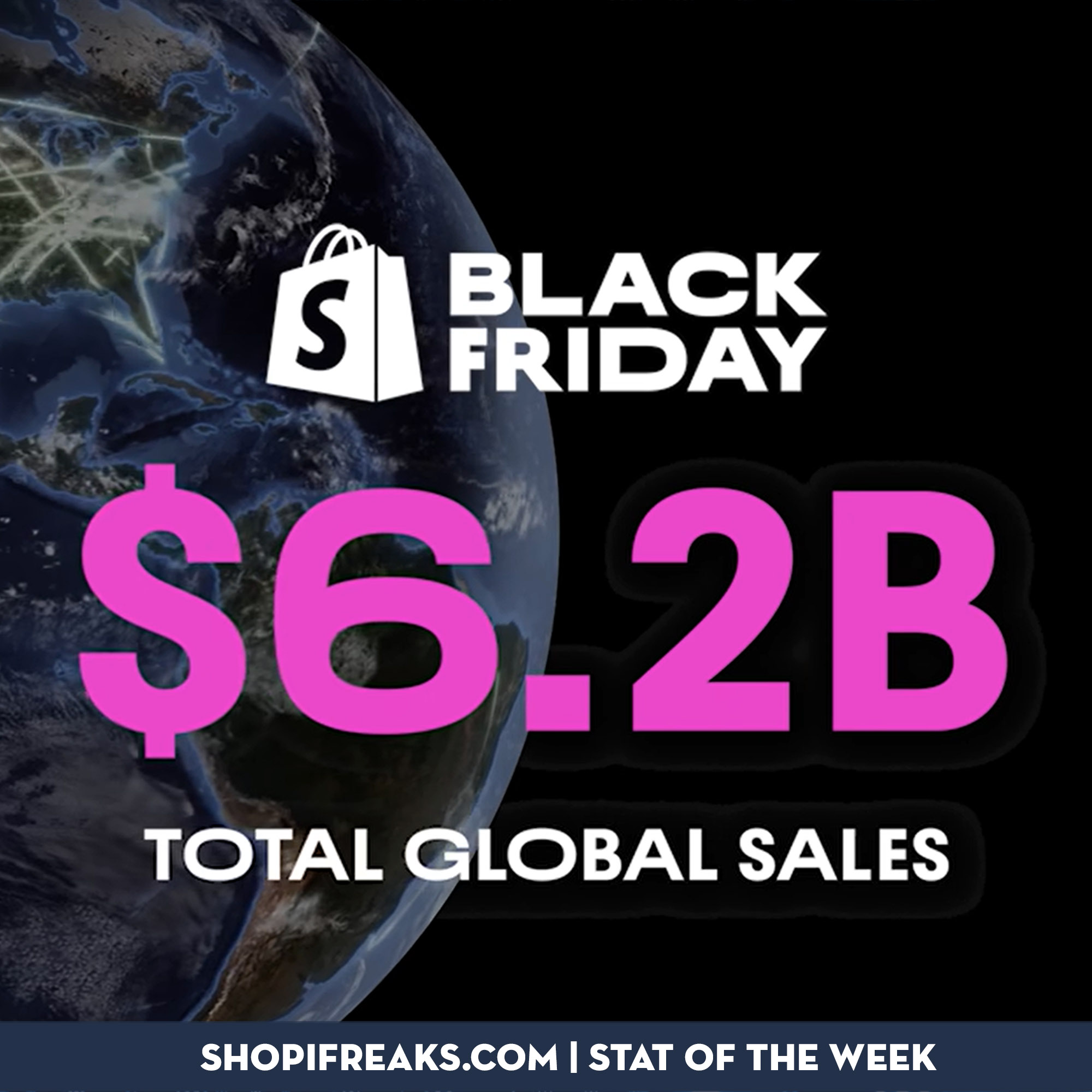
Shopify merchants did $6.2 billion in total sales on Black Friday, up 25% from last year. Spending surged at 12:01pm EST when sales peaked at $5.1 million per minute with an average cart price of $117.93.
1. OpenAI launches “Shopping Research” mode for ChatGPT
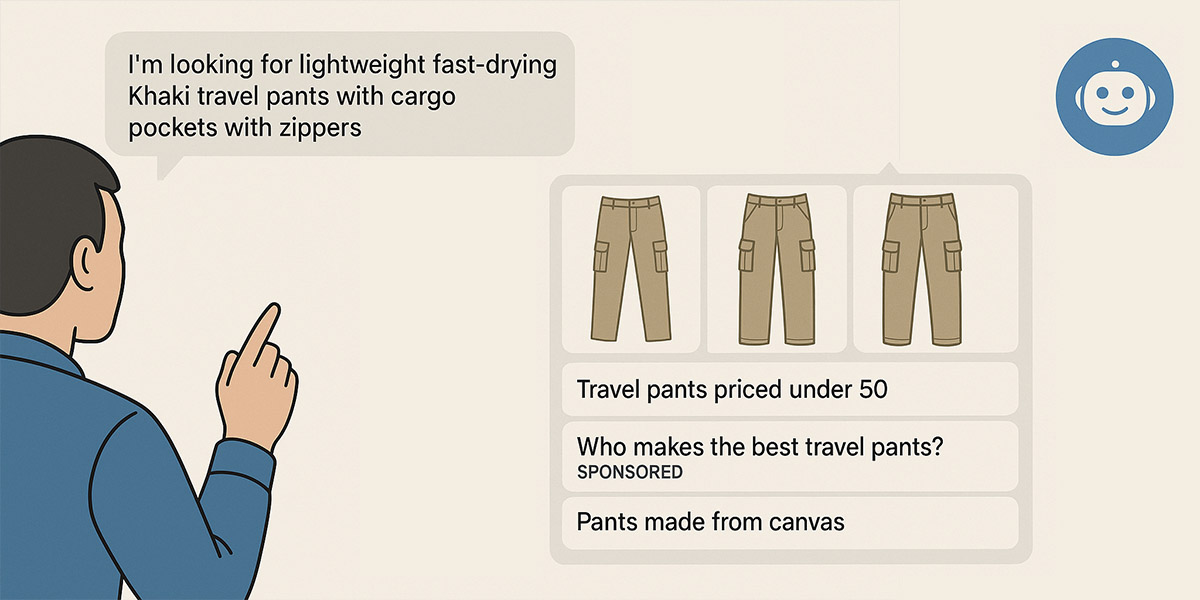
OpenAI released a new feature for ChatGPT called “Shopping Research” that helps you find products via personalized buyer guides built from publicly available product info and what it knows about you. The feature rolled out last week for ChatGPT users on Free, Go, Plus, and Pro plans just in time for Black Friday.
OpenAI says that Shopping Research “asks smart clarifying questions, researches deeply across the internet, reviews quality sources, and builds on ChatGPT’s understanding of you from past conversations and your ChatGPT memory to deliver a personalized buyer’s guide in minutes.”
Here’s what Shopping Research can do:
- Discover new products – “Help me find a new laptop suitable for gaming under $1000 with a screen that’s over 15 inches.”
- Find
dupeslookalikes – “I’m looking for a dress that looks like this, but is full length and less than $250.” - Compare items – “I need a stroller that’s lightweight, compact, and easy to fold, and can handle city sidewalks and some rough terrain. Compare these three models and determine which is best for my needs.”
- Choose gifts – “I need a gift for my favorite newsletter operator who lives in Cuenca, Ecuador.”
- Find deals – “Help me find the best Cyber Monday deals for 65″ smart TVs.”
Here’s how it works:
- The user asks ChatGPT a shopping question such as, “Find me the best lightweight fast-drying travel pants with cargo pockets that zip for under $50.”
- ChatGPT automatically suggests the Shopping Research tool when it’s applicable.
- If selected, ChatGPT generates a short quiz to acquire more information about features, preferences, and budget.
- From there, it creates a personalized buying guide with best options, comparison tables, and swipe cards (depending on the guide).
It’s pretty impressive in terms of output, but I didn’t spend enough time with it to confirm whether the information it provided in the buyer guides was accurate — or if it was anything like the traditional ChatGPT experience nowadays, which makes stuff up all the time.
I did one test for “best lightweight travel pants with cargo pockets that zip for under $50,” and it actually recommended the Wrangler pants that I’ve been buying for the past decade even though I’ve never had a conversation with it about them, which was pretty cool. So it must be doing something right!
OpenAI has recently inked deals with Walmart, Etsy, Shopify, and Target, but the company says that its Shopping Research tool won’t show any favoritism in its product recommendations, which are currently all unsponsored. There is no checkout feature within Shopping Research, but OpenAI said that it’ll be possible to integrate with its Instant Checkout feature later on. First they just “wanted to focus on making a really great discovery experience.”
2. ChatGPT is getting ready to serve you ads (for real this time)
There’s been a lot of speculation over the past year that OpenAI would be integrating ads into the ChatGPT experience, but now it might actually be coming true, according to code found in a beta version of ChatGPT’s Android app, first discovered by engineer Tibor Blaho.
According to Blaho’s post, the 1.2025.329 beta version of ChatGPT’s Android app includes mentions of:
- ads feature
- bazaar content
- search ad
- search ads carousel
This version of the app isn’t available to the public yet, but is causing speculation that ads may be coming to ChatGPT as early as its next public app release.
Blaho added more context in a follow-up post on X where he wrote:
- OpenAI has been talking for a while about maybe trying ads in a careful way, and these references are the first clear hint that this is now in active development
- My guess is that ads will start around search, shopping and recommendation answers, with “bazaar content” and “search ads carousel” pointing to marketplace style product cards, not inside every normal chat
- This brings ChatGPT closer to what we already see from Google and Microsoft, where Google shows ads inside AI Overviews and AI Mode results and has talked about native ad ideas for Gemini, Copilot already shows ads in chat for shopping and other commercial questions, and Perplexity shows sponsored follow up questions next to the answers
- This could help OpenAI give free users more generous usage and features, while users on paid plans stay ad free, which fits with the high costs of running ChatGPT and the revenue they expect from shopping and ad related features
Sam Altman has had an on-again off-again relationship with the idea of bringing ads to ChatGPT. He’s been quoted saying:
- “I kind of hate ads just as an aesthetic choice. I think ads needed to happen on the internet for a bunch of reasons, to get it going, but it’s a momentary industry. The world is richer now. I like that people pay for ChatGPT and know that the answers they’re getting are not influenced by advertisers.”
- “I’m not going to say what we will and will never do because I don’t know, but I think there’s a lot of interesting ways that are higher on our list of monetization strategies than ads right now.”
- “I’m not totally against it… I like ads on Instagram.”
- “I believe there probably is some cool ad product we can do that is a net win to the user and a sort of positive to our relationship with the user. I don’t know what it is yet…”
- “If ChatGPT were accepting payment to put a worse hotel above a better hotel, that’s probably catastrophic for your relationship with ChatGPT.”
- “Ads on a Google search are dependent on Google doing badly. If it was giving you the best answer, there’d be no reason ever to buy an ad above it. So you’re like – that thing is not quite aligned with me.”
- “I expect it’s something we’ll try at some point.”
I guess that after writing checks for tens of billions of dollars to pay for GPUs and datacenters, ads start to make a lot more sense.
3. PayPal and Perplexity deepen their partnership with Instant Buy
PayPal and Perplexity launched a new integration that enables PayPal merchants to become discoverable inside Perplexity’s shopping results and lets users complete purchases directly in the chat interface, marking the first major deployment of PayPal’s agentic commerce features.
Here’s how it works:
- The system makes merchants’ product catalogs searchable inside Perplexity through PayPal’s store sync feature, which pushes real-time listings into AI answers.
- Users enter shopping related prompts such as, “I’m shopping for a winter sweater that matches my style for the San Francisco Ferry commute.” (That’s actually the example they gave in the video. These San Francisco tech nerds might need to get out of the city more, LOL.)
- Perplexity displays a list of product results complete with image carousels, product descriptions, pricing, and reviews.
- The shopper can click to reveal more information about an item via a pop-up window.
- From there, they have the option to “Instant Buy” the item using PayPal’s integrated checkout.
- PayPal handles identity verification, fraud screening, payment processing, and seller and buyer protection without leaving the conversation.
- The brand remains the merchant of record and keeps direct control of customer relationships.
Perplexity said the integration is designed to capture high-intent shoppers at the moment of discovery, turning its answer engine into a shoppable interface that supports browsing, selection, and checkout. Initial brands to participate include Abercrombie & Fitch, Ashley Furniture, Fabletics, Adorama, and NewEgg, with more to come.
Last week I reported that Perplexity made its “Buy with Pro” agentic shopping experience free for everyone, after launching it one year ago exclusively for paid subscribers. That earlier update enabled Perplexity to process purchases for participating brands, but the PayPal partnership goes further by plugging in PayPal’s identity, payment, and protection stack. The companies say the partnership fulfills the vision they outlined earlier this year to turn Perplexity into a retail channel that connects shoppers with brands through agentic AI.
4. What’s up with the TikTok deal? We want answers!
U.S. Senator Ed Markey of Massachusetts, a member of the Senate Commerce, Science, and Transportation Committee, is demanding answers from the Trump administration over the status of the TikTok deal, following the administration repeatedly declaring that it has reached an agreement between ByteDance and a consortium of investors, but providing no details. Finally someone is stepping up to the plate and demanding answers!
Markey sent a letter to the Trump administration stating:
“Although your Administration has repeatedly declared that it reached a TikTok deal with China and financial investors, you have released few details on any agreement. In fact, it’s unclear whether China has even agreed to any TikTok deal. In late October, Treasury Secretary Scott Bessent declared that China had just approved the TikTok deal — even though you said in September that Chinese President Xi Jinping had approved the agreement. Throughout this process, Beijing has never confirmed that it has agreed to a TikTok deal; in fact, after Xi’s meeting with you a few weeks ago, the Chinese government would say only that ‘the Chinese side will work with the U.S. side to properly address issues related to TikTok.’ Given the number of times your Administration has falsely announced a TikTok deal, Americans would be forgiven for thinking that they stumbled into the movie Groundhog Day.”
He went on to pose a series of questions about the deal:
- If TikTok U.S. is licensing the algorithm from ByteDance and retraining it, is this a one-time transfer of the source code or does TikTok U.S. have to renew it at regular intervals?
- Will any changes to the algorithm by ByteDance affect the algorithm that is licensed to TikTok U.S.?
- Will ByteDance be providing any ongoing technical support for the licensed algorithm?
- What does retraining the algorithm on U.S. user data entail?
- If ByteDance and TikTok U.S. no longer have an operational relationship — as is required under the TikTok ban — why would Oracle need to closely monitor the algorithm and U.S. user data?
- Moreover, has China even agreed to this deal?
Markey is demanding a briefing on the deal within the next two weeks that includes detailed information about the status of negotiations with China over the TikTok ban and the licensing arrangement between ByteDance and TikTok US.
Whether the Trump administration will respond or comply with the demands is a different story. If they choose to refuse or ignore the demand, Markey can escalate the issue through Senate committee oversight, hearings, or a committee-approved subpoena — which could take weeks or months if it were to even receive the support needed to move forward.
5. Walmart is testing ads in Sparky
Walmart is testing ads in its AI shopping agent, Sparky, including a “Sponsored Prompt” ad type, according to WSJ sources. So far Walmart has only allowed certain advertisers to participate in the early test, which started in September and concluded earlier this month. Now Walmart says it’s considering next steps.
Here’s how the sponsored prompts worked:
- Let’s say a shopper was searching for energy drinks.
- Sparky might have produced a sponsored prompt that asked, “Which energy drink has the most caffeine?”
- If the shopper clicked on that prompt, they may have been presented with a product ad for a specific high-caffeine energy drink.
Question though: Would the advertised energy drink actually have the most caffeine? Or does the spot simply go to the energy drink company willing to pay for it? If these sponsored prompts are mixed with traditional AI recommended prompts, are they data-driven in the same way?
There’s a trust that’s been established between AI and consumers, along with an expectation that the information being provided is factual. If sponsored prompts begin providing wrong information that was paid for, it could erode trust in the experience.
Several people familiar with the test told WSJ that the volume of people engaging and clicking on the Sparky ads has been low. However Simon Poulton, VP of innovation at Tinuiti, said that advertisers are eager to test any new formats so that they can get a sense of what ads will look like in these chat environments.
Last week I reported that Amazon introduced sponsored product and brand prompts, which allow brands to inject their sponsored campaigns into AI conversations with paid prompts like, “Why choose Accent Athletics shirts?” The feature entered open beta in the U.S. this month and is automatically enabled for advertisers using Sponsored Products and Sponsored Brands campaigns. During the beta phase, the prompts are offered at no additional cost to advertisers so that Amazon’s systems can learn how to optimize them, but it’s expected that eventually sponsored prompts will be a separate channel with additional fees.
What are your thoughts on sponsored prompts infiltrating your AI chat experience? Hit reply and let me know or join the conversation on LinkedIn.
6. “Hey, hey, ho, ho, Amazon has got to go!” – Signed, Disgruntled
More than 1,000 Amazon employees have signed an open letter warning against the impact of the company’s strong AI push, claiming that the company’s “all-costs justified, warp speed” approach to AI implementation will cause damage to “democracy, to our jobs, and to the earth.”
The letter, which was backed by 2,400 workers across other tech firms including Google, Alphabet, Microsoft, and Meta, calls for clean-energy data centers, safeguards against harmful AI uses, and greater worker input on AI-related decisions.
Employees also say in the letter that Amazon’s emphasis on AI-driven productivity has created unrealistic expectations and heightened job insecurity, with one employee telling The Guardian that the company was “using AI as justification to push myself and my colleagues to work longer hours and push out more projects on tighter deadlines.”
In other news about disgruntled Amazon employees…
Amazon workers in 30 countries launched their sixth annual “Make Amazon Pay” protests on Black Friday, targeting heat conditions in warehouses, aggressive productivity pressure, AI-driven data center expansion, and the company’s work with immigration authorities.
In India, surveys cited by unions found widespread heat-related health issues, while actions in Europe and North America focused on unionization, recent layoffs and alleged retaliation against organizing efforts.
Christy Hoffman, general secretary of UNI Global Union, told Business Insider:
“Amazon, Jeff Bezos, and their political allies are betting on a techno-authoritarian future, but this Make Amazon Pay Day, workers everywhere are saying: enough. For years, Amazon has squashed workers’ right to democracy on the job through a union and the backing of authoritarian political figures.”
David Adler, co-general coordinator of the Progressive International, said in a statement:
“Amazon is no longer just a retailer — it is a pillar of a new authoritarian order built on surveillance and exploitation. From ICE raids to the repression of Palestinians, Amazon’s technologies are woven into systems of violence worldwide.”
In response to the demonstrations, Amazon said that it provides “great pay, great benefits, and great opportunities” and that the company provides a “modern, safe, and engaging workplace whether you work in an office or at one of our operations buildings.”
7. Black Friday once again set record sales numbers across the board
Black Friday results are officially in, and the numbers say: America went into a lot of debt this year!
Some were predicting a holiday shopping season of slow or no growth, but current numbers show quite the opposite. Here’s what’s been reported so far about Black Friday and other holiday shopping numbers:
- U.S. shoppers have already spent $79.7B online from Nov. 1 to Nov. 23, prior to Black Friday week, marking a 7.5% jump over last year’s pace. BNPL drove $6.1B of that online spending, a 10.3% YoY increase.
- Shopify merchants did $6.2B in total sales on Black Friday, up 25% from last year (22% on a constant currency basis). Spending surged at 12:01pm EST when sales peaked at $5.1M per minute with an average cart price of $117.93.
- American consumers spent $11.8B online on Black Friday, according to data from Adobe Analytics, up from $10.8B last year.
- Adobe estimates that Cyber Monday (today) will be even bigger, with $14.2B spent online — but I’ll share the official numbers next week.
- Adobe is projecting a total of $253.4B in holiday spending this year, compared to $241.1B in 2024.
- Salesforce tracked $79B in global spending on Black Friday (+6% YoY), of which $18B came from the United States (+3% YoY).
- Salesforce data also shows that prices were up an average of 7%, while order volumes were down 1% — meaning people didn’t necessarily set out to spend more. Things have just gotten a lot more expensive so the GMV is bigger!
- Mastercard SpendingPulse reported that overall Black Friday sales across online and brick-and-mortar (excluding automotive) rose 4.1% YoY, with online sales jumping 10.4% YoY.
Target took heat this year from shoppers who waited in line for hours before stores opened to claim a “Target swag bag,” only to discover that the “swag” was worthless clearance items like UNO cards, travel-sized shampoo, and small Nerds candy boxes.
Pretty much every major retailer got berated this year for offering “fake deals” that appeared to heavily discount items, but were actually priced equal to or higher than they normally are throughout the year. Retailers must think we’re pretty stupid to fall for those fake deals, which I guess we are! The numbers this year speak for themselves.
8. Shopify fires salespeople over inflated numbers, and then some
Shopify fired a “single-digit number of salespeople” for faking revenue projections to increase their commissions, according to a report by The Logic, which cited unnamed sources.
For over a year, the salespeople inflated projected sales figures of brands they’d onboard by “tens of millions of dollars” because their commission structure was based on the projected annual sales of each merchant they brought to the platform. However as time went on, Shopify saw that the new merchants failed to deliver the numbers projected by its sales team and eventually caught wind of what was going on.
Shopify’s head of external communications Ben McConaghy told The Logic:
“We immediately investigated, fired them, and strengthened our systems. This had no impact on our financials and this issue is closed.”
Following those fraud-related cuts, Shopify made additional layoffs last week across managerial roles including merchant success, operations, sales, and account executive teams.
Regarding those layoffs, McConaghy said:
“This impacts a fraction of a percent of our team, keeping us fast, sharp, and focused on long-term merchant success.”
In Ontario, where Shopify is partially headquartered, regulations require longer notice periods for employees affected by mass layoffs impacting more than 50 workers, but it’s currently not clear if these recent cuts meet that criteria.
9. Other e-commerce news of interest
Etsy sellers have been experiencing severe search visibility failures since November 6, with shops disappearing from results and traffic dropping to zero despite having clean histories and strong metrics. Hundreds of sellers on Etsy’s forums and Reddit report the same pattern, including a temporary fix by toggling Vacation Mode that lasts about 24 hours before visibility collapses again. Etsy acknowledged the issue on November 12 but has not provided further updates, which has left many businesses without search visibility on the platform during the busiest sales period of the year.
TikTok Shop will soon require all USPS shipping labels to be purchased and printed through TikTok Shipping starting in January, blocking labels from external sources and rejecting any USPS postage not issued through the platform. However, FedEx and UPS labels can still be purchased from other carriers, which is expected to push many brands into a hybrid approach that uses TikTok for USPS labels while shifting other volume to FedEx or UPS. The change aligns TikTok with federal law targeting counterfeit postage and expands an update already applied to cross-border sellers since October 2025. Sellers can still use their own labels with non-USPS carriers, but anyone relying on Postal Service shipping must integrate with TikTok Shipping by December 31 to avoid errors or fulfillment disruptions.
US attorneys general from 25 states are requesting that Shopify pull its hosting services from websites selling vapes illegally and then work with them on an ongoing basis to cut off clients selling vapes that lack the necessary government licenses or violate other U.S. laws. The FDA has authorized 39 e-cigarette products for sale legally in the U.S., however the market is still dominated by unregulated devices such as disposable e-cigarettes with fruity flavors that are manufactured in China. The attorneys general noted that they plan to seek similar agreements with other web hosting providers because a “more comprehensive solution” was needed nationwide due to the public health risks posed by unregulated vapes.
Media buyers refused to run an activist campaign criticizing Meta due to the fact that Meta is a client, and they didn’t want to appear to be in support of the message. The campaign was created by Insiders, a London-based independent creative studio, and supported by Refundee, a consumer advocacy group, designed to mimic Meta’s ad style to highlight how hacked and impersonated Instagram users struggle to reach human support, while promoting a Change.org petition calling for stronger protections and faster response times. Victims and advocacy groups say Meta’s automated systems and limited human intervention leave users exposed to fraud and that the industry’s reliance on Big Tech advertising makes accountability harder to pursue. So Meta is too big to criticize now through they same outlets that they also work with?
Temu, Shop App, Best Buy, Craigslist, and Hobby Lobby are some of the least privacy-invasive shopping apps, according to a report from Tenscope of the Most Invasive Shopping Apps in 2025. The study found that Foot Locker scored 100 out of 100 for data invasiveness, collecting nine types of tracking data and sharing 13 categories with advertisers, while Dick’s Sporting Goods scored just 3 despite shared ownership. The report also shows that 24 apps share purchase history with advertisers, 19 share email addresses, and several track browsing or search history across other apps. Tenscope notes an inverse trend between invasiveness and popularity, with top-downloaded apps like Temu and Shop by Shopify scoring near zero on data collection.
AliExpress has surged in paid Google Shopping visibility one week before Black Friday, surpassing both eBay and Temu to become Europe’s second-largest advertiser behind Amazon, according to data by Smarter Ecommerce. Just one month ago, AliExpress was only relevant for about one-quarter of advertisers, but now they’ve doubled their presence and compete with more than half of advertisers. Mike Ryan, head of e-commerce insights at Smarter Ecommerce, says he is currently unable to say with certainty whether Temu has lessened its ad spend, AliExpress has increased its spend, or a combination of the two.
Amazon abruptly removed Dupe, an AI-powered shopping search tool that lets users find products across multiple retailers, and other partners from its program that let AI search tools earn commissions on Amazon purchases. The change effectively forces Dupe to either keep listing Amazon products without receiving affiliate revenue or pull Amazon products from its database. Dupe’s co-founder and CEO Bobby Ghoshal told The Information, “I just don’t understand a business case where this is permanent. We’re not actually doing the checkout on behalf of the user, so we are not slowing the user down from visiting Amazon. If anything, we’re getting them there faster.” In the meantime, it’s one more example of Amazon explosive shitting on its partners without warning.
TikTok Shop is seeing more household brand names join its e-commerce platform this year including Samsung, Ralph Lauren, and the Disney Store, which last week began listing Mickey Mouse t-shirts and Frozen plush toys for sale, after previously struggling to attract big retailers. The influx of bigger brands increases competition for organic and paid visibility, prompting heavy discounting and rising ad spend through the platform — which is the goal for TikTok, right? The classic platform / marketplace play has always been: Offer organic reach, build a userbase, and then make it costly to reach them.
eBay introduced new updates to its Ambassador storefronts that let affiliates pin collections, control how items appear on their main page and quickly remove sold out listings aimed at addressing common complaints about managing out-of-stock items and giving creators more flexibility in how curated collections are displayed. eBay also added setup guides and an AI chatbot for program support, giving Ambassadors quicker access to answers when building and managing their storefronts.
Morgan Stanley predicts that nearly half of all U.S. e-commerce shoppers will use AI agents by 2030, and that agents could help add as much as $115B in total online spending. The firm says agentic commerce tools that handle recommendations, comparisons and order management could reshape retail funnels, beginning with groceries, followed by household, personal care and apparel categories. Groceries is one of the first ways I’d personally let agentic commerce shop for me, given how for the most part, I purchase the same items across multiple visits. Whereas I’m not quite ready to let an AI agent purchase clothing, electronics, or other items that I may be buying for the first time. But yeah, go ahead and re-order the milk brand that I buy each week.
Amazon shut down its 3.6 million-square-foot LIT1 fulfillment center in Little Rock, Arkansas “to perform building assessment” after outside experts found structural engineering errors that make the building unsafe during an earthquake. The facility, which employs more than 2,000 people, will undergo significant repairs with workers offered transfers, 90 days of full pay, extended medical benefits and severance if no new role is found. Amazon informed sellers that inventory stored at the facility will be redirected to other fulfillment centers as needed, with capacity limits adjusted and any storage or aged inventory fees refunded during the disruption.
Amazon is under FAA investigation after an MK30 delivery drone struck an overhead Internet cable in Waco on November 18, causing the line to snap and triggering a controlled emergency landing. Amazon said the incident caused no injuries or major service outages, that it paid for the repairs, and that the drone completed its delivery before the incident (which was everyone’s top concern, LOL). The probe follows a separate investigation into two Prime Air drones that collided with a construction crane in Arizona last month, and marks one more obstacle in the air as Amazon aims to scale its drone delivery program to 500M deliveries annually by the end of the decade.
Meta is in talks with Google to spend billions of dollars on its tensor processing units to train its AI models or do inference, which is the process a trained model uses to generate the response to a query, which would shift its reliance away from Nvidia. News of the deal caused Nvidia’s shares to drop 7% on Tuesday, resulting in the company posting on X, “We’re delighted by Google’s success—they’ve made great advances in AI and we continue to supply to Google. NVIDIA is a generation ahead of the industry—it’s the only platform that runs every AI model and does it everywhere computing is done.” Defensive much? Google first began using its TPU chips a decade ago for internal purposes, began making them available in 2018 to Google Cloud users, and most recently used the chips to train its own Gemini LLM. Last month, Anthropic announced that it would spend tens of billions of dollars beginning in 2026 to buy enough TPUs to power 1 gigawatt of computing capacity, and Google may start selling the chips more widely to external customers.
Apple eliminated dozens of sales roles in efforts to streamline how it offers products to businesses, schools, and governments, marking a rare layoff for the company, which hasn’t made a significant round of cuts since 2024 when it laid off 600 employees who worked on its electric vehicle project. The affected jobs included account managers serving major businesses, schools, and government agencies, as well as staff who operated Apple’s briefing centers for institutional meetings and product demonstrations for large customers.
Klarna launched a stablecoin called “KlarnaUSD,” marking the first bank to launch a stablecoin on Tempo, a new independent blockchain started by Stripe and Paradigm that’s built for payments. Klarna is aiming to position the coin as a faster and cheaper alternative for everyday payments and cross-border transactions. It is currently in testing and will be available on the mainnet in 2026. The move marks a major shift for Klarna’s CEO Sebastian Siemiatkowski, who in 2022 called cryptocurrencies a “decentralized Ponzi scheme” — but not this one!
Japan is considering ending its de minimis exemption, which waives consumption taxes on imported goods valued at or below 10,000 yen (roughly $64). According to the proposal, planforms with more than 5 billion yen ($32M) in annual sales would be required to pay the tax on behalf of sellers, targeting Temu, Shein, and Qoo10. Scrapping the loophole is expected to raise purchase prices by around 10% on those platforms.
A Canadian federal court judge said Amazon Canada should have hired “at least 100 lawyers” to go through more than 2.25M documents in order to meet its court-ordered deadlines in an investigation into anticompetitive conduct. Judge Paul Crampton ruled earlier this month to grant some extensions for document production to Amazon, but not others, saying that 100 lawyers could finish a review of the documents in 15 weeks by working 10 hours a day, five days a week, and reviewing an average of 30 documents per hour, despite Amazon claiming it would be impossible to comply with 90-day and 120-day deadlines set by the court in July. Canada is investigating Amazon for potential abuse of dominance tied to its marketplace fair pricing policy, examining whether it leads to higher consumer prices, restricts lower-priced rivals, or distorts how products are ranked and displayed.
The EU announced plans to ban social media platforms from providing financial or material incentives for kidfluencing as part of a broader push to protect minors online. With top kidfluencers earning millions a year, European leaders are worried the lure of money will tempt some parents to pressure their children into constantly performing (SPOILER: It does.) The proposal includes following Australia’s lead in banning children under 16 rom having any social media account without parental consent, and not allowing accounts at all for kids under 13. Does that mean kids can’t perform in their parents’ videos either? Is family vlogging going to die along with kidfluencing? The line between “kid channels” and “adult channels that feature their kids” may get blurry.
In other European regulatory news this week… EU lawmakers reached a deal that makes Meta, TikTok and other social platforms financially liable for online scam content they fail to remove after it’s reported. Banks will reimburse victims of impersonation scams or unauthorized payments, but platforms must then compensate banks when fraud originates on their services. The package builds on the Digital Services Act and Digital Markets Act and adds new regulatory pressure on U.S. tech firms. CCIA Europe Policy Manager Leonardo Veneziani, whose trade body represents Amazon, Google, Meta and Apple, criticized the rules as conflicting with existing EU law and creating a dangerous precedent.
Amazon and Flipkart are entering the lending business in India, with Amazon Axio preparing to offer loans to small businesses and Walmart-owned Flipkart looking into offering BNPL products. Amazon acquired the neobank lender Axio earlier this year, which has historically focused on BNPL and personal loans, but now is taking aim at offering credit and cash management solutions for SMBs. Meanwhile Flipkart registered its non-bank lending arm, Flipkart Finance, in March and is awaiting the Reserve Bank of India to approve its business plans.
OpenAI confirmed a user data breach via a third-party web analytics tool called Mixpanel that exposed names, e-mails, user IDs, operating system, browser, organization names, and approximate locations of an undisclosed number of users. The company says that ChatGPT users were unaffected and that their chat content, API usage, passwords, payment details, and government IDs remain secure. OpenAI has shut down its interfacing with Mixpanel while it investigates the breach.
Google dropped a holiday-themed commercial called “Big Night Out?” as part of its “Just Ask Google” campaign that features Santa Claus searching Google for a new clothes and using the company’s AI “try it on” tool to see how he looked in them before purchasing. The commercial ends with the narrator saying, “Because he asked Google, Santa sleighed.” Then Santa looked over at Mrs. Clause and clicked the “I’m Feeling Lucky” button, but the servers were busy…
🏆 This week’s most ridiculous story… Deloitte is back in the hot seat for allegedly (but definitely) using AI to create a $1.6M health care report for the Canadian government that contained false citations pulled from made-up academic papers, cited real researchers on papers they hadn’t worked on, and referenced fictional papers co-authored by researchers who said they had never worked together. As ridiculous as this story is on its own, it’s even more ridiculous given that this is the second time this year that Deloitte has been accused of using AI to write reports! The first accusation came last month in regards to a $290,000 report published in July that was supposed to help the Australian government crack down on welfare, but included references to nonexistent academic research papers and a fabricated quote from a federal court judgement. Deloitte denied that AI was used to write the report and claims it was only “selectively used to support a small number of research citations.”
10. Seed rounds, IPOs, & acquisitions
Cavela, an AI-driven sourcing platform that helps brands connect with global manufacturers, raised $6.6M in a seed round co-led by XYZ Venture Capital and Susa Ventures. The platform employs AI agents to find potential suppliers in over 40 countries and negotiate product specifications and pricing, claiming to save an average of 35% on production costs for clients.
Onton, an AI search and discovery engine that lets shoppers find home decor and furniture products using natural language and image queries, raised $7.5M in a seed round led by Footwork, bringing its total amount raised to $10M. The platform aggregates information from across the web into a single product listing so that shoppers do not have to bounce around to multiple sites. Onton rebranded from the name Deft earlier this year over confusion around the original name and difficulty securing a domain name. Well, “Onton” certainly clears things right up — if it was a Chinese dumpling company, LOL.
IDHL, one of Europe’s largest digital commerce and performance agencies, acquired Vervaunt, a London-based e-commerce consultancy, strategy, and performance agency, for an undisclosed amount. The acquisition is part of a long term strategy that includes investing more than £1.5M into AI and product development. Vervaunt will keep its brand, maintain its leadership team, and open a US office in 2026 while co-founders Paul Rogers and Josh Duggan join the IDHL leadership group.
Ranketta, a Czech-based AI visibility platform that helps brands understand and improve their presence in AI search and shopping results, raised €1M in a pre-seed funding round led by Lighthouse Ventures. Since launching two months ago, Ranketta has already begun working with more than 20 European brands and plans to use the funding to accelerate expansion across Europe, enter into the U.S. market, and grow its engineering, product, and sales teams.
ByteDance, the parent company of TikTok, saw its valuation jump to $480B, more than doubling from its $230B valuation reported in September 2024, following Capital Today’s $300M investment earlier this month. The stock was initially priced at $200M, valuing the company at $360B, before seven bidders drove up the price and valuation.
Thanks for being a Shopifreak!
If you found this newsletter valuable, please leave a review on Google and share the newsletter with your friends and colleagues to help us grow.
See you next Monday,
PAUL
Paul E. Drecksler
🌐 Shopifreaks.com
🧑💼 Add me on LinkedIn
📧 [email protected]
📱 +1-828-273-3031
⭐ Leave A Review
PS: Why were the Middle Ages called the Dark Ages? There were too many knights!