
Hi Shopifreaks
🎉 Before we begin, I’m excited to present a new pitch from my video series 90 Second Pitches — a channel that helps you discover innovative e-commerce technology from the most promising startups. You can subscribe to the channel on YouTube & LinkedIn.
Today’s 90 Second Pitch comes from Rich Chapple at Order Rescue, a Shopify app that recovers abandoned checkouts caused by invalid or expired discount codes.
According to the company, around 8% of customers attempt at least one invalid discount code before abandoning their cart. Order Rescue automatically detects those failed attempts in real time and serves up a targeted rescue offer, such as a one-time discount, free shipping, or a gift with purchase, to keep the sale alive. Merchants can choose which rescue offers to display and when, based on rules like cart value, customer status, and basket size.
I absolutely love Order Rescue and am already using it on stores I manage. It’s actually an idea I had several years ago for an app, but like many of my ideas, I didn’t want to build it myself — I just wish it existed! So I was thrilled when Rich messaged me about Order Rescue. My first thought was, “Yes! Finally!”
Watch Rich’s 90 Second Pitch below and then let him know in the comments if you’re going to add Order Rescue to your tech stack.

90 Second Pitch:
▶️ Watch On LinkedIn | ▶️ Watch On YouTube
Visit Order Rescue on the Shopify App Store to install the app for free and begin tracking how many sales you’re losing each day to invalid discount codes.
Want to pitch your startup? Hit reply and show me what you’re working on. I’ve got more great pitches coming your way soon, and I’d love to feature your e-commerce app or SaaS solution too. Hope you enjoy the new series!
And now onto your regularly scheduled programming…
In this week’s edition I cover:
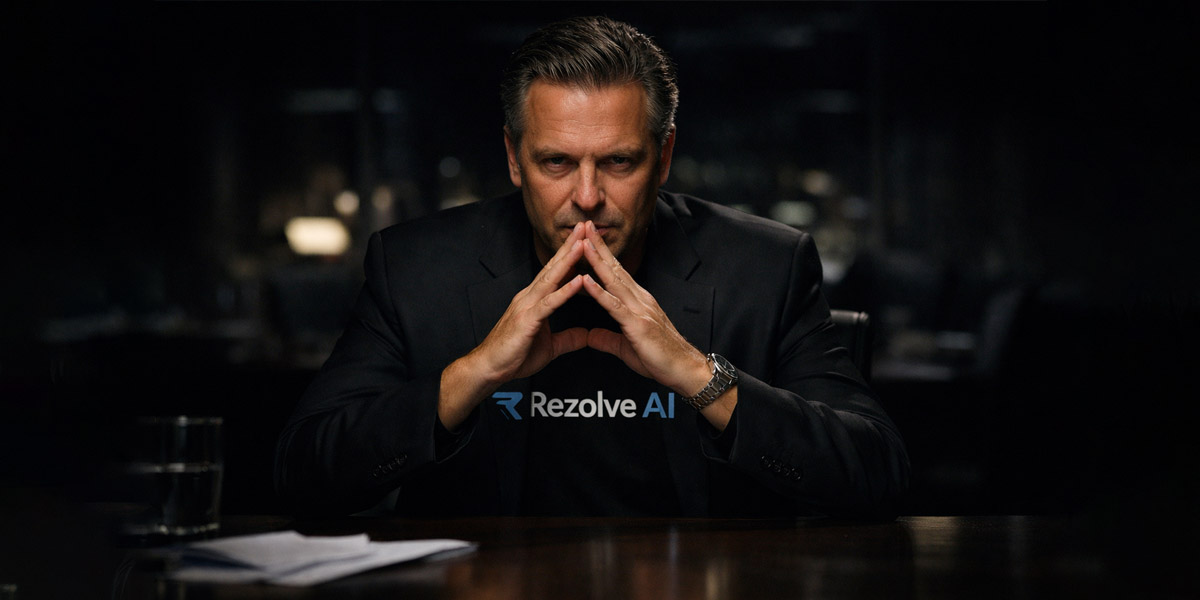
- Rezolve wants to takeover Commerce
- Shopify launches AI Toolkit
- Amazon and USPS reach an agreement
- PayPal partners with Meta and Canva
- PrestaShop prepares for layoffs
- Andy Jassy outlines his world domination plans
- Anthropic’s model is too powerful to release
- Amazon sellers plan a boycott
- New York City wants drivers to be employees
- Lowe’s gets serious about personalization
- Target scales its next-day delivery program
- Polymarket bets make it into Google News
All this and more in this week’s 273rd Edition of Shopifreaks. Thanks for subscribing and sharing!
Stat of the Week
Google’s AI Overviews answer questions correctly 91% of the time after upgrading to Gemini 3, up from 85% with Gemini 2, according to an analysis done by Oumi. While statistically impressive, a 9% error rate translates to tens of millions of incorrect answers every hour. Also notable is that more than half of the accurate responses linked to sources that did not fully support the information provided.

1. Rezolve AI attempts a hostile takeover of Commerce
Rezolve AI is attempting a public and hostile takeover of Commerce, the parent company of BigCommerce, Feedonomics, and Makeswift. After submitting two crappy offers to Commerce’s board and having both rejected, Rezolve is now bypassing the board and publishing letters directly to shareholders.
First, what is Rezolve AI?
Rezolve AI is a London-based AI commerce platform founded in 2016 that sells conversational product discovery, personalized search, and one-tap checkout tools to e-commerce brands across various platforms. The company went public on Nasdaq via a SPAC merger in Aug 2024 under the ticker RZLV and currently sits just under a $940M market cap. If the name sounds familiar, I’ve covered them a few times in previous editions, most recently when they acquired Reward, Crownpeak, and Smartpay.
Here’s a brief timeline of events:
- Feb 22, 2026 – Rezolve privately sent Commerce an unsolicited all-stock acquisition proposal, offering 1 RZLV share for every 1 CMRC share. At the time that offer was sent, RZLV was trading at $2.15/share and CMRC at $3.02/share, so the offer represented a 28.8% discount on Commerce.
- April 7, 2026 — Rezolve sent a second, revised proposal, this time offering 1 RZLV share ($2.88) for every 2 CMRC shares ($2.73), which was even worse than its first offer, representing a 47.3% discount.
- April 8, 2026 – Commerce’s board rejected the offer, saying the proposal “significantly undervalues the company” and “does not warrant further engagement.”
- April 9, 2026 – Rezolve issued a public response to the rejection, saying that Commerce’s board is “asking its shareholders to believe in a fiction: that a thinly traded screen price is the same thing as a realizable value, and that 3% annual revenue growth constitutes a credible standalone recovery.” I mean, that sort of feels like the pot calling the kettle black. Yes, CMRC has lost 96% of its market value since going public in 2020, but RZLV has declined 78% since its public merger in 2024. Neither stock really inspires confidence.
I’m going to share a few thoughts about this developing situation in no particular order:
1) I’ve been covering deals in this space for a long time, and I can’t think of one example where a publicly traded company was acquired at a discount. In virtually every public company acquisition, the acquirer pays a premium over the current share price. Why would a shareholder accept less than market value?
Rezolve is trying to pitch this as “we’re on the up and up and Commerce is stagnant,” making it sound as if overpaying for RZLV stock would be better than continuing the hold CMRC in the long run. Maybe that’s true, but if I really wanted to, I could sell my CMRC today, use the capital loss to offset gains elsewhere, and then subsequently use the funds to purchase RZLV — in which I’d come out waaaay better than Rezolve’s 2-for-1 offer. On that note, I feel that Commerce’s board is supporting shareholders through their decision to reject both offers.
2) Furthermore, is Rezolve overvalued because it’s considered an “AI stock”? Is the company even worth $940M? Rezolve did $46.8M in revenue last year at a loss. Sure they’ve gone on an acquisition spree in the past year and are projecting $360M in revenue in 2026, but could that simply make them worth what their stock is today? I don’t necessarily envision RZLV 10xing its share price.
3) A lot of companies are coming for Rezolve’s lunch. Rezolve competes in a very crowded territory with threats coming from multiple directions — including from the platforms themselves (Shopify, Salesforce, Adobe, Commerce via Feedonomics) and from the major LLM providers (OpenAI, Google, Perplexity, etc). Rezolve is trying to own the agentic commerce layer between consumers and retailers, but every major platform, LLM company, and specialized search/discovery vendor is converging on the same space. Their main differentiator is their proprietary LLM, but other very-well funded AI companies are improving their LLMs too.
My point of talking about the competition is that Commerce hitching their ride to Rezolve wouldn’t provide a guaranteed ticket to value creation, as the space can change quickly.
4) I can’t help but think that this whole thing may be a PR stunt, in which Rezolve comes out ahead either way.
- Scenario 1: Rezolve walks away with a ton of publicity and without a Commerce acquisition. The timing is nothing short of coincidental that while all eyes are on Rezolve, the company releases its new brainpowa on the Microsoft Foundry.
- Scenario 2: Rezolve acquires Commerce at a substantial discount in an all-stock deal that doesn’t require tapping into their cash reserves. I know a lot of companies that would gladly make that deal with Commerce if they shopped it around.
What are your thoughts? Hit reply and let me know or join the conversation on LinkedIn.
2. Shopify launches AI Toolkit, enabling merchants to manage their stores through AI agents
Shopify released its AI Toolkit, a new layer of infrastructure that connects AI coding tools like Claude Code, Cursor, Codex, and Gemini directly to a merchant’s Shopify store, giving those tools access to store data, documentation, and API schemas, as well as the ability to execute changes directly.
The toolkit allows AI agents to handle tasks like:
- Bulk product updates
- SEO and metafield edits across hundreds of listings
- Collection editing
- Inventory checks
- Custom reporting
- Product tagging at scale
- Theme modifications
All changes mentioned above can be triggered via natural language prompts rather than manual configuration, which can make development faster and more streamlined.
The only big caveat, which can be extremely dangerous on live stores, is that when you grant the toolkit mutation access, your requested changes execute immediately on your live store with no draft mode, no preview, and no undo. That’s putting a lot of faith in your AI agent! Which is why Shopify is positioning AI Toolkit as more of a developer tool than a merchant feature, as developers should know how to create backup environments of their product catalogs and theme code before letting their AI agent loose.
Generally speaking, I absolutely love this.
I regularly use Claude when developing Shopify stores, and this new ability to directly integrate the two platforms could significantly reduce the time it takes to develop, test, and deploy store changes. Then again, it could also create a giant mess very quickly! User beware…
Doesn’t Shopify already have a native AI tool to do those things?
Yes, you’re likely thinking of Shopify Sidekick, the company’s own built-in AI assistant that lives directly inside the Shopify admin, which began widely rolling out to merchants in late 2024. Effectively, Shopify has opened its platform for merchants and developers to be able to use the AI tool of their choice to work on their stores, as opposed to being locked into working with Sidekick.
It’s a smart move by Shopify to create interoperability between its platform and every major AI coding agent. After all, if they don’t, other platforms certainly will. At the end of the day, giving developers the ability to use their preferred coding tools keeps merchants on Shopify’s platform and payments running through their rails — which is all that matters.
3. Amazon and USPS reach a new deal to only reduce package volume by 20% instead of more than 67%
In March, I reported that Amazon, which is the Postal Service’s biggest customer, was planning to reduce the number of packages it sends through USPS by at least two-thirds after failing to reach agreement on business terms. USPS delivered more than a billion packages for Amazon last year, which accounted for around 15% of Amazon’s total package delivery and up to 40% of its delivery to rural areas.
Amazon said it negotiated in good faith with USPS for over a year and believed a deal was near when USPS “abruptly walked away at the 11th hour and introduced the auction concept” — which is where the Postal Service, for the first time, opened its last-mile delivery contracts to competitive bidding rather than negotiating with large shippers individually. The new Postmaster General David Steiner believes that the market should set the rates, which is why the auction system was introduced.
I wrote at the time:
“Amazon said that the deal they were working towards with USPS ‘would bring them billions in revenue’ — but that’s obviously not the full picture. That revenue has a cost, and Amazon historically hasn’t been a big fan of paying premium rates to its partners. At some point, if profit margins are too thin, that same revenue becomes a liability, as the obligation associated with it can hinder growth in other areas. The ‘billions in revenue’ may have proven to be a bigger strain on the postal service’s resources than it was a profit center. Plus, those ‘billions in revenue’ may very well be worth ‘multi-billions in revenue’ on the free market, which USPS aims to find out with its auction system.”
Flash forward to last week…
Amazon reached a new agreement with USPS in which it will retain about 80% of its existing deliveries, though neither party disclosed specific financial terms of the agreement.
Many news outlets were quick to point out that USPS generated $6B in revenue from Amazon last year, so a 20% reduction represents a meaningful hit. However, what we don’t know is what Amazon will be paying for the remaining 80% of packages it ships through the postal service.
I’d like to think that USPS was able to negotiate new rates to offset that loss. Through the revised deal, it’s very possible that USPS reduced their Amazon volume by 20%, but walked away with the same revenue (or close to it), which would be a win for the postal service in my book.
The new deal is a win for Amazon as well. Without a deal, the company would’ve had to scramble on short notice to find ways to take on the added capacity in-house or divert it to other carrier partners, which likely wouldn’t have been as cheap as USPS.
It’s ultimately a solid outcome for both parties.
4. PayPal partners with Meta and Canva to bring embedded checkout to users
PayPal announced a partnership with Meta that allows Facebook users to purchase products with a single tap without leaving their feed, with PayPal handling payment processing via an embedded checkout window. The company said that Instagram was coming soon, but did not provide a date of when that would be.
Here’s how it works:
- A user scrolls Facebook and sees an ad for a product they like.
- The product contains a Shop Now button, which if clicked, opens the product details as an overlay.
- The user then has the option of clicking “Buy Now,” which triggers the PayPal checkout experience, or “View on website” to shop outside of Facebook.
- From there, a third window overlay appears that allows the user to select their payment and delivery options.
- Next, they click the Pay with PayPal button, which loads yet another screen prompting the user to either Pay in Full or Pay in 4 Installments.
- Last but not least, the user swipes the final Pay button at the bottom of the screen to complete the purchase.
It’s not exactly the “one-tap” payment experience PayPal described it as, but it’s a legitimate embedded checkout experience within Facebook — probably the best checkout experience they’ve ever offered. The partnership could be a huge win for PayPal, depending on whether embedded commerce takes off on Meta’s platforms.
The partnership does not mention PayPal’s PYUSD stablecoin directly, but the infrastructure could eventually support stablecoin payments on Facebook and Instagram, as PYUSD is already available in 70 markets and has grown its market cap to $4.1B over the past year.
PayPal also announced a partnership with Canva that allows the platform’s 265M monthly users to add PayPal Payment Links and QR codes directly to their designs, turning any Canva creation into a checkout experience without needing a separate website or storefront. The integration supports PayPal, Venmo, and Pay Later options across approximately 200 markets, and is available now through the Canva Marketplace.
5. PrestaShop prepares for restructuring and layoffs
PrestaShop initiated a formal restructuring process under French labor law called a Plan de sauvegarde de l’emploi, which is essentially the French legal framework for collective layoffs that requires government approval before any cuts are finalized.
The company cited intensifying competition, evolving merchant expectations, and accelerating innovation as the reasons behind the decision, but explicitly clarified that the move is NOT about AI replacing workers.
PrestaShop wrote in its press release:
“For more than 15 years, PrestaShop has been at the heart of open source ecommerce. Hundreds of thousands of merchants across the world have built and grown their businesses on our platform. That is something we are deeply proud of, and it remains the foundation of everything we do.
The ecommerce landscape, however, has changed profoundly. Competition has intensified, merchant expectations have evolved, and the pace of innovation has accelerated. To continue leading in this environment and keep building the product and services that merchants need, we have to make sure our organization is structured to move forward with the market.
After careful review of all available options, we concluded that this restructuring was the right course of action in order to ensure PrestaShop has the focus, the resources, and the agility to invest in what matters most: our platform, our ecosystem, and our merchants.”
The exact number of employees affected has not been disclosed, as the formal legal process under French law is still underway and nothing will be finalized until the government signs off on the plan. However, PrestaShop said existing merchant support, partner relationships, and product roadmaps will not be affected during the process.
6. Andy Jassy’s annual shareholder letter covers AI chips, drones, satellites, grocery, and a $200B infrastructure bet
Amazon CEO Andy Jassy published his annual letter to shareholders, in which he painted a picture of Amazon as a company deliberately pursuing multiple parallel bets across AI, logistics, and new technologies rather than chasing a single straight line to growth.
Highlights from this year’s letter include:
- $200B in 2026 capex is not a “hunch.” Jassy defended the company’s massive infrastructure spend by pointing to concrete customer commitments to justify the expenditure, including a deal with OpenAI worth more than $100B, as well as other agreements that are either signed or in negotiation.
- Amazon is simultaneously investing in and competing with the AI models it hosts. AWS has invested $8B in Anthropic and $50B in OpenAI while also building its own competing Trainium chips and Bedrock inference platform, which is a dynamic Jassy has previously defended as consistent with Amazon’s long-standing practice of partnering with companies it also competes against.
- AWS AI revenue is already at $15B annually. Three years into the current AI wave, AWS’s AI business is running at over $15B in annualized revenue in Q1 2026, roughly 260x larger than AWS’s total revenue run rate at the same point in its history.
- Amazon’s chips are threatening Nvidia’s dominance. Trainium2 offered about 30% better price-performance than comparable GPUs and has largely sold out. The company just started shipping Trainium3 and is nearly fully subscribed, while Trainium4 already has significant pre-orders.
- The chips business could be worth $50B if sold externally. Amazon’s chip lines currently generate over $20B in annualized revenue, but Jassy estimates that figure would be roughly $50B if sold on the open market the way standalone chipmakers do. On that note, Jassy said that demand for Trainium is so strong that “it’s quite possible we’ll sell racks of them to third parties in the future.”
- Amazon Leo satellite internet is launching in mid-2026. The low Earth orbit satellite network, which already has more than 200 satellites in space, has signed up customers including Delta Air Lines, JetBlue, AT&T, Vodafone, and NASA ahead of its commercial launch.
- Amazon is now the second-largest grocer in the U.S. Grocery gross sales hit over $150B in 2025, with perishable same-day delivery available in over 2,300 cities and fresh food now making up nine of the top ten most-ordered same-day items where available.
- Prime Air drone delivery is scaling fast. The drone program now has a design that can scale, plans to serve communities with 30 million customers by year-end, and targets half a billion deliveries by end of the decade with a 30-minute delivery window.
- Amazon Now ultra-fast delivery is expanding to the U.S. and Europe. Launched in India and the UAE, the 20-minute delivery service has more than 360 micro-fulfillment centers in India where orders are growing 25% month-over-month, with Prime members tripling their shopping frequency after first use.
- Alexa got a complete makeover. The new Alexa+ was rebuilt from scratch around generative AI, and customers are now talking to Alexa twice as much, completing purchases on devices three times more, and using smart home features 50% more.
- Amazon’s retail business is approaching $600B in annual sales. However, despite that scale, Jassy notes that roughly 80% of global retail still happens in physical stores, which he sees as a massive untapped opportunity.
- Amazon now has over one million robots in its fulfillment centers. The company’s robotics program is handling stowing, picking, sorting, and transport, and Jassy hinted at plans to sell robotics solutions to other industrial and consumer customers.
- Overall revenue grew 12% to $717B in 2025. AWS grew 20% to $129B, North America grew 10% to $426B, and International grew 13% to $162B, with operating income up 17% to $80B, though free cash flow dropped from $38B to $11B due to AI infrastructure spending.
- Jassy invested $4B to expand rural delivery. Monthly same-day customers in rural areas nearly doubled in 2025, and once complete the network will reach over 13,000 zip codes covering 1.2M square miles.
Honestly, Amazon is crushing it right now. Who else wishes they had bought more AMZN in early 2023?
7. Anthropic believes its Mythos model is too powerful to release
Anthropic announced the launch of Project Glasswing, a cybersecurity initiative that pairs its unreleased model, Claude Mythos Preview, with a coalition of twelve major tech and finance companies in an effort to find and patch software vulnerabilities across critical infrastructure before hackers can exploit them. At the moment, the company does not plan to make the model available to the public.
Newton Cheng, Frontier Red Team Cyber Lead at Anthropic, told VentureBeat:
“We do not plan to make Claude Mythos Preview generally available due to its cybersecurity capabilities. However, given the rate of AI progress, it will not be long before such capabilities proliferate, potentially beyond actors who are committed to deploying them safely. The fallout — for economies, public safety, and national security — could be severe.”
Anthropic says it has already identified thousands of high-severity zero-day vulnerabilities in every major operating system and web browser using the model including a 27-year-old vulnerability in OpenBSD, a security-focused operating system, and a 16-year-old vulnerability in FFmpeg, a very commonly used video encoding and decoding library.
Project Glasswing launch partners include Amazon Web Services, Apple, Broadcom, Cisco, CrowdStrike, Google, JPMorgan Chase, the Linux Foundation, Microsoft, Nvidia, and Palo Alto Networks, and Anthropic says it has extended invites to more than 40 other organizations that build or maintain critical software.
Is this top level extortion? (You might want to pay for this model and see what it can do before we release it…) Or a company preemptively taking accountability for the impact its product might have on the world and making a genuine responsible attempt at mitigating the risks?
I’d like to believe it’s the latter, but forgive my skepticism. The AI industry has so far earned it.
8. Seven-figure Amazon sellers are planning an advertising boycott April 15th
A group of seven-figure Amazon sellers is calling for a one-day boycott of Amazon advertising on April 15, 2026 in response to recent changes that sellers say are draining working capital from their businesses at an already difficult time.
The boycott is being organized by Million Dollar Sellers co-founder Eugene Khayman, who runs a community of over 800 sellers doing a combined $15B in annual revenue on Amazon. Sellers participating in the event plan to turn off all Amazon ad spend for one day and post screenshots to prove their zero spend.
The event is in response to a few recent changes by Amazon including:
- Payout Delays – Starting March 12th, Amazon moved to holding seller funds for seven days after the customer’s delivery date, which equates to 10-15 day delays for sellers on a two-week payout cycle.
- 3.5% Fulfillment Surcharges – Amazon recently added a new fuel surcharge for FBA sellers, on top of the FBA fee increase that took effect in January.
- Ad costs deducted from proceeds, not billed to cards. Starting April 15th, Amazon will automatically deduct advertising costs from sellers’ retail proceeds before paying out, rather than charging them to a credit or debit card — a change that eliminates a working capital buffer for sellers who previously floated ad spend on credit, and ultimately ends up costing sellers a few percentage points higher in ad cost spend, since they’re losing their credit card reward points or cash back on the purchases.
I support the message, but will a one day boycott make a difference? And is pausing ad spend, which has a negative impact on the sellers themselves, the best way to send that message to Amazon?
Jon Elder, one of the first 25 founding members of Million Dollar Sellers, called the boycott “statistically insignificant” and says he feels bad for any brand taking part in this “nonsense.” He says this will happen:
“Amazon will ding your rankings, and you will have to scrape them back in the coming months. Your competitors will lock in the cheaper bids, and you will regret ever ‘going against the man.’ Secondly, Amazon is going to know who participated in this boycott. Not only can they see you turning off your ad spend, but they will know because they are in the MDS group, spying on brands. Punishment will come.”
His advice is to instead “expand off-Amazon aggressively” by targeting Walmart, TikTok, and Shopify — which is sound advice in my opinion.
What are your thoughts? Is a 24-hour boycott a good tactic? Hit reply and let me know.
9. Other e-commerce news of interest
Amazon is fighting a revived bill in New York City called the Delivery Protection Act that would require last-mile delivery facilities to be licensed by the city and to directly employ their delivery workers. The bill would upend Amazon’s model of relying on more than 40 subcontractors who employ more than 5,000 workers to drive its branded vans and e-bikes across the five boroughs. Amazon says that if the bill passes, it would likely relocate its 10 distribution centers in the city to nearby areas outside of city limits including in New Jersey, Long Island, and Westchester County, which would make delivery slower and more expensive for NYC residents. (Amazon would pass that cost increase onto consumers faster than it adds fuel surcharges to merchants!) The legislation would also impact FedEx, DHL, FreshDirect, DoorDash, and dozens of other last mile delivery services that rely on subcontractors for their delivery workforces.
Disney launched a collection of Muppets-themed plushies and keychains on TikTok Shop ahead of its own Disney Store website, making it the company’s first-ever TikTok pre-release drop and its second TikTok Shop launch overall. In recent years, Disney has been moving its retail strategy away from brick-and-mortar stores, many of which they’ve shut down over the past decade, towards social commerce channels that reach younger audiences through short-form video and creator-driven content. Now that Disney has its own short form video content feeds within Disney+ and ESPN, I’m curious if at some point it’ll directly incorporate e-commerce into its apps in the way that TikTok Shop has on its platform.
Lowe’s is expanding its use of customer data such as location, browsing behavior, and past purchases, to personalize its website for a small subset of customers, with a broader rollout planned by the end of the year. The personalization will show up through modular content blocks that can be swapped, reordered, or customized based on customer behavior, such as a weather widget that recommends products based on local conditions. “Today’s a great day to paint your fence!” Additionally, the company plans to use past purchase behavior to recommend future purchases. For example, if you recently bought a refrigerator, the website is not going to show you more fridges on your next visit, but rather, it’ll display water filters or kitchen upgrades to complement your fridge. Just wait though, in seven years, Lowe’s says it will start showing you refrigerators again because that’s how long it anticipates appliances lasting. Is it me, or is it incredibly dystopian that companies are now incorporating their own planned obsolescence into their marketing cycles?
Target is scaling its Last Mile Delivery Direct program, which uses Shipt drivers to make next-day deliveries straight from retail stores to customers, to more than 100 stores across 50 markets by the end of 2026. The company initially began testing the service from 6 stores in 2 markets a year ago. Target says that fulfilling orders from stores closer to customers lowers its cost to serve by about $2.50 per package compared to national parcel carriers. The retailer’s next-day coverage for standard shipments currently reaches 50% of the U.S. population and will grow to over 60% by the end of this spring as the company adds 20 new metro areas.
Block introduced Managerbot, an AI agent embedded in Square that proactively monitors seller businesses and proposes actions on inventory forecasting, employee scheduling, and marketing campaigns without waiting for sellers to ask, an update from the company’s previous reactive chatbot. Managerbot, which is built on Anthropic’s Claude Sonnet and OpenAI’s GPT models, requires seller approval before executing any changes, generating visual UI previews of exactly what will change before a seller confirms. An early behavioral pattern shows sellers who begin using Managerbot are voluntarily consolidating more of their business operations onto Square, moving payroll, time cards, and shift scheduling into Block’s ecosystem to give the agent more data to work with.
Visa introduced Intelligent Commerce Connect, a system that allows merchants to accept payments made by AI agents through a single connection to the Visa Acceptance Platform, which handles payment authorization, authentication, tokenization, and security controls. The system supports multiple emerging machine-payment protocols including Trusted Agent Protocol and Machine Payments Protocol, and includes a feature that lets merchants make product catalogs available to AI platforms so agents can search listings, compare options, and complete purchases directly. Visa is currently piloting the service with partners including AWS, Highnote, and Mesh, with additional partners expected to join as the rollout expands.
Google Finance, a free web-based platform that provides real-time stock quotes, market data, financial news, and portfolio tracking tools, is rolling out its AI-powered features to more than 100 countries over the coming weeks, expanding beyond the U.S. and India where it launched in August and November respectively. The updated platform includes AI research tools that answer financial questions with sourced links, new charting features with technical indicators like moving average envelopes and candlestick charts, a revamped news feed, expanded data for commodities and cryptocurrencies, and live audio with synchronized transcripts and AI-generated insights for corporate earnings calls. Google also added Deep Research in November, which lets users ask open-ended financial questions and receive AI-generated responses with citations, alongside prediction market data from Kalshi and Polymarket.
Google Ads is consolidating its enhanced conversions for web and leads into a unified feature with a single on/off toggle, removing the need for advertisers to choose a single implementation method and instead allowing data to flow simultaneously through website tags, Data Manager, and API integrations. By allowing multiple data sources at once, Google can better match conversions, which can improve bidding efficiency, campaign performance, and insights. The change takes effect in June 2026, with existing users automatically migrated if they have already accepted customer data terms.
Amazon’s board of directors is recommending that shareholders reject a proposal that would require the company to disclose more information on whether its massive AWS data center expansion is compatible with its pledges to reach net-zero carbon emissions by 2040 and match 100% of its electricity use with renewable energy by 2030. The proposal notes that utilities in datacenter-heavy states like Virginia are building new gas-powered plants and keeping coal facilities online to meet surging demand, and questions whether Amazon’s reliance on renewable energy credits will be sufficient as CEO Andy Jassy plans to double compute capacity by end of 2027. Amazon’s board said existing disclosures already address the concerns raised and make additional reporting unnecessary. They would say that….
The U.S. Postal Service is seeking approval to raise First-Class Mail Forever stamp prices from 78 cents to 82 cents on July 12, with other products including Periodicals and Marketing Mail rising an average of 4.8%, as part of an emergency cash conservation plan after telling Congress it will run out of operating capital by end of 2026. USPS is also suspending its employer contributions to the Federal Employees Retirement System starting April 10, which is expected to free up about $2.5B in the current fiscal year. Beyond these measures, USPS is urging Congress to raise its borrowing authority from $15B to $34.5B and reform its retirement fund obligations to address what the agency describes as an ongoing liquidity crisis.
Google CEO Sundar Pichai said in a recent interview that many “information seeking queries will be agentic search” in the future, where AI systems complete tasks on users’ behalf, and that search itself will function more as an orchestration layer managing multiple AI agents simultaneously. Pichai declined to say whether the traditional search paradigm would still exist in ten years, saying the pace of model development makes planning beyond a year nearly impossible and that embracing uncertainty is more useful than envisioning a fixed future. After more than an hour of discussion about the future of search, Pichai never mentioned websites as a destination, raising questions for publishers and the SEO community about where the open web fits into Google’s agentic vision.
Amazon will stop supporting any Kindle devices released in 2012 or earlier on May 20, which means the devices won’t be able to connect to the Kindle store to purchase, borrow, or download new e-books. Customers will still be able to read books they’ve previously downloaded, but will not be able to add new ones, though their existing libraries will still be available via the Kindle app on newer mobile devices. The change is expected to impact over 2M active Kindle devices. The only explanation Amazon provided was to say that some of these devices have been supported for over 18 years and that “technology has come a long way” since then. Moving forward, it’ll be careful not to manufacture devices that will last as long. LOL.
In lawsuits this week…
- YouTube creators are suing Amazon for allegedly scraping their videos to train its Nova Reel AI video model without permission, bypassing YouTube’s protections using virtual machines and rotating IP addresses to avoid detection in violation of copyright law. The lawsuit, which is seeking damages as well as an injunction to stop the practice, was brought by several creators including Ted Entertainment, the company behind the H3 Podcast and h3h3 Productions.
- A California woman filed suit against OpenAI, alleging that months of GPT-4o conversations fueled her ex-boyfriend’s delusions that he had cured sleep apnea and that powerful forces were surveilling him, which he then used to stalk and harass her by distributing AI-generated psychological reports to her family, friends, and employer. OpenAI’s automated safety system flagged the user for “Mass Casualty Weapons” activity in August 2025 and deactivated his account, but a human safety reviewer reinstated it the next day, and the company took no action after Doe submitted a formal Notice of Abuse in November.
- The family of a man who was killed at Florida State University during a mass shooting last year announced plans to sue OpenAI after learning that the shooter was in “constant communication with ChatGPT,” and that the chatbot “may have advised the shooter how to commit these heinous crimes.” This marks the seventh lawsuit that has been filed against either OpenAI or Google for the roles their chatbots played in encouraging people to take lives.
- Elon Musk amended his lawsuit against OpenAI and Sam Altman, dropping his claim to any personal financial damages and instead seeking to return all ill-gotten gains to OpenAI’s charitable nonprofit arm, with his lawyer saying Musk “is not seeking a single dollar for himself.” Beyond redirecting damages, Musk is seeking to unwind OpenAI’s for-profit conversion entirely, permanently bar future corporate transactions that conflict with its nonprofit founding charter, and remove Altman and co-founder Greg Brockman from their roles at the company. OpenAI is calling the last minute changes a “legal ambush,” accusing Musk of “sandbagging the defendants and injecting chaos into the proceedings, while trying to recast his public narrative about his lawsuit.”
- Meanwhile, Sam Altman’s sister, Annie, filed an amended lawsuit in federal court accusing Sam of repeatedly sexually abusing her between 1997 and 2006, beginning when she was 3 years old, after a judge ruled last month that her case could proceed under Missouri’s childhood sexual abuse statute despite her original claims expiring under standard deadlines. Sam has denied the allegations and filed a countersuit accusing Annie of defamation and fabricating the claims after the family refused his sister’s demands for greater financial support.
- Sweden’s Patent and Market Court delayed its ruling in PriceRunner’s $8.3B antitrust lawsuit against Google from April 15 to June 10, 2026, citing the need for additional time to finalize documentation. PriceRunner, which was acquired by Klarna, alleges Google abused its dominant position in search by favoring its own shopping comparison service over rivals, a case rooted in a 2017 EU ruling that found Google guilty of similar anticompetitive conduct.
In corporate shakeups this week…
- Anthropic appointed Eric Boyd, who spent more than a decade as president of Microsoft’s Azure AI Platform, as its new Head of Infrastructure, and hired Amlan Mohanty to lead its policy initiatives in India, where the company says Claude.ai has its second-largest user base.
- L’Oréal named Stijn Demeersseman its Global Chief Commercial Officer for the Consumer Products Division, who rejoins the company from Amazon where he most recently served as Head of UK Retail Media & Advertising.
- Project Prometheus, the AI startup founded by Jeff Bezos and Vikram Bajaj, poached Kyle Kosic, an xAI co-founder, from a role at OpenAI to work on AI infrastructure projects.
- Three key architects of OpenAI’s Stargate data center initiative, Peter Hoeschele, Shamez Hemani, and Anuj Saharan, are leaving to join Meta’s AI infrastructure team. OpenAI said Thursday that it’s pausing its Stargate project in the UK as it reins in spending plans.
Amazon denied viral reports claiming the company planned to cut 14,000 employees in May, calling the claims “false and not based in fact.” The reports originated on the job forum Blind, where an anonymous poster claiming insider knowledge said the cuts would come with significant restructuring, before being amplified by Chinese-language tech portal Lei Feng. The denial comes just a few months after Amazon laid off 16,000 employees in January, and following CEO Andy Jassy’s statements in a June 2025 memo about how AI integration across the company would mean “fewer people doing some of the jobs that are being done today.”
Meta began removing ads on Facebook and Instagram from attorneys who were seeking clients that claim to have been harmed by social media while under the age of 18. The removals come two weeks after Meta and YouTube were found negligent in a California case about social media addiction. Axios notes that Meta appears to be relying on part of its terms of service that say, “We also can remove or restrict access to content, features, services, or information if we determine that doing so is reasonably necessary to avoid or mitigate misuse of our services or adverse legal or regulatory impacts to Meta.” Honestly, can you blame them? Would Walmart allow lawyers to stand at the front door of their stores soliciting customers for a class action lawsuit against Walmart? While understandable, the removals will probably lead to yet another lawsuit — “something, something, gatekeepers.”
An eBay seller in the UK with an Anchor Store subscription, which is supposed to include unlimited fixed-price listings with no insertion fees, was incorrectly charged £15,000 in insertion fees across 42,000 listings in March due to a software defect affecting multiple sellers. eBay has been applying the proceeds of the seller’s subsequent sales toward the false debt rather than releasing funds, leaving him unable to pay suppliers and staff wages, while also making repeated unsuccessful attempts to charge the outstanding fees to his credit card. eBay community staff confirmed the underlying issue has been fixed and the account is on the list to receive credits, but as of day 29 the credit had still not appeared, and the seller faces the possibility of the same glitch repeating when listings renew on April 13. WTF eBay?!
Last week, Google News began prominently featuring Polymarket prediction bets alongside traditional news articles, which Google later said was an “error.” Spokesperson Ned Adriance told The Verge that “Google News is designed to show sources that create content about current issues, events, and important topics, and we have policies for sites to be eligible to appear. This site briefly appeared in Google News in error, and it is no longer surfacing in News.” Google recently announced deals with both Polymarket and Kalshi to feed their prediction data into its finance platform, and it’s unclear if Polymarket’s deal also included surfacing its bets in Google News. It kind of makes you wonder if it actually was an “error,” or if Google is simply backpedaling after testing the inclusion .
TikTok and the International Chamber of Commerce announced Digital Commerce Labs, a global training program targeting small businesses in select markets across Latin America, Africa, and Southeast Asia. The educational initiative combines TikTok’s commerce tools with ICC’s trade education network across national chambers of commerce, delivering training through three components: community building sessions with local ecosystem partners, self-led online modules with certificates of completion, and live virtual classrooms with industry experts. The program will launch in Latin America and Africa this spring before expanding to additional African markets and Thailand later this year.
The Australian Competition and Consumer Commission launched a public review of eBay’s acquisition of Depop from Etsy, seeking comment from buyers, sellers, and competing marketplaces on how the deal will affect Australia’s pre-owned fashion market. The review may face added complexity because eBay also quietly expanded Tise, a Norwegian secondhand fashion app it acquired in 2025, into Australia in February without triggering separate regulatory scrutiny. Liz Morton of Value Added Resource notes that the ACCC appears unaware of Tise’s Australian expansion, which follows a similar fee model to Depop and could raise additional market dominance concerns ahead of the commission’s May 19 deadline.
🏆 This week’s most ridiculous story… A New Yorker investigation into Sam Altman reveals that in 2017, OpenAI President Greg Brockman proposed the “countries plan,” which was a scheme to pit world powers like China and Russia against each other in a bidding war for the company’s technology. Leadership said “it worked for nuclear weapons, why not AI?” — while referring to their AI models as “potentially the most destructive technology ever invented.” OpenAI’s former policy director Jack Clark described it as a “prisoner’s dilemma, where all of the nations need to give us funding,” which “implicitly makes not giving us funding kind of dangerous.” The plan was eventually dropped, but only after employees threatened to quit, not because it’s fucking evil.
The same investigation also reports that Altman repeatedly told U.S. intelligence officials that China had launched an “AGI Manhattan Project,” and that in order for the U.S. to remain on equal footing, his company would need billions of dollars in government money. However the project didn’t actually exist. Altman simply made it up to use in his sales pitches.
I’m not going to say that shit like this is why Sam Altman gets Molotov cocktails thrown at his home, but…
10. Seed rounds, IPOs, & acquisitions
Levanta, a marketing platform that enables brands to run private affiliate programs alongside native marketplace programs, acquired Perch+, one of the earliest affiliate networks built specifically for Amazon sellers, for an undisclosed amount. Perch+’s sellers and affiliate partners will now operate within Levanta, gaining access to improved tracking, faster payouts, and Levanta’s network of 60,000+ vetted creator partners. Levanta has grown 60% year-over-year and expanded its platform to support unified affiliate and creator programs across Amazon, Shopify, and Walmart.
Canva, a visual design platform offering tools for graphics, presentations, video, and marketing, acquired Simtheory, an agentic AI collaboration platform, and Ortto, a customer data platform with marketing automations tools, for undisclosed amounts. Both companies were founded by brothers Chris and Mike Sharkey, who will join Canva in leadership roles across its AI and marketing technology teams, with Simtheory forming the foundation of what Canva calls the “biggest evolution” in its history, set to be unveiled at Canva Create on April 16. Ortto, which serves more than 11,000 customers across 190 countries, will continue operating as a standalone product while folding into Canva Grow, the company’s marketing lifecycle suite.
Anthropic employees completed a secondary sale that started earlier this year at the same $350B valuation as its February fundraising round. The transaction fell short of the $6B investors had lined up because employees chose to sell fewer shares than expected due to optimism about the company’s prospects ahead of its anticipated IPO, which could take place as soon as this year. Anthropic’s annualized revenue run rate has climbed from $19B last month to more than $30B as of April.
Bolt, a one-click checkout and payments platform, entered into a definitive agreement to acquire Beem, an Australian consumer payments app, from Australian Payments Plus for an undisclosed amount. AP+ said the sale allows it to sharpen its focus on building and operating Australia’s critical payments infrastructure, while giving Beem access to more capabilities and a new owner uniquely placed to grow its customer base and create new experiences for the Australian market. Bolt plans to evolve Beem into an everyday money app combining payments, transaction and savings accounts, multi-currency, and investing in a single experience, with the transition expected to complete by end of June 2026.
SiFive, a chip design company founded by UC Berkeley engineers who created an open source chip design, raised $400M in an oversubscribed round led by Atreides Management at a $3.65B valuation, with participation from Nvidia and other investors. Unlike Intel’s x86 or Arm architectures, SiFive’s RISC-V designs are open and hardware-neutral, and the company licenses its designs rather than manufacturing chips itself. SiFive’s designs will work with Nvidia’s CUDA software and NVLink Fusion rack server system, positioning it as an alternative CPU supplier for AI data centers at a moment when Intel and AMD are competing for the same ground.
Cisco is in talks to acquire Astrix Security, a Tel Aviv-based cybersecurity startup that sells software to monitor and secure AI agents and non-human identities within enterprise environments, for between $250M and $350M, representing at least a 25% premium to Astrix’s last valuation. The deal follows Cisco’s acquisition earlier this week of Galileo Technologies, which monitors and evaluates AI models and agents, as the company accelerates its push into AI cybersecurity amid growing enterprise concerns about rogue agents. If completed, the deal would be one of the first exits from the Anthology Fund, a $100M joint vehicle backed by Anthropic and Menlo Ventures formed in July 2024 to back AI startups.
Major brokerages including Interactive Brokers, ETrade, Merrill Lynch, Fidelity, Charles Schwab, and Vanguard have restricted or blocked trading in Rich Sparkle Holdings, the shell company that TikTok influencer Khaby Lame announced a $975M merger deal with in January, after the stock plunged more than 90% from its post-announcement high. Rich Sparkle called the deal “completed” in a January press release but still described it as “contingent on unmet conditions” in its most recent SEC filing, with a January filing stating the deal would be void if those conditions weren’t satisfied by February 28. Lame, who has 160M TikTok followers and has worked with brands including Hugo Boss, Airbnb, and Visa, has removed Rich Sparkle’s stock ticker from his social media profiles and has not commented on the deal since January.
Fashinza, an Indian B2B supply chain and manufacturing platform that connects fashion brands and retailers with factories and manages the production process, acquired Qckin, a startup that provides design-to-delivery manufacturing services for apparel brands, for an undisclosed amount. The deal is part of Fashinza’s strategy to integrate technology-led sourcing with specialized manufacturing, enabling brands to move from design to production faster as global brands diversify their sourcing strategies. Qckin’s founders will continue to lead operations and scale manufacturing across India and Bangladesh after the deal closes.
Thanks for being a Shopifreak!
If you found this newsletter valuable, please leave a review on Google and share the newsletter with your friends and colleagues to help us grow.
See you next Monday,
PAUL
Paul E. Drecksler
🌐 Shopifreaks.com
🧑💼 Add me on LinkedIn
📧 [email protected]
📱 +1-828-273-3031
⭐ Leave A Review
PS: eBay is so useless. I tried looking up lighters, and all they had was 13,749 matches.