
Hi Shopifreaks
Have you seen my new video series 90 Second Pitches? If not, check it out on YouTube and LinkedIn.
My goal for the channel is to help merchants discover innovative e-commerce technology from the industry’s most promising startups, while giving those startups a chance to present their solutions to the folks who could benefit the most from them. A win-win!
So far I’ve had four companies pitch:
- Infinite Color Search – a truly revolutionary way for customers to search for your products by color.
- Cuttable – the fastest way I’ve ever seen to turn your product images and data into Meta ads.
- The Influencer AI – for creating highly photorealistic digital avatars to showcase your brand’s products.
- Elsie AI – an AI operating system that helps solo founders run their businesses more efficiently.
Each 90 second pitch is accompanied by a full length interview where we do a live product demo and dive deeper into the technology and business model. (You can find links to the full interviews in the description of the pitch videos.)
I’ve got several more pitches headed your way soon, so stay tuned!
And now, I’ve got a jam-packed edition for you, possibly my best one so far this year.
In this week’s edition I cover:
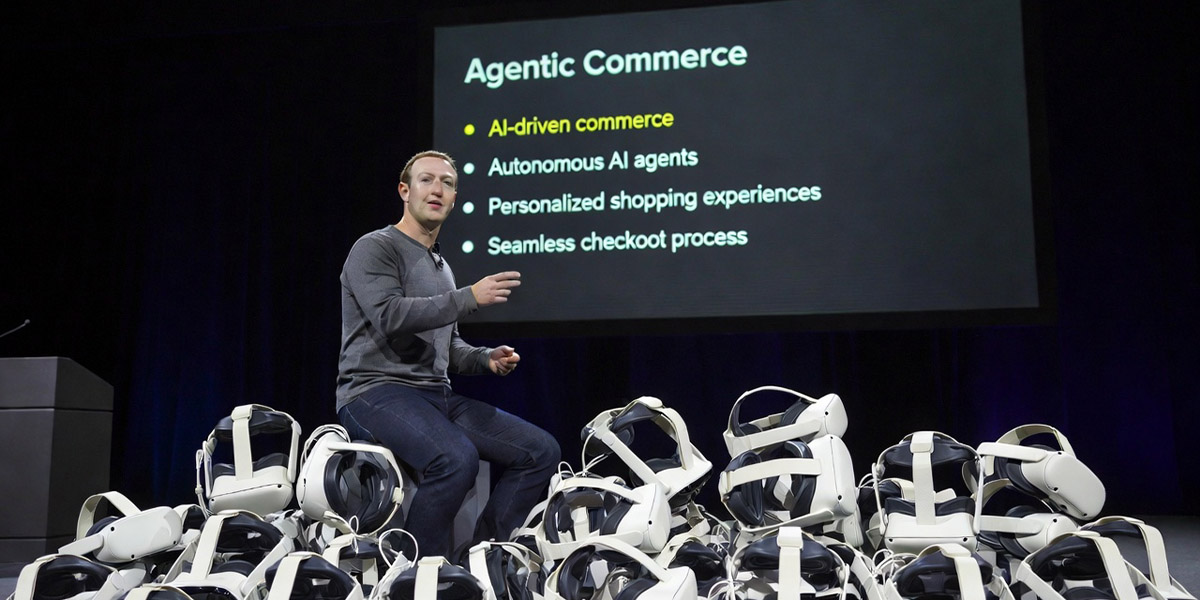
- Meta’s agentic commerce plans
- OpenAI’s expensive advertising
- TikTok’s rocky start as a U.S. entity
- Amazon is closing its Go and Fresh stores
- Amazon is also ending its palm reader service
- Nvidia may scale back its OpenAI investment
- Saks 5th Ave & Neiman Marcus are closing stores
- Meta is launching another premium subscription
- Google may let you opt-out of its AI tools
- Yahoo introduces AI to its platform
- Affirm forms major partnerships with Bolt, Expedia, and Fiserv
- Merchants and users are rethinking TikTok
All this and more in this week’s 263rd Edition of Shopifreaks. Thanks for subscribing and sharing!
Stat of the Week
Law enforcement requests for TikTok user information increased nearly 8,000% between 2019 and 2025, according to TikTok’s annual Information Requests Report. The United States not-surprisingly led with the highest volume of total inquiries with 5,570 total requests, followed by Germany with 5,078 requests, the United Kingdom with 2,957 requests, and France with 2,344 requests. On the bottom of the request list, India, Iceland, Iraq, and several other countries had 1 request, while Cambodia, Vietnam, Philippines, Nigeria, and several other countries only had 2 requests.

1. Meta thinks AI is its shot at commerce
Meta plans to launch agentic shopping tools and new AI models in the coming months as it leverages user data to personalize commerce.
Mark Zuckerberg said on a recent earnings call:
“In 2025, we rebuilt the foundations of our AI program. Over the coming months, we’re going to start shipping our new models and products… and I expect us to steadily push the frontier over the course of the new year. This also has implications for commerce. New agentic shopping tools will allow people to find just the right set of products from the businesses in our catalog.”
He later added:
“We’re starting to see the promise of AI that understands our personal context, including our history, our interests, our content and our relationships. A lot of what makes agents valuable is the unique context that they can see, and we believe that Meta will be able to provide a uniquely personal experience.”
Investors have previously criticized Meta for failing to clearly state how its massive AI investments will translate to the company’s bottom line, but Zuckerberg made it clear on the call that the AI lab’s work would reach the public soon. However on the same call, he projected that 2026 capital expenditures will rise to between $115B and $135B, marking a sizable increase from the $72B Meta spent in 2025.
It was also noted on the call that Meta’s recent acquisition of Manus is expected to play a big role in its social and AI commerce goals over the next few years, as the company plans to integrate the service into its products. As a reminder, Manus AI agents receive data from third-party digital data companies for breakdowns of consumer activity and campaign effectiveness, which could help Meta give advertisers clearer attribution, tighter targeting, and closed-loop measurement across its apps.
Why does Meta think it can do well at commerce now?
It’s failed at every other attempt, other than Facebook Marketplace, which is more of a Craigslist-style forum as opposed to a true commerce experience. This announcement feels like a monkey-see, monkey-do attempt at playing catch up with OpenAI’s agentic commerce ambitions and an attempt at placating investor skepticism about how / when Meta’s AI investments will pay off.
When it comes to commerce, Facebook has never succeeded in its attempts to own the entire experience. It should instead focus on building ad formats and AI answers that build on its vast trove of user data to offer better / more personalized product discovery, leaving the checkout to partners like Shopify, BigCommerce, PayPal, and Stripe — on their platforms.
While other AI companies build closed ecosystems inside pay-to-play walled gardens, Meta should focus on building an open ecosystem that excels at personalization and discovery — which is what it does best. But it won’t.
What are your thoughts on how Meta should (or shouldn’t) approach agentic commerce? Hit reply and let me know.
2. OpenAI to charge $60 CPM on ads with a $200k minimum commitment
In its initial rollout of ads, OpenAI is charging approximately $60 per 1,000 views, a premium rate that The Information says rivals live NFL broadcasts and significantly exceeds Meta’s average CPM pricing, which is around $20 per 1,000 views.
Despite the high cost, the company will only provide limited performance data to advertisers, offering basic metrics like total impressions and clicks, rather than granular attribution insights like which keywords surfaced the ads or which ads led to conversions.
Adweek later reported that OpenAI is asking select advertisers to commit at least $200,000 to its beta ads program in order to participate, which is a lot smaller than the $1M figure floating around last week, but still a sizable amount for an untested channel. Four clients represented by Adthena were approached by the company to commit $250,000 each, which based on The Information’s estimates, would equate to around 4.17M views.
Adweek also notes that although OpenAI stated a $200k minimum, companies are reporting being approached for less. For example, a global brand with over $10B in 2024 revenue was asked for roughly $125,000, while a digital agency reported being asked for $100,000.
This ad offering feels rushed, doesn’t it?
If this was the year 2000 and the concept of online advertising was still taking shape, I can understand testing the market with an immature ads platform (albeit not at a premium price). However it’s 2026, and online advertising is the most sophisticatedly tracked ad channel on the planet.
Coming at potential enterprise advertisers, many of which are existing partners of OpenAI through their apps program or other endeavors, and asking for a six-figure commitment to throw digital ad dollars into a black hole feels sloppy and not what you’d expect of an almost $1 trillion company that’s poised to upend the ad industry.
Is building an ad platform that offers better ad attribution that difficult? Vibe code that shit with AI guys, come on.
3. TikTok’s transition to a U.S. entity is off to a rocky start
It’s been just over a week since TikTok U.S. officially took over the service for American users, and the transition hasn’t gone as smoothly as expected.
Advertisers have reported multiple issues with TikTok Ad Manager with some campaigns overspending and others not being delivered at all. On top of that, there were many reports of TikTok Shop having problems with an algorithm malfunction that affected the content users see.
TIkTok’s new ownership team, which includes Oracle, Silver Lake, MGX, and others, said in a statement:
“Holy shit, this is harder than we thought! How are the Chinese so much better at technology than we are?! And they have universal healthcare and provide up to 180 days of maternity leave? We may have fucked up…”
Alright, I’m just kidding. They actually said:
“We’ve made significant progress in recovering our U.S. infrastructure with our U.S. data center partner. However, the U.S. user experience may still have some technical issues, including when posting new content. We’re committed to bringing TikTok back to its full capacity as soon as possible. We’ll continue to provide updates.”
The company also confirmed a major infrastructure issue that impacted the app for thousands of users caused by a power outage at one of its U.S. data center partner sites. The big hand-off was coming and no-one paid the power bill?
I’m an American citizen currently living overseas in Ecuador, and there was a few day period where all my American content disappeared and my feed became filled with Latin American comedy skits and Spanish-speaking telenovela clips. Now it’s returned to my normal English-speaking time wasters.
Meanwhile, aside from technical difficulties, the new TikTok U.S. is losing trust with its userbase over privacy concerns and censorship.
The Guardian reports that many TikTok users across the country say they’re rethinking their relationship with the platform since its ownership change, citing censorship and lack of trust as reasons why they’re removing themselves from the app. The daily average of U.S. users deleting the app increased 195% from Jan 22nd to the 28th compared to the previous 90 days.
After the murder of Alex Pretti by ICE agents on Jan 24th, some content creators reported that videos condemning the agency were being suppressed by TikTok, prompting California Governor Gavin Newsom to launch an investigation into the platform and whether it is violating California law by censoring anti-Trump content. The “censorship” may ultimately prove to have just been app-wide technical issues, but Newsom certainly wouldn’t miss this opportunity to pour gasoline on public outrage as he gears up for his run for presidency.
For my U.S. readers (which is most of you), how has your TikTok experience been this past week and a half since the transition? Hit reply and let me know.
4. Amazon to close its Go and Fresh physical grocery stores
Amazon is planning to close its Go and Fresh physical stores across the country to instead double down on its Whole Foods grocery brand, with plans to open 100+ new stores over the next few years.
As part of that expansion, the company will further introduce a new smaller format store called Whole Foods Market Daily Shop that offers a curated selection of grab-and-go meals, coffee, and everyday essentials. So like 7-Eleven?
As to why the shift in brick-and-mortar branding, Amazon wrote:
“While we’ve seen encouraging signals in our Amazon-branded physical grocery stores, we haven’t yet created a truly distinctive customer experience with the right economic model needed for large-scale expansion. After a careful evaluation of the business and how we can best serve customers, we’ve made the difficult decision to close our Amazon Go and Amazon Fresh physical stores, converting various locations into Whole Foods Market stores.”
To be frank, this always should have been Amazon’s grocery strategy. Why spend $13.7B acquiring an amazing grocery chain like Whole Foods to not capitalize on its valuable brand equity? Amazon’s entire grocery division should have been exclusively operated under the Whole Foods name since its acquisition in 2017.
Amazon also wrote in its announcement:
“We will continue to invent for customers, including testing new physical store experiences like Amazon Grocery, which we launched alongside Whole Foods Market in Chicago, Illinois, or our ‘store within a store’ experience in the Whole Foods Market in Plymouth Meeting, Pennsylvania, where customers can also shop for groceries and household essentials from Amazon. These experiences make it easier for customers to shop our extensive grocery selection, all in one place.”
Bad move Amazon! Kill the “Amazon Grocery” experience and go all-in on the Whole Foods brand. No-one cares if you sell Coca Cola or other non-organic food and drink in Whole Foods. Everyone knows you’re going to dilute the original Whole Foods mission anyway, so you might as well make it convenient for customers along the way.
What do you think is the best way for Amazon to approach grocery? Hit reply and let me know or join the conversation on LinkedIn.
5. Amazon to discontinue its palm recognition system
Amazon announced that it will be discontinuing its Amazon One palm recognition payment and ID system “for facility access and payment” on June 3, 2026 “in response to limited customer adoption.” Though the service will continue to be available to patients for check-in at existing healthcare locations until further notice.
The company noted in its announcement that all customer biometric data associated with Amazon One will be securely deleted after the service ends.
Amazon One launched in 2020 as a way to help speed up in-store payments and entry into in-person events by removing the need for customers to present a card or phone to pay or present a ticket for access. However apparently it didn’t catch on.
In my opinion… they’re quitting too early!
Amazon should double down on the technology, license it to payment providers and POS systems, and ultimately make it the de facto way to make in-store payments, power loyalty programs, and offer entry into in-person events. I believe it’s shortsighted to pull back from the rollout of the technology, as it could’ve been Amazon’s best way to own in-store checkout and venue access.
It shouldn’t be a surprise that Amazon One didn’t catch on, as the company didn’t really do anything to promote it.
All I remember is a single campaign to promote the service where Amazon offered $10 in free credit to enroll. Wow, ten whole dollars?
They should have run campaigns to educate customers about the convenience and security of the service. Something like, “Crap, I left my wallet at home!” or “Oops, I left my phone in the car!” commercials that end with the consumer using Amazon One to pay. How many viral TikTok videos would it have taken for the tech to go mainstream?
Then there’s a matter of security.
How many companies would you trust with your biometrics? I can name them on one hand: Amazon, Microsoft, Google, Apple.
All four of those companies are battling for market share in the payments space, and Amazon One could’ve been the company’s big edge. It just needed enough time, energy, and consumer education. Did Amazon really think it could change payments in 5 years with a soft rollout?
6. The $100B circular deal between Nvidia and OpenAI is stalled, or is it?
Nvidia’s plan to invest up to $100B in OpenAI has stalled after some leadership in the company expressed doubts about the deal, according to Wall Street Journal sources.
Quick Backstory: Last September, the two companies announced a circular deal that involved Nvidia investing up to $100B in OpenAI in exchange for OpenAI contracting Nvidia to build at least 10 gigawatts of computing power. The deal was expected to complete within a few weeks.
Flash forward to today: The talks haven’t progressed since then, according to sources. Now the two sides are rethinking the future of their partnership, including the possibility of Nvidia making an equity investment of tens of billions of dollars in OpenAI’s upcoming funding round that SoftBank, Amazon, and Microsoft may participate in as well.
Sources told WSJ that Nvidia CEO Jensen Huang has privately criticized what he described as a lack of discipline in OpenAI’s business approach and expressed concern about the competition it faces from Google and Anthropic. Ah, so he noticed too?
Huang has since pushed back on the rumors, calling them “nonsense.”
He told reporters in Taipei:
“We will definitely participate in the next round of financing, because it’s such a good investment. It’s a great pleasure.”
Huang went on to say that it would probably be “the largest investment we’ve ever made,” though he declined to specify how much it would be.
So is it $100B or not? Because the largest investment Nvidia has ever made was its $20B acquisition of Groq in December. So even exceeding that amount by a few billion is a far cry from the $100B previously announced.
It’s also important to note that the $100B deal from September may have played a significant role in OpenAI’s recent fundraising efforts and valuation, as it’s now seeking a $750B to $830B valuation. Without that $100B investment from Nvidia, does its new target valuation still hold?
Does OpenAI even own any shares of OpenAI anymore? It feels like they’ve either sold or promised away 200% of the company at this point.
7. Saks Global closes 60+ stores and discontinues some e-commerce operations
I’ve been following the recent Saks Global bankruptcy closely because it’s a modern example of how being big isn’t always better in today’s retail environment. If you’ve missed what’s been happening, here’s a brief timeline to get you up to speed:
- In early January I reported that Saks Global, the parent company of Saks Fifth Avenue, Neman Marcus, and Bergdorf Goodman needed $1B in rescue financing to pay off debts, or it may face bankruptcy.
- The company’s CEO Marc Metrick stepped down and has been replaced by Richard Baker, the execute chairman of Saks Global.
- I noted at the time that Amazon and Salesforce are investors in Saks Global and helped fund the Neiman Marcus deal, and wrote, “I’m curious to see if / how they play a role in the potential rescue financing and future of the company.”
- A couple weeks later, it was revealed that Amazon was not happy with Saks’ bankruptcy filing plan on the grounds that it could harm creditors and push Amazon further down the repayment pipeline.
- Amazon said that Saks had “burned through hundreds of millions of dollars in less than a year” and called its equity investment “presumptively worthless.”
- The judge denied Amazon’s request to block the company’s bankruptcy financing plan and allowed Saks to start tapping into $400M of the $1.75B total funds after the company argued it would face immediate liquidation without it.
Flash forward a couple weeks to present time…
- Saks Global announced that it is closing 57 Saks Off 5th stores, leaving just 12 standing, as well as discontinuing its Saks Off 5th e-commerce operations, which was idiotically split into a separate company a few years ago. Last Call, the clearance outlet for Neiman Marcus, is also closing all five of its stores.
- Saks Global is also reportedly ending its “Saks on Amazon” partnership, according to a Reuters source. The two companies were already at odds with each other earlier this month, but Saks had yet to outright say that it was exercising its right under Chapter 11 bankruptcy to reject the contract until now.
- A Saks spokesperson bitterly said in a statement that the “Saks on Amazon storefront saw limited brand participation,” and that Saks feels it would be better served driving traffic to its own website.
In the words of Gen Z… Saks Global is cooked!
Wow, who could’ve predicted the demise of Saks Global?
Me, I did.
Back in 2021 when Saks Global first announced that it would split its online and brick-and-mortar operations, I saw the handwriting on the wall that this was the beginning of the end for the company. At the time I wrote:
“Meanwhile, the rest of retail is going omnichannel… department stores, who are ahead of the game by leaps and bounds in the offline world, are looking to take a step backwards and split off from their online channels.”
The split was all about money. The company thought that by separating its “tech asset” from its brick-and-mortar operations, it could demand a higher multiple on its stock price for the tech company. However it turns out the conjoined twins only had one working heart, and slicing them in half wasn’t such a good idea. How’s that multiple looking now, guys?
8. Meta looks to launch another premium subscription
Meta announced plans to test new subscription bundles across Instagram, Facebook, and WhatsApp that will unlock exclusive features and expanded AI capabilities. The company plans to test a variety of subscription features and bundles, each with a distinct set of features, and figure out what works along the way.
For example, Meta intends to integrate its recently acquired AI agent, Manus, and offer tiered access to its “Vibes” video generation tool as part of a premium experience. Other examples of premium features on Instagram could include letting users create unlimited audience lists, see a list of followers who don’t follow them back, or view a Story without the poster seeing that they viewed it. (Gee, I wonder what type of person that last feature will attract?)
Doesn’t Meta already offer a premium subscription?
Yes, you’re thinking of Meta Verified. However that subscription plan is aimed at content creators and businesses, as it comes with a verified badge, 24/7 direct support, impersonation protections, search optimizations, exclusive stickers, and a few other dumb perks. Whereas the new subscription plans will be aimed at everyday users, or non-creators, designed for a broader audience.
Mark my words: Meta isn’t going to create new value through its premium subscription plans. It’s instead going to take existing value away from its free tier and package the same features as premium. They demonstrated this a few weeks ago by imposing a limit on the number of links professional users can post on Facebook unless they have a paid Meta Verified subscription. That’s the exact strategy they’ll use when “creating value” around their new premium subscriptions as well.
9. Other e-commerce news of interest
Google is exploring ways to allow websites to opt-out of its content in AI Overviews and AI Mode in preparation for potential new requirements from the UK’s Competition and Markets Authority. The company wrote in its announcement, “Our goal is to protect the helpfulness of Search for people who want information quickly, while also giving websites the right tools to manage their content.” Google noted that its controls would work on the same frameworks and open standards that it’s used for years to give web publishers control of how they appear in search, like the robots.txt file or its tools for controlling featured snippets and AI training permissions. It’s always a double-edged sword with Google, as the tradeoff is often “more control” versus “more exposure” in its search results. Publishers may find themselves with similar decisions to make in regards to surfacing in AI answers.
WhatsApp head Will Cathcart confirmed in a recent interview that the messaging app’s main chat inbox will remain ad-free for the foreseeable future, however the rest of the app, including Status and Channels, remain fair game. Instead of placing banners inside conversations, Meta is pushing its WhatsApp Business Platform, charging companies per customer interaction and driving traffic through “click-to-message” ads on Facebook and Instagram that already generate about $10B annually. Additionally, Android Authority reports that it discovered code in WhatsApp’s newest version which suggests that Meta may eventually offer a paid ad-free subscription model in the app.
Yahoo introduced Yahoo Scout, a generative AI answer engine that replaces traditional links with summarized responses powered by Yahoo’s first-party data, search history, and content across its properties including Yahoo Mail, News, Finance, Sports, and Shopping. Scout, which is co-powered by Anthropic’s Claude and Microsoft Bing, offers features like AI summaries, stock analysis, product comparisons, and comment digests, which offer a snapshot of the conversation happening around a Yahoo article. Yahoo CEO Jim Lanzone wrote, “Search is fundamentally changing, and our team has been inspired to use our decades of experience and extremely rare assets to create something uniquely useful for Yahoo’s hundreds of millions of monthly users.” Yahoo is the second-most popular e-mail service globally and the third-most popular search engine in the U.S., although the service has been powered by either Bing or Google since 2009.
BigCommerce expanded its partnership with Stripe to give merchants worldwide access to the payment processor’s Optimized Checkout Suite, which includes global support for Link, 30+ local payment methods, BNPL, and built-in Radar fraud protection. Previously, features like Link were only available to U.S. merchants, and many global payment and fraud tools required separate integrations. Whereas now, those capabilities are native and auto-configured inside one Stripe stack, making it easier to localize checkout, reduce cart abandonment, and expand internationally without extra integrations.
Affirm made big moves this week, slowly becoming the BNPL platform of choice for many large platforms. Bolt selected Affirm as its default BNPL for its U.S. platform, integrating Affirm’s installment plans directly into its one-click checkout interface. Fiserv made a deal with Affirm to integrate its BNPL capabilities directly into debit card programs for U.S. banks and financial institutions without the need to build independent lending products. Last but not least, Affirm is now the exclusive provider of BNPL payment options for lodging and travel packages on Expedia Group owned platforms in the U.S. including Expedia, Hotels.com, and Vrbo. As much as I hate buy now pay later, I’m certainly glad I bought into AFRM early on! It might never get back to its Oct 2021 peak anytime soon, but still a good buy if you got in at the right time, which I was lucky enough to do.
Amazon is changing how it charges sellers for removing and disposing products stored in its FBA fulfillment centers. The fees will remain the same, but instead of charging all at once when an entire removal or disposal order is completed, Amazon will begin charging on a per-unit basis at the time each unit is removed and disposed of, beginning on Feb 15th. The company wrote, “This update aims to give you more visibility into your removal and disposal activities.” Anything to take money from sellers faster, right? I’ll never forget the time Amazon sent dozens of my products to Canada without me asking, and without me even enrolling to sell on Amazon Canada, and then subsequently charged me to either dispose of said items or ship them back to the U.S. Thanks for now charging me individually for each item you dispose of instead of all at once.
TikTok’s new mandate for U.S. sellers to use their logistics services is pushing some brands to reconsider whether TikTok Shop makes sense for them, according to five brands and three consultants who spoke to ModernRetail. For example, brands that currently leverage Amazon FBA to fulfill all their orders, whether from Amazon or other channels, are currently precluded from participating unless they move their fulfillment to either TikTok or an approved provider. One agency also noted that the shipping change will make it harder to recruit enterprise clients, as those sized brands “want to make their own decisions around logistics.”
Fidelity Investments plans to launch its first stablecoin, the Fidelity Digital Dollar (FIDD), which will be available to retail and institutional investors in the coming weeks, positioning itself as one of the first traditional asset managers to operate a regulated, in-house stablecoin. The USD-backed token will run on the Ethereum blockchain and allows users to purchase or redeem it for $1 through the firm’s crypto platforms. The move follows the recent passage of the GENIUS Act and leverages Fidelity Management & Research Company to oversee the underlying reserves. Great! Just what the world needed, another stablecoin.
Costco is partnering with Instacart to power its online grocery ordering in Spain and France, extending their partnership beyond North America for the first time as Instacart looks overseas for growth. Instacart will use its white-label technology and fulfillment services to power Costco’s e-commerce website and offer same-day grocery deliveries in both countries, having chosen those markets for their “dense urban environments with established retail footprints.” To comply with local labor laws, Instacart said it will work with third-party European companies that hire workers to pick, pack, and deliver orders, but declined to name the partners, as opposed to its U.S. business model, where it directly recruits independent contractors to complete orders on its app.
ThriveCart, an e-commerce platform for creators and digital businesses, introduced ThrivePay Installments to let customers finance purchases ranging from $2k to $65k+ using their existing credit card limits. The new feature allows buyers to split payments over up to 12 months without originating new loans, ensuring merchants receive funds upfront. The company claims the system doubles approval rates to 85% by leveraging underutilized credit rather than location-specific underwriting. ThrivePay Installments will initially launch in the United States, with Canada, UK, EU, and Australia following shortly after.
Walmart introduced two new Seller Performance Standards including Return Rate and Item Not Received Rate, which are now part of its official performance framework and will be exposed via its Seller Performance API. Return Rate measures the percentage of delivered orders that customers return and must remain 6% or lower over a given 60 day period, while Items Not Received Rate measures the percentage of orders where the customer reports they did not receive the item and must be lower than 2% over any given 60 day period. Both metrics are effective immediately as performance standards, and GeekSeller recommends that sellers should start monitoring them now, even if they do not see enforcement actions yet.
Poshmark is testing “Worry-Free Returns,” an optional checkout add-on that lets U.S. buyers pay a small fee for 7-day, no-questions-asked returns, in partnership with Seel. Poshmark’s current returns policy only lets buyers initiate a return within 3 days if the item is damaged or not as described, but doesn’t cover fit issues or buyer’s remorse, whereas the new optional add-on insurance permits both of those return reasons. Worry-Free Returns are sent back to Seel, not the sellers, which then resells, recycles, or disposes of the item. This sounds absolutely ripe for abuse!
OpenAI is planning to retire GPT-4o, GPT-4.1, and other older models on February 13th, citing low usage rates of 0.1%, which is still almost a million daily users. Last time OpenAI tried to retire 4o, back when 5.0 first came out, the company faced immediate backlash from users who said the newer model felt colder, more robotic, and less reliable, prompting the company to quickly reinstate GPT-4o alongside GPT-5. It was just a matter of time though. OpenAI noted that recent updates to GPT-5.2 now address user demand for conversational warmth and customization. Okay, but what will it take to get 5.2 to fact check itself before providing answers? The retirement of GPT-4 models affects only its consumer chatbot, while API access remain unchanged for the time being.
Many of the world’s largest banks are reducing their reliance on OpenAI as their primary LLM provider, according to new data from AI benchmarking and intelligence platform Evident. Eighteen months ago, OpenAI provided the underlying technology for roughly half of the 50 banks that Evident tracks, but by the end of 2025, its share had fallen to just one-third, with banks increasingly developing and deploying use cases built on Anthropic and Google. That makes sense, right? Everyone seems to be relying on multiple AI platforms now, including myself, as each platform finds it strengths in the market.
“Apple runs on Anthropic at this point,” according to Bloomberg’s Mark Gurman, who is well known for having numerous sources inside the company. Gurman said in a recent interview, “Anthropic is powering a lot of the stuff Apple’s doing internally in terms of product development and a lot of their internal tools. They have custom versions of Claude running on their own servers internally, too. This Google deal just came together a few months ago. They were not going to use Google. Apple actually was going to rebuild Siri around Claude. But Anthropic was holding them over a barrel. They wanted a ton of money from them, several billion dollars a year, and at a price that doubled on an annual basis for the next three years.”
Anthropic expanded its newly released Cowork agentic workspace with customizable plug-ins that let teams automate specialized tasks like marketing content creation, legal document review, sales analysis, and customer support using Claude. The company open sourced 11 starter plug-ins and says enterprises can easily build and share their own, allowing Claude to pull from internal tools and data to standardize workflows without heavy technical setup. The launch of Cowork has rattled Microsoft, where leaders reportedly view Cowork as a direct threat to 365 Copilot, prompting internal pressure from CEO Satya Nadella to speed up similar agent-style tools, in some cases even using Anthropic’s own models to power them.
In lawsuits this week…
- Music publishers are suing Anthropic for $3B for allegedly misusing over 20,000 songs to train its Claude chatbot, building their case on a previous $1.5B settlement Anthropic reached with book authors over similar claims.
- Wixen Music Publishing is suing Meta for copyright infringement, claiming the company continues to use hundreds of its copyrighted songs on Instagram, Facebook, and WhatsApp without permission after its licensing agreement expired in December 2025.
- Amazon agreed to pay $309M to resolve a class-action lawsuit filed by customers who claimed they were incorrectly denied refunds or recharged after returning items.
- Google agreed to pay $68M to resolve a class-action lawsuit that alleged its voice assistant recorded private conversations without consent to facilitate targeted advertising.
- TikTok joined Snap in settling a social media addiction case brought on by a 19-year-old girl from California who said she became addicted to social media platforms at a young age because of their attention-grabbing design, leaving just Meta and YouTube, who were also named in the case, to head to trial. Wait, so she became addicted to ALL of those platforms? Seems like a her problem.
- And lastly, xAI’s trade secret theft lawsuit against OpenAI, which accused the company of poaching employees to steal Grok source code and other confidential technology, is likely to be dismissed after a federal judge said the claims failed to plausibly show misuse of trade secrets or anticompetitive conduct, though xAI may be allowed to amend and refile its case.
In layoffs this week…
- UPS plans to eliminate 30,000 operational jobs through attrition and voluntary buyouts, as well as close 24 facilities in the first half of 2026, as part of its strategic shift to unwind its partnership with Amazon, after having already eliminated 48,000 jobs last year.
- Oracle is considering cutting between 20,000 and 30,000 jobs to free up an estimated $8B to $10B in cash flow, which the company needs to bankroll a network of AI data centers it promised OpenAI, who may or may not actually have the money to pay for those data centers in the future.
- Pinterest plans to cut less than 15% of its workforce, or around 800 employees, and reduce office space as it shirts resources towards investing in AI.
- Nike is laying off 775 employees at its U.S. distribution centers in Tennessee and Mississippi as part of CEO Elliott Hill’s strategy to turn the company around and improve its bottom line.
- Last but not least, The Chan Zuckerberg Initiative, which is the philanthropic organization formed by Mark Zuckerberg and his wife Priscilla Chan, is cutting 8% of its workforce, or around 70 jobs, primarily at its Redwood City headquarters in California, as part of their move towards focusing on AI-powered biomedical research.
U.S. Department of Commerce special agents are investing allegations by former Meta contractors that the company can access WhatsApp messages, despite previous statements promising that the service is private and encrypted. The former contractors claim that they and some Meta staff had “unfettered” access to WhatsApp messages, even though the company has told both its users and the government that it’s impossible for them to read, listen to, or share the messages. Meta continues to deny the claims and issued a statement saying, “What these individuals claim is not possible because WhatsApp, its employees, and its contractors, cannot access people’s encrypted communications.” This coming from the same company that knowingly accepts scammers onto its platform because it makes so much money doing it, and then lied to government officials about its work towards reducing said scams.
Y Combinator is no longer investing in Canadian startups, now only backing firms registered in the U.S., Cayman Islands, or Singapore. Startups incorporated elsewhere must “flip” their structure so that their home-nation entity becomes a subsidiary of a new parent company in one of those three countries. Canada was previously an acceptable country since as far back as 2008, but references to Canada were removed from Y Combinator’s website in November 2025. The incubator did not provide a reason for delisting Canada and did not respond to The Logic’s request for comment over the matter.
South Korea implemented the “AI Basic Act,” which are new laws that require companies to label AI-generated content with invisible digital watermarks, conduct risk assessments and document how decisions are made for medical diagnosis, hiring, and loan approvals, and issue safety reports. The legislation aims to position the nation as a top global AI power but faces criticism from startups, which claim that compliance is burdensome, and from civil society groups, which argue that the law lacks meaningful protections for consumers. Companies that violate the rules face fines of up to 30 million won (around $20,000) following a one-year grace period designed to help the industry adjust. I’m curious how South Korea will draw the line between “AI-generated” and “AI-enhanced” content.
The Melania Trump documentary “Melania” debuted in theaters with a lackluster $7M in ticket sales, according to studio estimates. Amazon MGM Studios paid $40M for the rights to the documentary, plus another $35M to market it, making it the most expensive documentary ever. Xan Brooks of The Guardian compared the film to a “medieval tribute to placate the greedy king on his throne,” while Owen Gleiberman of Variety called it a “cheese ball informercial of staggering inertia.” Moviegoers weren’t that enthusiastic about the documentary either, which currently sits at a 10% rating on Rotten Tomatoes, 1.2 out of 10 on IMDb, and 12% on Google. People are also defacing the movie’s billboards and posters across Los Angeles, which was to be expected.
Prices for Super Bowl commercials have reached as high as $10M for a 30 second spot, according to Mark Marshall, NBCUniversal’s head of global advertising. Marshall noted that viewers can expert to see more ads from technology, pharmaceutical, and wellness industries this year, with almost 40% of advertisers not having participated in last year’s Super Bowl. Want to see a sneak peak of Super Bowl commercials? CNET and Collider put together lists of teasers from Pepsi, Instacart, Squarespace, Hims, Dunkin’ Donuts, and more.
🏆 This week’s most ridiculous story… Meta spent $6.4M over the past few months on a TV ad campaign in the U.S. aimed at winning over residents on the construction of new data centers. The folksy commercials spotlight Meta’s existing data centers in Iowa and New Mexico, making the case that they create jobs and revitalize rural communities. For example, the campaign showcases Altoona, Iowa as a town on the brink of disappearing, but thanks to Meta’s data centers, its residents get to meet up at local diners and attend football games, rather than moving away to find work. Other data center operators including Amazon, Digital Reality, QTS, and NTT Data are also running or planning a “lobbying blitz” to campaign in defense of new data centers in response to public backlash. Do you love America? Then you must love data centers or you’re not patriotic!
10. Seed rounds, IPOs, & acquisitions
Apple acquired Q.ai, an Israeli startup that builds “silent” AI models that let devices understand whispered or quiet speech by analyzing subtle facial and muscle movements, for an undisclosed amount estimated to be around $2B. The company’s 100 employees, including CEO Aviad Maizels and co-founders Yonatan Wexler and Avi Barliya, will join Apple, which did not disclose how it plans on using its tech, though one can imagine. The deal marks Apple’s second biggest acquisition behind the headphone maker Beats, which it acquired for $3B in 2014.
Nvidia, Microsoft, Amazon, and Nvidia are in talks to invest a combined $90B in OpenAI at a $730B valuation as the company seeks to raise $100B in total, according to The Information sources. The Wall Street Journal later reported that Amazon may up their investment to $50B. The funding round aims to cover OpenAI’s computing costs that could exceed $430B through 2030. The round is not finalized and institutional investors besides SoftBank are also likely to participate.
OpenAI is also rumored to be preparing for an IPO in the fourth quarter of this year, holding informal talks with Wall Street banks, according to Wall Street Journal sources. The company is aiming to expedite its IPO plans to beat Anthropic to the public markets, though pulling one off by the end of the year may be difficult. What’s the rush if companies are still lining up to invest? Well, perhaps they’re facing pressure from those same investors to dump shares onto retail investors before the AI bubble pops and/or the general market cools or depresses.
Nvidia invested an additional $2B in CoreWeave, a specialized GPU cloud infrastructure provider for AI training, inference, and high-performance computing workloads, increasing its stake in the company to 11.5%. As part of the agreement, CoreWeave committed to standardize its operations on NVIDIA’s latest CPUs, GPUs, and storage systems, adopt multiple future chip generations early, and expand its AI data center footprint to more than 5 gigawatts of capacity by 2030. The circular deal gives NVIDIA a guaranteed large-scale buyer, while CoreWeave gets capital and priority hardware access to speed up land, power, and data center buildouts.
Anthropic doubled its fundraising goal from $10B to $20B at a $350B valuation due to booming investor interest, according to FT sources. The expanded round is expected to include participation from Sequoia Capital, Coatue, and Singapore’s sovereign wealth fund. The upcoming raise follows a $13B round in September and comes as the company reportedly prepares for an IPO this year.
Khaby Lame, the most-followed TikTok creator known for his silent comedy skits, signed a $975M all-stock deal for Rich Sparkle Holdings, a Hong Kong-based investment holdings company, to acquire a stake in his brand, Step Distinctive Limited. Rich Sparkle now controls monetization across TikTok Shop, live streams, short-video commerce, and endorsements, while Lame remains the controlling shareholder. The company also plans to create an AI version of Lame to create multilingual social media content, as well as increase his output. Welp, I’m sure fans won’t get tired of that very quickly…
PicPay, a Brazilian digital wallet and payments app that lets consumers send money, pay bills, make purchases, and access financial services through a mobile platform, raised $434M after going public on the Nasdaq, achieving a valuation of $2.5B. The IPO marks the first significant listing by a Brazilian company in the U.S. in over four years. IPO proceeds will fund credit expansion, regulatory capital requirements, and new services like insurance and SMB banking, with the company continuing to solely focus on Brazil for the next few years.
Yozo.ai, a UAE-based e-commerce startup that uses AI to run e-mail, WhatsApp, and SMS campaigns with minimal human input, raised $1.7M in a pre-seed funding round co-led by Access Bridge Ventures and Disruptech Ventures. The platform enables merchants to connect their sales channels and then automatically create campaigns, allowing their AI agents to execute, test, and optimize workflows without manual intervention. Yozo plans to use the funds to further develop its products, hire more engineers, and expand beyond the Middle East into global e-commerce markets.
Decagon, a conversational AI platform that builds autonomous customer support agents and workflow automation infrastructure for chat, email, and voice, raised $250M in a Series D round led by Coatue Management and Index Ventures, tripling its valuation to $4.5B in just six months. Last year, Decagon added over 100 new enterprise customers across travel, hospitality, financial services, and retail including Block, Affirm, Chime, and Mercado Libre. The company plans to use the funds to expand globally and enhance its “AI concierge” technology, which automates complex customer service interactions.
Robinhood, the commission-free retail brokerage for gambling degenerates, is competing with Wall Street banks to secure a stock allocation for its customers in SpaceX’s upcoming IPO, according to Bloomberg sources. The brokerage would let users buy stock at the IPO price before they trade on the open market through its Access platform, a premium tier that offers advanced trading tools, higher interest on cash, and other perks. SpaceX is aiming to raise up to $50B and targeting a valuation of roughly $1.5T as early as mid-year.
Cainiao, the logistics arm of Alibaba, agreed to acquire a non-controlling stake in Zelostech, a Chinese robovan developer, in a deal that values the business at approximately $2B. The deal will merge Cainiao’s autonomous driving unit into the startup and includes a cash investment to build a “RoboVan Super Carrier” network. Zelostech plans to operate both brands simultaneously while deploying its Z10 electric freight vehicles.
Anaplan, a Thoma Bravo-owned cloud-based enterprise planning and performance management software platform for finance, supply chain, and operations teams, is preparing to file confidentially for an IPO in the coming weeks, according to The Information sources. The move marks a potential return to the public markets after the private equity firm took the company private for $10.4B in 2022. The company disclosed last February that it’s ARR has grown from $600M to over $1B and recently integrated AI features to compete with rivals like SAP and Workday.
Mesh, a NYC-based crypto payment sand stablecoin settlement platform, raised $75M in a Series C round led by Dragonfly Capital at a $1B valuation, bringing its total amount raised to over $200M. Mesh connects exchanges, wallets, and payment providers into a single network that lets consumers pay with any crypto asset while merchants receive instant settlement in stablecoins or fiat. The company says that its network already reaches more than 900M users globally, and plans to use the funds to continue its expansion into new regions in Latin America, Asia, and Europe.
Ricursive Intelligence, a chip design startup founded by the researchers behind Google’s AlphaChip, raised $300M in a Series A round led by Lightspeed Venture Partners at a $4B valuation, just two months after its public debut, bringing its total amount raised to $335M. The company is focused on addressing the slow, expensive process of chip design by building a platform that tightly links AI models with the hardware they run on, allowing for faster feedback between hardware and software to speed up development. Since launching, it has recruited researchers and engineers from companies including Google DeepMind, Anthropic, Apple, and Cadence.
Tandem Technology, an AI healthcare startup that automates prescription processing, authorization, and pharmacy routing, raised $100M in a Series B round led by Accel at a $1B valuation, bringing its total amount raised to $137M. The company’s goal is to help patients get access to medicines by automating the paperwork and phone calls behind prior authorizations and pharmacy routing. I can only imagine that this type of tech would be of interest to Amazon and other online pharmacies in the future.
C3.AI, an enterprise AI software provider and predictive analytics platform, is in talks to merge with Automation Anywhere, a developer of software for automating repetitive tasks inside businesses, in a deal that would allow the privately held startup to go public. Under the proposed structure, Automation Anywhere would acquire C3.AI, whose market capitalization has fallen to $1.7B, a tenth of its valuation six years ago, amid intensifying competition from generative AI tools. The combination follows C3.AI’s engagement with investment bankers last November after receiving takeover interest and the departure of founder Thomas Siebel as CEO.
Phia, an AI-powered shopping app co-founded by Phoebe Gates and her former roommate Sophia Kianni, raised $35M in a Series A round led by Notable Capital at a $185M valuation, bringing its total amount raised to $43M. The company is building an “AI alignment layer” to connect consumers and brands, and since launching in April 2025, has surpassed 1M users and built partnerships with more than 6,200 retail brands, operating on a zero-dollar upfront, performance model. It plans to use the funds to expand partner tools with dashboards that provide real-time visibility into audience behavior, emerging trends, and category positioning.
Waabi, a Toronto-based autonomous vehicle startup focused on developing large-scale models for commercial truck autonomy and driverless freight operations, raised $750M in a Series C round led by Khosla Ventures and G2 Venture Partners. Waabi trains its system using proprietary simulation software rather than real-world driving data, aiming to model rare edge cases faster and cheaper than traditional self-driving approaches. The company is deepening its partnership with Uber, where it’s currently already on the road with Uber Freight, with plans to deploy up to 25,000 vehicles controlled by Waabi’s software, positioning the firm to compete directly with Waymo and Tesla.
Mantas, a UAE-based cloud infrastructure insurance provider offering coverage and risk protection for cloud servers, data centers, and digital assets, raised $1.77M in a seed round led by Nuwa Capital and emerged from stealth. The platform combines cloud outage insurance with real-time risk monitoring, targeting digital businesses like fintechs, airlines, SaaS companies, and e-commerce providers. It plans to use the funds for product development, risk modelling, and initial growth across MENA and North America.
Consio AI, a Tonto-based startup that automates phone-based customer services and sales conversations for e-commerce brands, raised $3.3M in a funding round led by RTP Global. Its platform utilizes AI to handle inbound calls instantly and execute timed outbound follow-ups, which helps merchants capture high-ticket sales that require personal interaction. The company, co-founded by early employees of Gorgias, plans to use the capital to accelerate its engineering and go-to-market strategies.
Anta Sports, China’s largest sportswear brand, agreed to acquire a 29% stake in Puma, a German sportswear brand, from the Pinault family for approximately $1.8B, representing a 62% premium over Puma’s closing share price. Anta is now Puma’s biggest shareholder and plans to use its expertise to help the struggling company increase its sales in the Chinese market. The move comes as Puma struggles against rivals like Nike and Adidas and is part of a broader strategy to globalize its multi-brand portfolio including Fila and Salomon.
Jelou, an Ecuador-based startup that builds AI agents for WhatsApp transactions, raised $10M in a Series A round led by Wellington Access Ventures, bringing its total amount raised to $13M. The company’s “Brain” platform enables businesses to automate financial operations like payments and identity checks directly within messaging apps and has already processed over $100M in transactions across Latin America. The new capital will fund its expansion into the U.S. market and the further development of its agentic AI capabilities.
Jingdong Property, the logistics infrastructure arm of JD.com, filed for an IPO in Hong Kong to fund its overseas asset expansion. The company plans to use raised funds to expand its overseas infrastructure asset network, strengthen its footprint in Chinese cities, and upgrade its services. This is the company’s second attempt at going public after a 2023 application lapsed while awaiting regulatory approval.
Yolando, a Toronto-based startup that helps companies understand how they appear in AI-generated answers and take action to improve visibility, raised $8.5M from Drive Capital. The platform was launched by BirdseyePost, a marketing software company that built the tool for internal use, and is now being made available to other companies. Yolando will use the funds to formally launch its commercial platform and expand its enterprise sales team.
Synthesia, a British AI video platform that helps companies create interactive training videos, raised $200M in Series E round led by Google Ventures at a $4B valuation, up from $2.1B just a year earlier. The company uses synthetic avatars to replace traditional corporate training production and counts companies like Bosch, Merck, and SAP as clients. Synthesia, which crossed $100M in ARR last year, is also in the process of facilitating an employee secondary sale in partnership with Nasdaq to help early team members cash out on some of their shares.
PayLater, a Qatar-based BNPL platform, raised $10M in a seed funding round led by LuLu Alternative Investments Portfolio, marking one of the largest seed-stage investments in the country’s startup ecosystem. The company plans to use the funds to expand into key sectors including travel, education, and healthcare, as well as enhance its product suite through new features powered by advanced credit assessment technology. Since launching less than a year ago, PayLater has facilitated more than QAR 300M ($82M) in transactions and builda customer base of over 80,000 users.
Thanks for being a Shopifreak!
If you found this newsletter valuable, please leave a review on Google and share the newsletter with your friends and colleagues to help us grow.
See you next Monday,
PAUL
Paul E. Drecksler
🌐 Shopifreaks.com
🧑💼 Add me on LinkedIn
📧 [email protected]
📱 +1-828-273-3031
⭐ Leave A Review
PS: What do you call an expired passport? … A pastport.