
Hi Shopifreaks
Thanks for joining me for yet another jam-packed edition of Shopifreaks. Just when I thought this newsletter couldn’t get any more comprehensive, here comes edition number 241!
In this week’s edition I cover:
- What comes after de minimis
- Shopify Fulfillment 2.0
- Google’s Nano Banana breaks the Internet
- Amazon’s return to Google Shopping ads
- The Trade Desk’s rocky future
- Google Ad Manager’s potential spinoff
- Target’s new priorities
- Walmart’s new seller tools
- eBay expands it Ambassador program
- Whole Foods becomes more like Amazon
All this and more in this week’s 241st Edition of Shopifreaks. Thanks for subscribing and sharing!
PS: Looking forward to meeting some of you at Alibaba’s CoCreate 2025 later this week in Vegas.
Stat of the Week
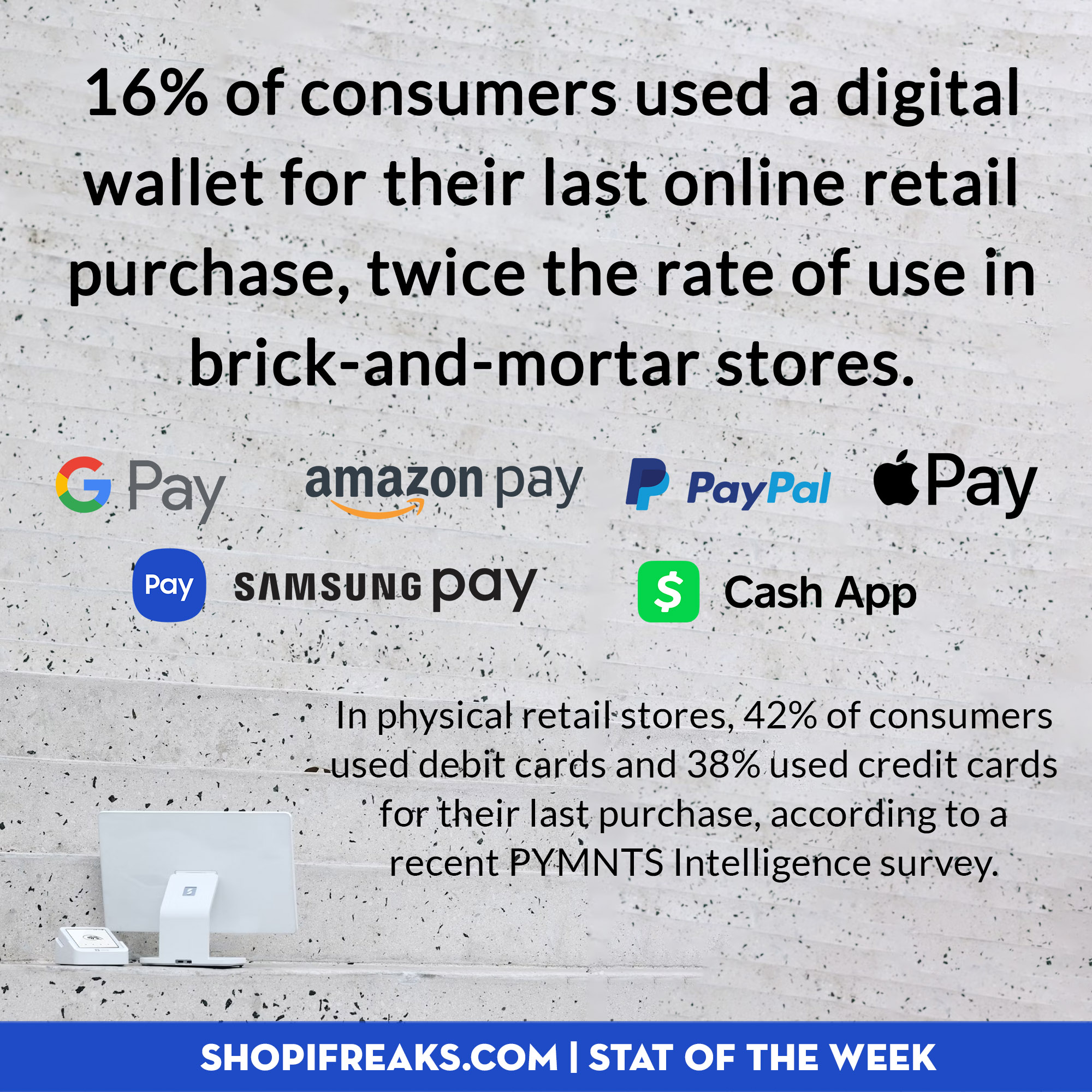
16% of consumers used a digital wallet for their last online retail purchase, twice the rate of use in brick-and-mortar stores. In physical retail stores, 42% of consumers used debit cards and 38% used credit cards for their last purchase, according to a recent PYMNTS Intelligence. report.
1. The de minimis exemption ends for all countries globally
On Friday, the United States ended the nearly century old “de minimis” exemption, which allowed items worth less than $800 to be shipped to the country duty free, without paying any tariffs. The exemption ended for Chinese goods in May, but now the exemption is closed for the rest of the world. The changes were announced via executive order on July 30th, but just took effect on Aug 29th.
In advance of the official termination date, several European countries, as well as Australia, India, Japan, South Korea, Taiwan, Thailand, New Zealand, and Mexico announced suspensions of U.S.-bound shipments because of the pending changes and the lack of guidelines given on how to deal with them. (Some have since resumed service.)
The service suspensions are resulting in many U.S. customers being notified that their orders are being cancelled and refunded, due to foreign postal services not having systems in place to process tariffs or pay them to U.S. Customs and Border Protection.
Alison Layfield, vice president of product development at ePost Global, said:
“In essence, the Trump administration is now asking foreign mail carriers to act as import tax collectors on behalf of the U.S. government — something they aren’t set up to do or may be refusing to do. Why would a foreign post collect from a local business for a foreign country’s customs? It’s not something that anyone has done before.”
How much are the tariffs?
- Moving forward, a global baseline of 10% will be in effect, with country-specific tariffs layered on top (30% for China, 50% for India, 40% for Brazil, etc).
- For the first six months, importers can opt to pay a flat-rate duty of $80 to $200 per package shipped from foreign postal agencies.
- Steel, auto imports, and copper face 50% tariffs, and there are special exceptions for products like GPUs.
Are the tariffs legal?
Not according to a federal appeals court in Washington DC, which ruled on Friday that President Trump overstepped his presidential powers when implementing global tariffs. The court said in the 7-4 ruling that:
“[U.S. law] bestows significant authority on the president to undertake a number of actions in response to a declared national emergency, but none of these actions explicitly include the power to impose tariffs, duties, or the like, or the power to tax.”
The ruling added that many of Trump’s steep tariffs are “unbounded in scope, amount and duration,” and “assert an expansive authority that is beyond the express limitations” of the law his administration has leaned on.
The court’s decision will likely mean that the supreme court will have to rule on whether President Trump (or any U.S. President moving forward) has the legal right to unilaterally upend U.S. trade policy.
Despite the ruling, the tariffs are still in effect. The court said the ruling would not take effect until October 14th, but even then, there’s no guarantee that the Trump Administration will abide by it.
President Trump wrote on Truth Social:
“If allowed to stand, this Decision would literally destroy the United States of America. At the start of this Labor Day weekend, we should all remember that TARIFFS are the best tool to help our Workers, and support Companies that produce great MADE IN AMERICA products.”
His statement about “literally destroying the United States of America” feels a bit hyperbolic. Wouldn’t it just mean that things simply go back to where they were a few days ago?
Anyway… it’s going to be an interesting holiday shopping season. That’s for sure.
How are these new tariffs impacting your retail business? How about your shopping experience? Hit reply and let me know.
2. Shopify majorly upgrades its fulfillment system and expands partnerships
Shopify announced major upgrades to its native fulfillment system, giving merchants access to global carriers, bulk processing, and smarter workflows directly from the admin, without relying on extra apps or third-party systems.
Here’s what’s new:
- More Carriers – partnerships include DHL, USPS, UPS, FedEx, Canada Post, Purolator, Royal Mail, Australia Post, and Flexport, with more being added in the coming months.
- Time Saving Tools – the ability to filter orders by status, destination, or other criteria, process up to 250 orders at once, add pick lists with bin locations, and automatically select the right box sizes based on specific variants.
- International Shipping Tools – the ability to collect duties and taxes at checkout, purchase Delivered Duty Paid (DDP) labels from DHL Express and DHL eCommerce, and generate customs documentation automatically.
- Built-in Protection – every label includes up to $200 insurance at no extra cost for U.S. merchants using Shopify Payments on the Grow plan and above. Plus address validation and fraud detection as well as the ability to file a claim from the admin for all merchants.
- Expanded Fulfillment Network – now connects merchants with more trusted partners including Amazon Multi-Channel Fulfillment, Bigblue, DHL Fulfillment Network, GoBolt, and Mayple, with integrated dashboards to monitor order status, shipping performance, and inventory levels.
Shopify is taking the right approach to fulfillment this time.
In 2019, Shopify launched its Shopify Fulfillment Network and shortly after acquired 6 River Systems, a warehouse robotics startup, for $450M. Then in 2022, it acquired Deliverr, an e-commerce fulfillment provider, for $2.1B, marking its largest acquisition to date.
The acquisitions made everyone believe that Shopify was moving towards building out their own internal fulfillment capabilities and potentially closing the gate on partners.
However in 2023, Shopify abruptly pivoted and sold the majority of its logistics businesses, including the assets it acquired from Deliverr and 6 River Systems, to Flexport in exchange for 13% equity in the company. Shopify CEO Tobias Lütke described the logistics venture as a “side quest” that had distracted the company from its core mission of building e-commerce software and emphasized a renewed focus on its “main quest.”
Turns out logistics is hard!
Shopify’s new approach to logistics — of expanding its partnerships and bringing integrated capabilities in-house — is the right move. Why take the difficult and expensive role of running your own fulfillment network when you can partner with the best? The new collaborations, integrations, and partnerships that Shopify has launched since 2023 are a win-win-win for Shopify, fulfillment companies, and merchants.
🔥 Partner News
Go Fish Digital, part of the Agital portfolio, unveiled a new brand identity that unites Go Fish Digital, Exclusive Concepts, and EK Creative under a single name with an updated performance-driven positioning. The relaunch includes Barracuda, a proprietary suite of AI-powered marketing tools that support SEO, paid media, digital PR, content, and social commerce with real-time insights and automation. Together, the consolidated agency offers broader capabilities, deeper specialization, and a seamless, AI-enhanced experience for clients across industries.
doola introduced its new AI Co-Founder, a business-in-a-box platform designed to help e-commerce founders launch and scale without the burden of back-office tasks. The tool streamlines LLC formation, banking, bookkeeping, taxes, and compliance into a single login, replacing the need to juggle multiple providers. Unlike generic AI tools, doola’s platform adapts to each founder’s business, handling everything from EIN applications to Shopify Payments setup, so entrepreneurs can cut hours of admin work down to minutes and focus on making sales.
3. Nano Banana is taking the Internet by storm
In the words of Kelly Kapoor, “This day is bananas! B-A-N-A-N-A-S!”
On Tuesday, Google unveiled a new image editing model called Gemini 2.5 Flash Image (aka “Nano Banana”) that’s designed to maintain consistency across edits and ensure that photos of people look consistently like themselves — and people are loving it!
The new model allows users to:
- Change clothes and locations – maintaining the same look in every image as the subjects are placed in new scenarios.
- Blend photos together – creating brand new scenes from individual photos of different people.
- Multi-turn editing – making multiple edits one at a time with continuity between edits.
- Mix up designs – apply the style of one image to an object in another, such as taking the color and texture of flower petals and applying it to a pair of rainboots.
Nicole Brichtova, a product lead on visual generation models at Google DeepMind, told TechCrunch:
“We’re really pushing visual quality forward, as well as the model’s ability to follow instructions. This update does a much better job making edits more seamlessly, and the model’s outputs are usable for whatever you want to use them for.”
Brichtova says Google specifically designed the model with consumer use cases in mind, such as helping users visualize their home projects, and that it has better “world knowledge,” like the ability to combine multiple references in a single prompt.
The most fun use case so far? People are using Nano Banana to artificially create photos of themselves with celebrities! So if in the past week, you’ve seen a bunch of your connections on LinkedIn posting photos with Jeff Bezos — now you know why.
Users of the free version of Gemini now get 100 images per day to either edit or create, while the paid version of the Gemini for $20/month includes up to 1,000 images per day.
Alistair Barr of Business Insider questioned:
“Why would you pay $23 a month for Photoshop when Google offers similar capabilities, either for free or for less money?”
Well, not every designer wants to exclusively edit with conversational text prompts, and Adobe provides those tools, as well as the ability to integrate Nano Banana and other image models for when designers would like the best of both worlds. Nonetheless, Adobe stock fell on Tuesday when Google’s launch went live, ending a five year period during which the company has lost 30% of its market cap, leaving it worth about $150B, compared to Google’s $2.5 trillion.
What’s your best Nano Banana photo so far? Hit reply and show me what you’ve got!
4. Amazon resumes Google Shopping ads outside of the U.S.
Amazon restarted spending on Google Shopping ads across its international domains exactly one month after abruptly pausing them, in a move that Search Engine Land says now looks like a “deliberate marketing test” — although no-one really knows for sure.
Quick Backstory: At the end of July, I reported that Amazon removed its entire Google Shopping advertising presence across all major markets, including the U.S., UK, Germany, and Japan, in a move that ended up lasting for 31 days. (However no-one knew at the time how long it would last.) Amazon’s median Shopping ad impression share dropped from as high as 60% in some categories to 0%, marking one of the company’s most dramatic exits from Google’s retail ad ecosystem in recent history.
Now Search Engine Land and Digiday are reporting that Amazon’s international domains are once again running Shopping ads, other than in the U.S.
According to Mike Ryan, head of e-commerce insights at Smart Commerce, Amazon’s share in every market other than the U.S. is back up to previous levels. Ryan said, “It was as if nothing had happened.”
Amazon declined to comment on the matter (of course), but the data speaks for itself. The company’s activity on Google Shopping ads is visible to ad managers through Google’s Auction Insights tool, which provides the ability to monitor your own search impressions versus those of competitors.
Ryan commented on what to expect next:
“Amazon left. The vacuum got filled nearly instantaneously. It’s filled now, and Amazon’s jumping back in. So someone’s got to lose out on this situation and somehow, I don’t think it will be Temu and Walmart.”
Now marketers eagerly await to find out whether Amazon will also reactivate its ad campaigns in the U.S.
5. Is The Trade Desk cooked? And do they realize it?
The Trade Desk’s stock sunk 40% earlier this month with analysts blaming increased competition from Amazon as a reason for the uncertainty, but the company’s CEO Jeff Green may have his head in the sand.
On their August earnings call, Green said:
“Amazon is not a competitor and Google really isn’t much of a competitor anymore either. We’re trying to buy the open internet, leveraging technology that values media objectively. We don’t have any media, and we don’t grade our own homework.”
However is what he considers the company’s UVP actually a disadvantage?
Owned media is an extremely valuable asset! In comparison:
- Amazon owns its shopping marketplaces, Prime Video, and Fire TV, giving it direct ad inventory, plus access to a mountain of first-party shopping data.
- Google owns Search, YouTube, and Chrome, which collectively offer massive user data and in-app / on-platform ad placements.
- Netflix and Disney+ host and serve their own content and ads, while controlling the formats and placements.
In contrast, The Trade Desk doesn’t own any media, which on one hand, allows it to act as a neutral, transparent DSP across the open internet, but on the other hand, means it lacks the exclusive inventory and first-party data advantages that competitors like Amazon, Google, and Netflix enjoy.
One may be more noble and make for a better talking point, but the other may be more stable & profitable.
So while Green may have a point that Amazon an Google aren’t direct competitors in the world of “neutral, transparent DSPs” — that world doesn’t exist in a silo and is very much in competition with ad networks that own media.
What are your thoughts? Should The Trade Desk pivot away from its idealistic model and seek to acquire some media assets in order to future-proof its business? Is the company at risk of Amazon and Google forging exclusive partnerships with their biggest clients? Is its high margin business ripe for disruption by the king of “your margin is my opportunity?”
Hit reply and let me know, or join the conversation on LinkedIn.
6. Google prepares Ad Manager for a potential spinoff
Speaking of ad tech… Google is preparing Ad Manager for a potential antitrust-mandated spinoff by courting ad agencies and exploring direct ad-buying tools, a shift from its traditional publisher-only focus. The $5B unit has struggled to adapt to streaming and app clients like Roku and Uber, falling behind rivals despite recent discounts and incentives, but now, with the DOJ pressing for a breakup, Google is doubling down on its efforts to ensure Ad Manager can stand on its own two feet if separated from the rest of its ad tech stack.
The Information reports:
- Last month, Google Ad Manager staff organized a dinner in New York for the largest advertising agencies, where they asked agency employees how they could work together — which surprised attendees because they were accustomed to dealing with a different division of Google that helps agencies buy ads.
- Google employees have known of the possibility that its ad tech unit might be broken up for several years now, according to one former employee.
- The former employee said that Google has internally discussed for years way to ensure that Ad Manager could be self-sufficient in order to defend itself against accusations that it’s too tied into the company’s other ad tech services, and to ensure that it could self-sustain if forced to spinoff.
Why the urgency now?
In August 2024, a D.C. judge ruled that Google held an illegal monopoly in search, and in April 2025, a Virginia judge ruled that Google illegally monopolized parts of the ad tech stack, specifically publisher ad servers and ad exchanges. The DOJ is arguing that a breakup is necessary, whereas Google is instead proposing making its tools more interoperable to avoid divestiture.
With the outcome uncertain, Google is hedging its bets and preparing the business to survive outside of its umbrella.
7. Is Target headed in the right direction?
Target’s new CEO Michael Fiddelke shared his top three priorities for achieving growth and reinforcing what he believes makes Target special.
- Reestablish the company’s distinct “merchandising authority,” focusing on unique, trendy, and exciting products.
- Improve the in-store experience, such as ensuring that key items are never out of stock and offering friendly customer service.
- Employ technology to improve speed, guest experience, and efficiency, such as redesigning its merchandising and inventory processes with the help of AI.
Just curious, but are executives terrified to talk about “DEI” or any of the other giant elephants in the room that are impacting sales and customer loyalty? It doesn’t seem prudent to simply act like they don’t exist and strictly focus on merchandise and AI instead.
In regards to its focus on trendy products…
Trading card sales at Target are up nearly 70% YTD and are on track to deliver $1B in sales this year, primarily due to the popularity of card games like Pokémon, Magic the Gathering, and One Piece. Target executives said the trend, paired with the Nintendo Switch 2 launch, lifted its newly coined “Fun 101” hardlines category, even as overall sales slumped. The company hopes it can continue to capitalize on trends and remain a shopping destination for culturally relevant products.
Is that the GameStop strategy? Earlier this year GameStop announced that it’ll also be focusing on trading cards and other collectibles since online video game sales have effectively killed its videogame revenue.
I can’t imagine this is a strong long-term path for either company. Imagine building your business on the sale of Beanie Babies back in the day?
Is Target headed down the right path?
In June, I criticized Target for copying other retailers and cited multiple examples of when that strategy has failed them in the past. I wrote at the time:
“Target needs to sit down, have a nice long look in the mirror, and ask, ‘Who am I?’ And then build an offering for the next twenty years that reflects that answer.”
While I concur with the new CEO’s three focus areas above, they seem more like the bare minimums of running a successful national retail chain than strategic differentiators.
It still feels like Target is directionless and doesn’t yet have a solid answer to the question, “Why shop here instead of Walmart or Amazon?”
Focusing on keeping shelves stocked isn’t a great answer.
8. Walmart unveils new seller capabilities and tools
Walmart unveiled new marketplace upgrades, AI-powered tools, and seller incentives at its annual Walmart Marketplace Seller Summit, which took place Aug 26th and 27th.
New AI tools include:
- AI-Powered Listing Tool – to reduce time adding items individually or in bulk
- Smart Assistant – providing 24/7 real-time support. (That’s “real-time,” not “real-person.” LOL)
- Seller Advisors Program – provides a direct line of feedback to Walmart leaders to help improve seller programs and tools and foster a healthy business ecosystem. (Shots fired Amazon!)
- Shipping Settings and Services – sellers who self-fulfill can automate delivery promises by region instead of having one national promise.
- Brand Portal – to help brands protect their IP and flag fraudulent activity with an enhanced focus on product authenticity.
New seller incentives include:
- 0% referral fee on all qualifying toys
- 50% referral fee reduction on all qualifying pet supplies
- Up to 100% referral fee reductions on qualifying top-selling items across categories
Other announcements and upgrades include:
- Next-Day Shipping in Major Metros – including Los Angeles, New York, Chicago, Houston and Atlanta.
- Competitive Rates – Walmart Fulfillment Services say it offers rates that average 15% less than competitors.
- In-Store Digital Discovery – In April, Walmart opened its new Cypress, Texas, location, which features digital QR codes throughout the store that allow customers to access digital tools, services and an extended online assortment. (More on that from Modern Retail.)
Walmart also announced that it’s inviting U.K. and European businesses to attend its U.K. Seller Summit in London to learn how to sell to its customers in the U.S., Canada, Mexico, and Chile. Attendees are promised to receive localized guidance, deep dives into cross-border growth, and breakout sessions featuring conversations, success stories, and direct access to solution providers.
Daniel Sodkiewicz, co-founder of GeekSeller, attended the Walmart Seller’s Summit and did some live coverage of the event if you’d like to see some behind-the-scenes content and read additional insights.
9. Other e-commerce news of interest
eBay opened its new Ambassador affiliate program to all U.S. buyers, sellers, and creators, offering up to 7.5% commission for promoting select listings through curated storefronts or social sharing tools. The program officially launched in April, but was initially limited to affiliates who were previously part of the company’s eBay Partner Network, which it now wants to limit to “professional marketers and publishers” — which I’m reading as “larger partners.” The Ambassador program is restricted to certain categories and could trigger Promoted Listings ad charges if items appear in storefronts, while also replacing the Final Value Fee credit that sellers once earned by promoting their own items, leaving many sellers concerned that the new commission structure won’t cover all their fees. I’m sure sellers and influencers will be lining up to join this well thought out program.
In other disappointing eBay news… eBay buyers that were promised $100 coupons from its Live shopping promotion back in June say the coupons never arrived, despite terms stating they would be issued within two weeks of purchase. Community forum posts detail months-long waits, unhelpful support responses, and claims of systemwide IT issues, leaving shoppers frustrated. The company’s CEO Jamie Iannone has increasingly been employing the type of discounting strategies that he previously criticized his predecessor for using to help boost quarterly financial results, which are helping to drive sales, but leaving buyers and sellers holding bags of broken promises.
Shopify partnered with RunDTC and ContentStack to launch Unify, a centralized platform that lets global retailers manage multiple Shopify storefronts from one interface. The tool aims to cut launch times, streamline content workflows, and provide enterprise-grade permissions without the high cost of headless builds. Steve Madden was an early adopter of the tool, using it to launch 30 global sites across 3 brands, which Shopify says resulted in a 16% increase in conversion rates due to being able to offer localized content with consistent brand control.
Amazon is reclassifying Whole Foods’ U.S. corporate employees who work in roles like marketing and merchandising as “Amazon staff” starting Nov. 10, extending new job offers that align titles, salaries, and benefits with the parent company. Workers will gain Amazon stock and discounts but lose Whole Foods perks like the annual bonus, extra remote work weeks, and eventually their in-store discount, which will be reserved for frontline staff. The move, which Amazon says is meant to propel collaboration and innovation, comes as the company pushes deeper integration across Whole Foods, Amazon Fresh, and Amazon Go to unify its grocery strategy.
Etsy is asking sellers to rewrite their listing titles to make it easier for buyers to read them, and promising that its new AI-powered tool can help them do so. The company explained to sellers that its search engine had previously “heavily emphasized” the title of listing, which encouraged keyword-stuffing, but now it’ll be taking a more holistic view of listings and giving more weight to tags, attributes, descriptions, photos, and reviews. Etsy is asking that sellers focus on “clarity and relevance” in their listing titles and move other key details to listing tags, descriptions, and attributes. Great move! Product titles had become a bit Amazonified over the years on Etsy.
Instacart is teaming up with Merchants Distributors LLC, a wholesale grocery store distributor, to bring its Storefront Pro e-commerce platform and same-day delivery services to independent grocers in MDI’s network. The platform includes catalog services, marketing automation, customizable merchandising, and delivery options as fast as 30 minutes, giving local grocers tools to grow their online presence with similar features as their larger competitors.
Wix announced a new partnership with Pinterest that lets merchants sync product catalogs, run targeted ads, and drive traffic back to their Wix stores. The integration is managed directly from the Wix dashboard, with updates like title, description, and price changes automatically reflected on Pinterest. Wix said the move expands its multichannel selling capabilities and gives merchants new opportunities to monetize through social commerce.
Amazon is losing ground in the AI talent war due to its rigid pay bands, backloaded stock vesting, and strict return-to-office policies, according to an internal document viewed by Business Insider. Competitors like Meta, OpenAI, and Google are offering richer compensation packages and attracting top engineers, leaving Amazon with lower retention rates and a weaker reputation in generative AI. AWS recruits say candidates are increasingly rejecting offers, and around 600 employees have been poached by Oracle in the last two years, causing Amazon to reconsider tweaking its compensation and location strategy, but no moves have been made yet.
Meanwhile, TikTok is continuing to hire aggressively, with over 1,800 open roles that offer six-figure salaries across e-commerce, AI, and search. Federal visa filings reviewed by Business Insider show TikTok Shop roles ranging from $94,000 for live ops managers to nearly $500,000 for senior e-commerce leaders, while AI and search specialists can earn up to $564,000. The pay levels are on par with rivals like Meta and Google, and the open roles highlight TikTok’s aim to strengthen its recommendation systems, logistics, and ad products.
Typepad, a blogging platform that used to serve as the backend for many major publications including Wired, ABC, CBC, and BBC, is shutting down on Sep 30th and permanently deleting all of its blogs and content. The company had previously removed the ability to create new accounts in 2020, but as recently as March were telling users that there were “no plans” to shut down the service. It gave no specific reason for shutting down other than calling it a “difficult decision.”
This week in Elon Musk lawsuits… 1) Eliza Labs, formerly AI16z, is suing X, claiming that the company deplatformed its accounts to squeeze out competitors in the AI agent space after pumping the company for information about creating, developing, building and deploying AI agents for several months. 2) Elon Musk’s lawyers are seeking to get a lawsuit from the SEC thrown out that centers on Musk amassing more than a 5% stake in Twitter without disclosing it within the regulated time frame, prior to before his eventual takeover of the company in 2022. 3) Last but not least, Musk’s lawyers are asking a U.S. judge to block OpenAI from obtaining documents from Meta related to his previous $97.4B bid for the company’s assets, in which Musk tried to enlist Mark Zuckerberg for the bid. Last week OpenAI tried to get the judge to order Meta to produce the documents, and Meta asked to deny the request, claiming that it should seek the documents from Musk and xAI. I hope the judge requires all companies to hand them over.
TikTok introduced the ability to share voice notes, photos, and videos through direct messages, which previously only supported text, GIFs, stickers, and TikTok-made photos and videos. Last year, the platform launched group chats that support up to 32 members and recently rolled out Creator Chat Rooms for creators and their followers to connect and interact with each other. The new capabilities bring TikTok’s messaging experience more in line with competing messaging apps like WhatsApp and iMessage. I imagine it won’t be long before they integrate commerce capabilities into the chats as well.
Google will begin blocking the sideloading of unverified Android apps after a recent analysis found “over 50 times more malware from internet-sideloaded sources than on apps available through Google Play.” Moving forward, Google will require developers to verify their identify in order for their apps to be installed on certified Android devices, and it’s building a new Android Developer Console specifically for developers that distribute outside of its app store so that they can quickly authenticate their identifies. Google says it’s for security, but it sounds like an additional form of gatekeeping to me.
TikTok “voluntarily” suspended its live feature for the “next few days” in Indonesia following anti-government protests that have turned violent in some areas of the country. The riots are the culmination of months of economic and political frustration in Indonesia, with citizens accusing police and members of parliament of corruption. TikTok says that “in light of the increasing violence in protests in Indonesia, we are taking additional security measures to keep TikTok a safe and civil space.” A scary example of how citizens can have their digital platforms cutoff at a moment’s notice during times of political resistance.
Skylight, the TikTok alternative built on Bluesky’s social network and AT Protocol, is building a community of human curators who post and repost videos to build out their own custom feeds that others can subscribe to, as opposed to restricting users to an algorithmic main feed. The option is meant to appeal to users who are discontent with the traditional algorithmic control of traditional social media platforms. It’ll be interesting in the future if those human curators are also able to earn a piece of the revenue that creators usually get, although at the moment, neither Skylight or Bluesky offer internal monetization programs.
Klarna is now an in-store payment method at more than 400 Walmart stores across Canada, complementing its existing acceptance on Walmart.ca and the company’s mobile shopping app. Consumers can choose to pay in full or via installment payments at assisted checkout lines for purchases of more than $50 CAD by scanning a QR code on the POS screen at checkout. The option is currently not available at self-checkout lanes at this time. That’ll bode well for its IPO!
Apple is opening a Douyin storefront in China where fans can buy iPhones and other Apple products with Douyin Pay, giving them the option to pay in 12 interest-free installments. Douyin, the sister app of TikTok that’s also owned by ByteDance, sees more than 760M monthly active users in China and Hong Kong, where its use is currently restricted to. Prices for Apple products so far seem consistent with those on Tmall, China’s largest consumer marketplace.
Amazon is pouring billions of dollars into AWS data centers in Sweden, attracted by the country’s emergence as a NATO logistics hub and regional e-commerce epicenter. The move aims to leverage Sweden’s renewable energy, advanced logistics, and high per-capita online spending, while further cementing Sweden as a commercial and strategic data hub.
Alibaba is revamping its supply chain to achieve one-hour delivery in major cities, pouring resources into its Cainiao unit to optimize routes, automate warehouses, and expand last-mile reach. The move comes as JD.com and Pinduoduo also invest heavily in logistics, with Alibaba betting that its scale, AI tools, and sustainability push will give it a competitive edge. The company also plans to integrate greener practices, partner with third-party delivery firms, and experiment with drones and automation to boost fulfillment speed and cut carbon impact.
Amazon and Flipkart are lobbying India’s commerce ministry to exempt exports from foreign direct investment restrictions that bar platforms from holding inventory or selling goods directly. The companies argue that easing rules would boost small traders’ participation and help India reach its $200–300B e-commerce export target by 2030, with Amazon alone pledging $80B in cumulative exports by then. Retailer associations, however, pushed back, warning that relaxed rules could further disadvantage small offline merchants who are already strained by the discounting practices of larger platforms.
Two weeks ago I reported that Meta knowingly permitted the company’s AI chatbots to “engage a child in conversations that are romantic or sensual,” generate false medical information, and help users argue that Black people are “dumber than white people.” Now the company has shared that it’s implemented temporary guidelines for its chatbots NOT to engage in conversations with minors around self-harm, suicide, or disordered eating, and to avoid inappropriate romantic banter, while it works on new permanent guidelines. Well, I’m sure glad that we can count on Meta to do the right thing after leaked documents and international news attention coerces them to do so. Bless their hearts. Salt of the earth those people.
A BBC investigation found a web of spammers using AI to mass-produce fake Holocaust images and stories on Facebook, racking up billions of views through Meta’s monetization program. Survivors and memorial groups say the content distorts history, disrespects victims, and risks eroding trust in authentic Holocaust records. Meta removed some flagged accounts for impersonation and inauthentic behavior but said the AI images themselves did not violate its policies, raising questions about how platforms reward high-engagement “AI slop” regardless of accuracy.
Speaking of anti-Semitism… The Verge discovered antisemitic t-shirts for sale on TikTok Shop, Amazon, and Shopify such as one featuring a parody of the Jaws movie poster showcasing the shark transformed into a human nose, the swimmer at the surface of the water replaced by a $100 bill, and the movie title edited to read “Jews,” propagating the stereotypes that Jewish people are money hungry. I’ll admit — I chuckled when I saw the t-shirt — and I’m Jewish. Then again, aren’t us Jews known for our self-deprecating humor? Situations like this bring attention to the thin line between edgy humor and hate speech, which seems to exist in a silo when it comes to e-commerce. Comparably, if Louis C.K. made a joke with a similar punchline (of which he’s made plenty), should he have his specials removed from Netflix? Or does the medium of stand-up comedy allow for instances of antisemitism and racism if presented in jest, while retail does not? It’s an interesting and evolving topic to see how e-commerce versus media platforms determine what’s considered art, humor, and free expression over hate speech.
🏆 This week’s most ridiculous story… Taco Bell is rethinking its use of AI to power its drive-through ordering system after a video circulated of a customer crashing the system by ordering 18,000 water cups. Another video that was viewed 21.5M times shows a man ordering a “large Mountain Dew” and the AI voice continually asking “and what will you drink with that?” I’d love to see how its AI system responds to the order, “I’ll take anything on the menu that won’t give me screaming diarrhea tomorrow.” Despite some of the viral glitches, Taco Bell says that it’s successfully processed over 2M orders using the voice AI technology since its introduction.
10. Seed rounds, IPOs, & acquisitions
Shopify acquired Molly Studio, a NYC-based design firm that has previously worked with Shopify as a client, for an undisclosed amount. Molly will operate as an “internal agency,” where product design leads at Shopify will act as clients, help scope out projects, and turn around finished designs in two to three months, according to Shopify’s Chief Design Officer, Carl Rivera, who took on the role in April. Rivera added that the studio is not meant to replace teams, but to add “energy, creativity, and momentum” to their projects and serve as an in-house “Navy SEAL” squad tasked with reimagining the next era of commerce from the ground up, powered by AI.
Razor Group, a Berlin-based aggregator of e-commerce brands, merged with Infinite Commerce, a Seattle-based e-commerce company formed in 2024 through the merger of Juvo Plus, Cap Hill Brands, Dragonfly, and Moonshot Brands, to create one of the world’s largest e-commerce aggregators. The combined company, which will operate under the Razor brand, will manage over 10,000 SKUs across Amazon, Walmart, Target, Chewy, and other marketplaces, supported by a unified tech platform for forecasting, pricing, and advertising. Razor CEO Max Biller will lead the business, while Infinite CEO Steve Neufer becomes Executive Chairman.
ChatBlue, a UK-based AI-powered inventory automation platform that synchronizes listings, manage, stock levels, and adjusts pricing across marketplaces via natural-language commands, raised $500k in a pre-seed funding round led by Matador Venture Capital. The startup, which incorporated in April, believes their product can help merchants increase conversion rates by up to 20% through intelligent listing optimization and real-time inventory control. The funding will be used for product development and go-to-market rollout, which is planned for this month.
ByteDance is launching an employee share buyback that will value the company at more than $330B, according to insiders. The company plans to offer current employees $200.41 per share in the repurchase program this fall, up 5.5% from the $189.90 it offered them six months ago at a $315B valuation. That jump resulted in the company’s Q2 revenue hitting about $48B, most of which is from the Chinese market as it continues to face political pressure to divest its U.S. arm.
DHL eCommerce completed the acquisition of a minority stake in AJEX Logistics Services, a Saudi Arabian parcel logistics company, marking the company’s expansion into the rapidly growing region. DHL first established its presence in Saudi Arabia in the 1970s with its DHL Express business unit, and other divisions of the company have been operating in the country for several years, providing specialized services like contract logistics and freight forwarding solutions. As part of the deal, DHL eCommerce will be represented on AJEX’s Management Board and has the option to increase its stake to a majority in the future.
Framer, a Dutch company that makes tools for automating web design and competes with Figma, raised $100M in a round led by Meritech Capital Partners and Atomico at a $2B valuation, bringing its total amount raised to $123M. The startup was formed in 2014 by two designers who sold their prior company, Sofa, to Facebook three years earlier, initially offering prototyping tools for designing websites and later adding web publishing and no-code development services. Framer markets its services as a simpler alternative to Figma and Squarespace, providing tools for web animation, tracking marketing activity, and publishing in one platform.
Swedbank, a Swedish banking group that offers retail banking, asset management, and other financial services, acquired Barclays’ 50% stake in Entercard, a Scandinavian credit company that offers consumer credit products across Sweden, Norway, and Denmark, for $273M. The sale continues Barclays’ efforts to dispose of non-core operations in recent years. Entercard will retain its brand identity following the acquisition.
Mekari, an Indonesian SaaS platform that provides cloud-based HR, payroll, accounting, tax, and business management software for SMBs, acquired Desty, an Indonesian commerce platform that helps merchants build online stores, manage payments, and sell across multiple channels, for an undisclosed amount. The deal aims to strengthen Mekari’s omnichannel commerce solutions, allowing merchants to manage inventory, orders, products, and warehouses across various marketplaces within a single system, connected to Mekari’s existing financial and operational software.
dlivrd, a Pennsylvania-based last-mile logistics company that provides contract delivery drivers for restaurants, catering companies, and marketplaces, acquired Vanuse, a London-based on-demand delivery platform that connects businesses with local van drivers for same-day transport of furniture and other large items, for an undisclosed amount. The acquisition expands dlivrd’s last-mile logistics capabilities by adding larger vehicle transport for catering delivery, e-commerce fulfillment, and high-value business shipments.
Pepper, a NYC-based AI-powered revenue platform for food distributors that provides digital tools to streamline ordering, optimize pricing, and drive customer engagement, acquired Kimelo, a San Francisco–based AI-powered SaaS platform that streamlines order management and catalog workflows for restaurant and foodservice distributors, for an undisclosed amount. The acquisition aims to enhance Pepper’s tools for distributors by simplifying order, improving buying insights, and supporting revenue growth through a combined platform for managing customer relationships, optimizing sales, and supporting business expansion.
PEAC Solutions, a multinational asset finance provider, acquired topi, a Berlin-based digital subscription and rental platform that enables retailers to offer IT hardware like laptops and smartphones on flexible terms to business customers. The deal, which keeps topi operating independently, strengthens PEAC’s push into Hardware-as-a-Service models and supports its European expansion strategy. By integrating topi’s API-driven tools with its global financing capabilities, PEAC aims to deliver embedded finance solutions at the point of sale and accelerate growth in tech-focused markets.
Attio, a London-based CRM that helps businesses build customizable, real-time databases to manage and analyze customer interactions, raised $52M in a Series B round led by Google Ventures, bringing its total amount raised to $116M. The company plans to use the funds to scale its engineering team and accelerate product development, particularly focusing on features that enhance agent collaboration, security, and real-time intelligence.
Thanks for being a Shopifreak!
If you found this newsletter valuable, please leave a review on Google and share the newsletter with your friends and colleagues to help us grow.
See you next Monday,
PAUL
Paul E. Drecksler
🌐 Shopifreaks.com
🧑💼 Add me on LinkedIn
📧 [email protected]
📱 +1-828-273-3031
⭐ Leave A Review
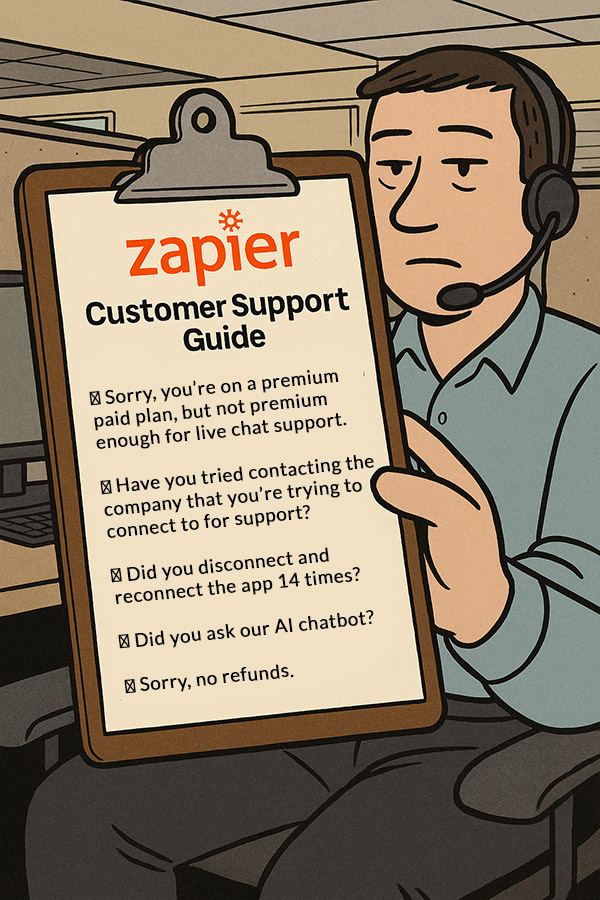
PS: Here’s what I imagine Zapier customer support training must be like…