
Hi Shopifreaks
What a week! I woke up last Tuesday with a 102 degree fever and couldn’t get out of bed most of the week. I think my body instinctively knows that I need to write this newsletter on Sunday and Monday, so it waits until Tuesday to get sick. LOL. I hope your week was better than mine though.
That said, I’m happy to inform you that I’m back to my old self (well, 80% there) just in time to deliver another jam-packed edition of Shopifreaks.
In this week’s edition I cover:
- Sora’s historic rise to 1M downloads
- 100% tariffs on Chinese imports
- Etsy overhauls its membership program
- PayPal launches a retail media network
- Highlights from OpenAI’s Dev Day
- BNPL firms go agentic
- Amazon debuts medication vending machines
- Amazon & Google’s new AI agent building tools
- YouTube wants to Make America Great Again
- PayPal introduces 5% BNPL cash back
- Block wants you to avoid Visa and Mastercard
All this and more in this week’s 247th Edition of Shopifreaks. Thanks for subscribing and sharing!
Stat of the Week
OpenAI’s new Sora app was downloaded over one million times in less than five days, even faster than ChatGPT hit the milestone despite only being available in North America and by invitation only. The app is now #1 in Photo & Video on the Apple App store, but unfortunately it’s only got a 2.8 star rating out of 3,500 reviews, with many users complaining about its guardrails being too restrictive.

1. President Trump imposes 100% retaliatory tariffs on Chinese imports
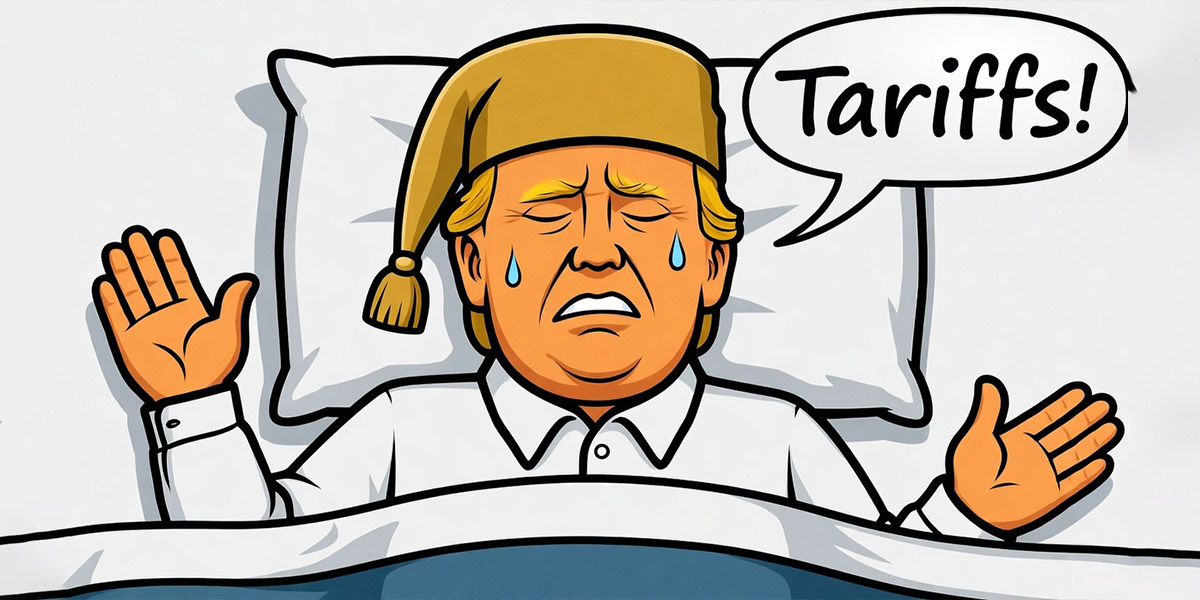
Tariffs again? I thought we already did this. It’s like, come on, tariffs are so Q2 / Q3! However to no-one’s surprise, President Trump is at it again with throwing his tariff weight around.
Here’s what’s gone down in the past few days:
- On Thursday, China issued new export restrictions on rare earth elements and minerals, adding five new elements and extra scrutiny for semiconductor users and dozens of pieces of refining technology to its control list. China produces over 90% of the world’s processed rare earths and magnets, which are used in products like electric vehicles, aircraft engines, and military radars.
- On Friday, Trump said he will impose an additional 100% tariff on imports from China, as well as impose export controls on “any and all critical software” starting Nov 1st, in retaliation of China’s new export restrictions.
- He posted on Truth Social that “China has taken an extraordinarily aggressive position on Trade,” claiming that their move “was obviously a plan devised by them years ago.” He described the new controls as “absolutely unheard of in International Trade, and a moral disgrace in dealing with other Nations.” Feels a little like the pot calling the kettle black, but let’s move on…
- President Trump has been planning to meet with President Xi later this month, but said on Friday that “there seems to be no reason” for the meeting to take place under current positions.
- Following the news on Friday, the S&P 500 dropped 2.7%, the Dow Jones Industrial Average 1.8% and the Nasdaq Composite dropped 3.6%.
- It also sparked a massive $18.28B cryptocurrency sell-off late Friday, which is the largest liquidation event in crypto history.
- On Sunday, China defended its new rare earth export controls, which began on Oct 9th, explaining that the measures are “designed to better safeguard world peace and regional stability.”
- China’s Commerce Ministry called Trump’s plan to impose another 100% tariff on Chinese goods a “classic case of double standards.” The ministry further stated that Trump’s actions “have severely harmed China’s interests and undermined the atmosphere for bilateral economic and trade talks.”
- On Sunday Trump posted again on Truth Social, “Don’t worry about China, it will all be fine! Highly respected President Xi just had a bad moment. The U.S.A. wants to help China, not hurt it!!!”
- Beijing later signaled on Sunday that it’s ready to retaliate against any new levies that the Trump administration imposes on Chinese imports. A spokesperson for China’s Commerce Ministry said, “Threatening to impose high tariffs at every turn is not the right way to engage with China. China’s position on tariff wars has been consistent: we do not want to fight, but we are not afraid to fight.” He later added that Beijing is ready to retaliate with unspecified “corresponding measures” if Trump follows through on his threat.
Does President Trump even have the authority to be doing this? Tariffs should be approved by Congress except during emergencies, but Trump even says himself this is a retaliatory tariff, and has nothing to do with the fentanyl crisis he’s been using to rationalize tariffs up until this point under the International Emergency Economic Powers Act (IEEPA). An upcoming Supreme Court case will determine if he actually does have the authority to haphazardly impose tariffs without Congressional approval.
More harmful than the bombshell tariffs themselves is the instability that they bring to U.S. businesses. There’s no good argument for imposing surprise tariffs at the drop of a hat. The instability is making it impossible for businesses to plan ahead, forecast inventory or expenses, or in many cases know if they’re going to still be in business in a month.
Do you actually believe that tariffs are the answer? At least strategically plan them in advance and give businesses time to prepare. And then stick to a plan! We’re living in the Ross / Rachel timeline of tariffs and it’s absurd.
2. Etsy overhauls its Insider membership program
Etsy is overhauling its Insider buyer membership program, replacing its ambitious free shipping benefits with a 5% Etsy credit on purchases starting November 4th. Under the new plan:
- Members will earn 5% back in Etsy credit on every purchase to use on a future order. The credits, which cap at $2,000 earned, do not expire as long as you continue paying the annual membership fee.
- Etsy will cover up to $6 in shipping costs on the least expensive U.S. domestic shipping option for orders over $15, with the buyer paying the difference. (Previously, Etsy covered up to $20 worth of shipping for all Insider orders.)
- Plus other “Insider” perks like “personalized offers” and “special savings.”
Liz Morton of Value Added Resource points out:
“And it’s likely no coincidence they set it at $6 – Etsy changed their search algorithm last year to prioritize items which show a shipping cost of $6 or less, saying their data shows that once shipping prices are $6 or above, buyers are less likely to make a purchase.”
Chief Growth Officer Kruti Patel Goyal announced in August:
“We’re evolving our Etsy Insider beta loyalty program, which has shown excellent results of driving frequency and consideration, yet didn’t provide scalable economics in its V1 iteration. So by this holiday season, we’ll launch a V2 program to an expanded buyer set, including our top buyers enabling us to test and iterate on a refreshed set of rewards and benefits.”
Wait, so Etsy Insider wasn’t a profitable endeavor for the company? Who could’ve predicted that?
Me. I predicted that.
In August 2024, when first covering Etsy’s original Insider membership program, I wrote:
Can Etsy afford to do that?
Are they aware that Amazon effectively loses money by offering free shipping with its Prime Membership?
In 2023, global revenue from Amazon Prime subscription fees totaled $12.4B, but the company spent around $89.5B on delivery (some of which includes its warehousing and other logistics expenses).
And we’re talking about Amazon here — meaning they do things to scale like no other. Plus they run their own warehouses and fulfillment network.
Are we about to see brightly colored Etsy trucks delivering to neighborhoods nationwide this year? Of course not!
Etsy will likely be reimbursing their sellers for the delivery fees they spend at couriers like USPS, UPS, FedEx, and DHL — which means they won’t have anywhere near the operational efficiency of Amazon when it comes to fulfillment. It’ll be an absolute money pit — and one that Etsy can’t afford given that the company is barely profitable.
I applaud the effort, but I don’t see this being a viable plan for the company (at least the free shipping part). Nor do I envision that enough Etsy shoppers will purchase the membership to make it a significant source of revenue for the company. But prove me wrong Etsy! I’m rooting for you.
This new Insider program will be less costly for Etsy, but it appears too restrictive to be embraced by customers. They need to step away from their free / subsidized shipping ambitions, which is a money pit no matter what angle they dig at it from.
The model simply doesn’t make sense for a marketplace that sells non-essential goods like gifts and novelty items and doesn’t fulfill any of the orders themselves. I don’t have to shop at Etsy, but I need to buy groceries and other household goods regularly from Amazon and Walmart — which is why their Prime and Plus memberships make economic sense for consumers in terms of a return-of-value.
Instead, Etsy should focus on creating a sticky shopping experience for ALL SHOPPERS that doesn’t involve a membership fee. For example, the 5% credit on purchases is great for promoting future purchases, but why should customers have to pay for that perk? Introducing a cashback program across the board to all customers (without opt-in or membership) would likely drive more additional revenue for Etsy than the Insider membership fees themselves.
99% of customers earning cashback sounds like it’d encourage more repeat patronage (especially if the credits expire) than just offering cashback to the less than 1% of customers that already shop with you enough to warrant paying for a membership. Then they could dial up that cashback throughout the year to incentivize purchases at key moments, or to encourage customers to add their friends and family’s birthdays to their shopping calendars.
Honestly, there are so many things that Etsy could do to thrive — with or without an Insider program — that it’d take a whole edition for me to cover them. Right now though, I’ll just say that Etsy simply isn’t getting it. You’re not Amazon. You’re not Temu. Just be ETSY and be damn good at it! As always, I’m rooting for you.
3. PayPal launches a retail media network
PayPal launched Ads Manager, a new way for small businesses to earn revenue from their websites through display advertising. They are marketing it very strangely. The press release says:
“PayPal today unveiled PayPal Ads Manager, allowing the tens of millions of small businesses that use PayPal to become their own retail media networks and generate new revenue streams. With 99.9% of all businesses in the U.S. being small businesses, PayPal Ads Manager will help small businesses create billions of new advertising impressions for brands of all sizes by utilizing a fast-growing and highly profitable segment of digital advertising.”
“become their own retail media networks” — isn’t PayPal the one becoming a retail media network in this scenario? It’s the equivalent of telling someone entering the bottom of an MLM that they’re “launching their own business.”
In the case of PayPal, small businesses are just a cog in the wheel of PayPal’s media retail media network — and that’s okay. I don’t see a need to make it sound like Georgia’s Tire Shop is getting an opportunity to build the next Amazon Ads with his 5 page Divi template WordPress website. Small businesses are simply being given a new opportunity to display ads on their website from PayPal — instead of Amazon, Google, Taboola, Mediavine, etc.
Mark Grether, SVP and General Manager, PayPal Ads, is quoted in the release:
“Small businesses are the backbone of our economy, but they’ve been locked out of the retail media revolution that’s transforming how major retailers generate revenue. PayPal Ads Manager changes that equation entirely. We’re enabling small businesses to participate in the same high-margin advertising model that’s powering growth at some of the largest companies in the world..”
I wouldn’t say they’ve been “locked out” of participating in retail media. Small businesses have had the opportunity to place display and affiliate ads on their website for quite some time.
In my humble professional opinion (from a guy who’s laser focused on keeping up with this industry), this whole announcement completely missed the boat on demonstrating the value that PayPal is bringing to the table.
Let’s not act like this is “brand new” and “revolutionary” — because it’s not — but it doesn’t have to be in order to be extremely valuable.
Positioning it as “first time, never before existed” hinders PayPal from headlining what’s really important — which is how their retail media network provides more accurate targeting, more efficient budget allocation, and a closed-loop attribution system for continued optimization. They buried the lede.
In other words… “Why PayPal Ads versus ______?”
I’ve been a vocal supporter of PayPal building an ad network because I encourage competition in the retail media ad space, as it can lead to more competitive pricing for advertisers. However…
“You can’t give me gravy and tell me it’s jelly, cause gravy ain’t sweet.”
In other words… Talk about the merits of your product in a real, honest, and transparent way. The industry is eager to embrace your ad network as a viable alternative to existing ones.
Odd positioning aside, I think it’s great that they’re doing this because I support competition in the retail media ad space, and with PayPal’s extensive transaction graph, its retail media network has the ability to spend advertiser dollars effectively with highly targeted advertisements, assuming they can get enough businesses on board as publishers to create a network effect.
Here’s a brief recap of PayPal’s recent advertising efforts:
- May 2024 – PayPal launched its first advertising initiative, PayPal Ads, alongside its PayPal Advanced Offers platform, letting brands target consumers using its transaction graph and show personalized offers across PayPal-owned surfaces such as the PayPal app and website, checkout and confirmation pages, PayPal e-mails, and its Honey browser extension.
- Aug 2024 – PayPal expanded the model with the PayPal Publisher Program, partnering with media outlets like The Independent, LA Times, and Blavity to show sponsored offers next to content.
- Oct 2025 (this week’s news) – PayPal Ads Manager is the next phase, creating a self-serve portal for merchants to opt in as inventory providers and for advertisers to run campaigns directly through PayPal’s network. The new “Ads Manager” announcement essentially formalizes PayPal’s ad business into a true retail media network, giving small merchants an entry point to earn money from ads and scaling PayPal’s reach across third-party storefronts instead of just PayPal’s own products and publisher partners.
4. Highlights from OpenAI’s Dev Day
Last week at OpenAI’s annual developer conference, DevDay, the company unveiled new products, partnerships, and platform upgrades aimed at transforming ChatGPT from a single product into a full operating system for AI applications.
Here are the key highlights from DevDay 2025:
- GPT-5 Pro – The company released what it says is its fastest and most capable model yet (but they say that every time), featuring improved reasoning, longer memory, and multimodal performance across text, image, code, and voice. GPT-5 Pro offers twice the speed of previous models and is available now for ChatGPT Plus and Enterprise users.
- ChatGPT Apps – OpenAI introduced an in-chat app platform that lets developers build interactive experiences directly inside ChatGPT conversations, such as booking travel, managing spreadsheets, or shopping online. A new ChatGPT App Store will allow developers to distribute and monetize their creations. The launch follows its previous attempts to let developers build interactive applications through its GPT Store, however, this new launch puts apps directly in ChatGPT’s responses and lets users call up third-party tools in their everyday conversations. For example, users can now say “Zillow, find me 5 bed 4 bath houses in Waynesville NC for under $1M” to call up the Zillow app.
- AgentKit – A new toolkit that allows developers to create autonomous agents capable of executing multi-step tasks, integrating with third-party apps, and operating independently to complete objectives such as scheduling, research, or workflow automation.
- Model Context Protocol (MCP) Expansion – MCP now supports real-time read/write data access, letting ChatGPT and custom agents interact directly with external databases, APIs, and productivity tools like CRMs or file systems, bridging the gap between chat and action.
- Sora 2 – OpenAI debuted its next-generation video model capable of generating longer, higher-resolution, and more consistent scenes from text prompts, positioning it as a creative tool for filmmakers, advertisers, and content studios. I covered that release in detail last week.
- Codex Revival – The company relaunched its code-generation engine with expanded language support, deeper context awareness, and integration into ChatGPT, enabling natural-language coding assistance and debugging.
- AMD Partnership – OpenAI announced a multi-billion-dollar collaboration with AMD to develop new AI hardware optimized for inference workloads, reducing dependence on NVIDIA and improving scalability for enterprise clients.
- Enterprise & Ecosystem Growth – OpenAI unveiled deeper integrations with Microsoft 365, Salesforce, and Notion, alongside new safety frameworks and education tools for responsible AI deployment.
- Vision for the Future – CEO Sam Altman described the shift from “AI as a tool to AI as an ecosystem,” where developers, businesses, and consumers interact through connected agents and embedded apps — effectively transforming ChatGPT into the operating system for everyday AI.
OpenAI didn’t share details around any revenue-share agreements with Figma, Canva, Zillow, Spotify, or any of the other apps it highlighted in its examples, but given its recent efforts around e-commerce, advertising, and commissions, I’d imagine the company is building its app model to be revenue driving from day one. If not, it’s going to run out of cash to burn.
5. BNPL firms jump head first into the agentic commerce pool
Last week, three major BNPL providers entered the race to make their installment payments a native part of the agentic shopping experience.
Affirm announced it is supporting Google’s Agent Payments Protocol (AP2), an open-source, payment-agnostic framework designed to enable agent-led payments across platforms. The collaboration allows AI-powered agents to offer pay-over-time options within automated transactions.
“Do you want to split that $112 into 4 interest free payments?”
“Actually, make it 48 interest free payments.”
“No-one’s programmed me not to do that, so okay. You’ll now be charged in 48 installments of $2.34.”
“Thanks ChatGPT!”
Earlier today, Klarna also announced that it will support Google’s AP2, extending its relationship with the company, which already includes integrations with Google Pay, Chrome’s autofill feature, and various Google platforms.
Affirm and Klarna now join more than 60 companies including Revolut, Coinbase, PayPal, Etsy, Salesforce, Intuit, American Express, and Mastercard that have pledged to support Google’s broader agentic commerce initiative in time for the holidays.
Meanwhile, Splitit introduced its Agentic Commerce Partner Program, an invite-only pilot aimed at embedding installment payments directly into AI shopping agents. The program allows autonomous agents to present card-linked installment options during checkout, giving AI systems the same pay-later flexibility offered on websites.
Splitit operates differently than Affirm and other traditional BNPL providers. It doesn’t issue new credit to customers and instead uses the available credit on the shopper’s existing credit card to split the purchase into multiple installments. The total amount is pre-authorized on the card, and each month a portion is charged.
BNPL is officially everywhere! First on websites, then in-store, and now part of your AI chatbot conversations.
6. Amazon debuts prescription vending machines
Amazon is launching prescription vending machines at select One Medical clinics in Los Angeles, operated by Amazon Pharmacy and stocked with commonly prescribed medications like antibiotics, inhalers, and blood pressure treatments. Effectively one more nail in the coffin for Walgreens and CVS.
Hannah McClellan, Amazon Pharmacy’s vice president of operations, said:
“We know that when patients have to make an extra trip to the pharmacy after seeing their doctor, many prescriptions never get filled. By bringing the pharmacy directly to the point of care, we’re removing a critical barrier and helping patients start their treatment when it matters most — right away.”
To use the kiosks:
- The patient’s provider must first send a prescription to Amazon Pharmacy.
- Amazon verifies the prescription with one of its human pharmacists. (Funny that we have to mention the word “human” now to be specific.)
- Patients purchase the medication in the Amazon app.
- Lastly they scan a QR code at the kiosk to retrieve their medication.
McClellan said the kiosks aren’t meant to replace pharmacists “but to bring their expertise closer to the point of care.”
Amazon will start rolling out the kiosks at One Medical clinics in downtown LA, West LA, Beverly Hills, Long Beach and West Hollywood, with plans to add more One Medical offices and other locations soon after.
Brilliant, right? This was the first time that I’ve read about prescription medication vending machines, however, it turns out Amazon isn’t the first to offer this type of service. Companies like InstyMeds and MedAvail have offered similar fully automated kiosks that dispense prescription medications immediately after a telehealth or clinic visit. However MedAvail filed for Chapter 7 bankruptcy in February 2024 and is no longer in operation.
My Prediction: Amazon blows this model up and you start seeing Amazon Pharmacy kiosks at doctors offices and hospitals around the U.S. Then they start charging pharmaceutical companies to place their name brand drugs in their kiosks. (Your margin is my opportunity, right?) And of course, let’s not forget about the kiosk screen, which is ripe for display advertising while patients sit in the waiting room.
7. Amazon and Google launch tools to simplify AI agent building
Amazon unveiled a new software platform called Quick Suite, which aims to simplify the creation of AI agents and enterprise chatbots that are capable of retrieving information, visualizing data, generating reports, and automating mundane tasks.
Quick Suite lets users ask questions in natural language, analyze data, and take automated actions — accessing data from 50 enterprise platforms including Office 365, Slack, and Salesforce — all from a single interface.
Existing Amazon QuickSight customers will automatically be upgraded to Quick Suite, retaining their data connections and permissions. The service is available on a per-user subscription with consumption-based charges for optional features like Quick Index.
Not to be outdone… Google introduced Gemini Enterprise, a new AI platform under Google Cloud that also lets companies build, deploy, and manage their own AI agents for workplace use.
The platform allows agents to access and analyze data from Google Workspace, Microsoft 365, Salesforce, and other internal systems through a secure chatbot interface. Launch customers include Figma, Klarna, Macquarie Bank, Gordon Food Service, and Virgin Voyages, which has deployed over 50 specialized agents. Gemini Enterprise targets large organizations, starting at $30/month/person, while Gemini Business is geared towards smaller businesses at a cost of $21/person/month.
Amazon and Google’s new platforms are similar to other agentic AI workflow platforms like n8n, providing a no-code environment for connecting internal documents, wikis, forums, intranets, and other data sources while using them to create agents capable of tasks like summarizing e-mails, sending messages, or updating support tickets. There don’t appear to be direct integrations with Shopify, BigCommerce, or WooCommerce, however, the data can be ingested via 3rd party connector apps.
Last but not least in the world of AI agents this week… Adobe introduced a new lineup of AI agents built specifically for B2B marketing, expanding its agentic offerings within the Adobe Experience Platform. The tools, which include Audience Agent, Journey Agent, and Data Insights Agent, analyze customer data to identify key decision-makers, automate cross-channel marketing campaigns, and generate actionable insights from buyer interactions. Adobe plans to add more specialized agents soon, such as an Account Qualification Agent to assess sales prospects and a Brand Concierge chatbot to engage first-time business customers.
8. YouTube welcomes back conservative and anti-vax creators (among others)
YouTube is introducing a pilot “second chance” program, giving previously banned creators the opportunity to create a new channel. The company wrote:
“We know many terminated creators deserve a second chance — YouTube has evolved and changed over the past 20 years, and we’ve had our share of second chances to get things right with our community too. Our goal is to roll this out to creators who are eligible to apply over the coming months, and we appreciate the patience as we ramp up, carefully review requests, and learn as we go.”
“How about my old channel with all my followers back?” Nope, not happening. New channels only and you’re starting from scratch on follower count.
“Can you at least notify my old subscribers that I launched a new channel?” Absolutely not, but let us direct your attention to our advertising platform where you can boost your videos to reach your desired audience that you already previously built.
Over the next several weeks, eligible creators will begin to see an option to request a new channel when they log into YouTube Studio with their previously terminated channel. Why would they still be logging into their terminated channels? Anyway…
YouTube’s announcement conveniently left off that the move was made under political pressure after Republican Representative Jim Jordan issued multiple subpoenas to the company over its censorship practices.
Here’s a quick recent history of when YouTube’s censorship began to attract political attention:
- In 2020, YouTube announced that it would remove videos with covid and other vaccine misinformation.
- After the January 6th insurrection at the Capitol, YouTube also said it would give a strike to channels spreading 2020 election misinformation.
- Shortly after he lost the election, YouTube suspended President Trump from making new uploads.
- The company lifted the restrictions on Trump’s account and dropped some of its covid misinformation policies in 2023.
- More recently YouTube loosened its content moderation policies more broadly to “reflect the new
political climatetypes of discussion and content” it sees on the platform. - Last month, YouTube also said it would pay $24.5M to settle a lawsuit filed by President Donald Trump in 2021 over the ban.
Basically Big Tech collectively has conservative values now.
9. Other e-commerce news of interest
The Trade Desk partnered with Koddi to let advertisers buy onsite retail media placements, including sponsored product ads, directly through its programmatic platform. Until now, The Trade Desk has only given advertisers access to offsite ads (ie: placements on websites, apps, or streaming platforms outside of a retailer’s own website), but the new integration enables advertisers to buy onsite retail media (ie: ads that appear directly on a retailer’s own site or app, like “Sponsored Products” or “Featured Items.”) Gopuff is the first retail partner, giving brands the ability to run full-funnel campaigns that connect awareness and conversion within a single workflow.
PayPal is introducing the ability for U.S. customers to earn 5% cash back on their PayPal BNPL purchases between now and the end of the year. The promotion will automatically apply to all eligible in-store and online BNPL transactions. The company is also expanding its Pay Monthly installment option for in-store use, allowing approved customers to pay over time using a virtual card. I wonder if other major BNPL firms will follow suit with cashback programs? Affirm experimented with an “Affirm Rewards” program back in 2023 / early 2024 where shoppers could earn points for using their BNPL at participating merchants, which they could then redeem for discounts or cashback on future purchases, but they discontinued the program in February 2024.
Block is offering merchants a 1% processing rate on Cash App payments, hoping to incentivize them to encourage their customers to pay with the app and sidestep Visa and Mastercard networks, which typically charge around 3%. The company is also launching “Neighborhoods,” a rewards platform that lets local businesses offer loyalty programs managed through Cash App and boost engagement among its 57M users. Block will subsidize part of the rewards, which shoppers can view and redeem on Square terminals and through the app, encouraging them to pay with Cash App balances instead of credit cards. The initiative aims to help small businesses compete with large chains while driving more transaction volume and engagement across Block’s Cash App network.
In other Block news… Square launched several new features for merchants including including AI-powered voice ordering for restaurants, enhanced Square AI assistants with local insights, and an integrated Bitcoin payment solution. Restaurants and cafes can now use AI to handle phone orders and menu questions, while new tools like Grubhub integration, AI inventory management, and a redesigned kiosk interface streamline operations. Square’s updated AI assistant can generate and save dashboard widgets, recall conversation history, and display local data like weather and events. The company also introduced a Square Bitcoin wallet, allowing merchants to accept, hold, buy, and sell Bitcoin directly from their POS systems, currently with no processing fees for the first year before a 1% fee takes effect in 2027.
Instacart launched a ChatGPT plugin that lets users turn recipe ideas and meal questions into shoppable grocery lists, with ingredients deliverable in as fast as an hour. The integration combines ChatGPT’s conversational abilities with Instacart’s product catalog of over 1.5M items across 1,100 retailers, allowing users to create instant orders from natural-language prompts like “What can I make for dinner?” or “How to make spicy ass tacos!” The plugin is initially rolling out to ChatGPT Plus users, with plans to expand to all users in the coming weeks.
In other Instacart news… The company announced a new integration with TikTok that enables consumer packaged goods advertisers to use TikTok Ads Manager to tap into Instacart’s first-party retail media data, which they can then use for campaign targeting and performance measurement. Instacart’s retail media network integration with TikTok will give advertisers access to audience insights for targeting high-intent shoppers, grocery data to power shoppable TikTok ads that link directly to Instacart product pages, and conversion metrics to measure and optimize campaign performance. The integration makes Instacart the first retail media partner to enable targeting and closed-loop measurement directly within TikTok Ads Manager.
commercetools introduced Cora, an AI shopping assistant that maintains continuity across web, mobile, and messaging channels so shoppers can pick up where they left off without losing cart data or chat history. Early features include AI-powered product discovery, cross-device continuity, and brand-controlled design, with future updates to include autonomous shopping and checkout, building on commercetools’ partnerships with Stripe and OpenAI under the Agentic Commerce Protocol. Cora is one of several AI innovations commercetools will highlight in its soon-to-be-launched Innovation Studio, where businesses can “explore new ways to reimagine commerce.”
Perplexity has paused accepting new advertisers in order to reevaluate how ads fit into its AI search experience and Comet browser, according to the company’s head of publisher partnerships, Jessica Chan. The move follows the August departure of Taz Patel, who led ad sales at the company. Perplexity first launched its ad offering last year when it began testing campaigns with Indeed, PMG, Universal McCann, and Whole Foods, which enabled brands to sponsor follow-up questions in search results. Advertising only generated $20,000 of Perplexity’s $34M total revenue last year, according to Adweek.
Amazon Echo Show owners are reporting an increasing amount of advertisements on their smart displays. The devices previously showed ads through its Shopping Lists feature and Alexa skills, as well as played audio ads when users listened to Amazon Music. However now users are reporting that ads are even showing when viewing personal photos, and they can’t be disabled. One user even said that ads were appearing for them during commercial breaks, meaning they were effectively served double ads. Amazon confirmed ads are part of the experience, claiming they help with content and product discovery, but declined to say whether ad frequency has increased.
Neil Young is pulling his music off Amazon’s streaming service and urging fans to stop supporting the company. The legendary folk singer wrote on his website earlier this week, “Forget Amazon and Whole Foods,” claiming that Amazon is one of the “big corporations who have sold out America.” He continued, “We all have to give up something to save America from the Corporate Control Age it is entering.” Fight the power Neil!
Last week I reported that OpenAI released its Sora 2 model, capable of generating lifelike clips of real people speaking in multiple languages, which The Verge’s Hayden Field described as “essentially an app full of deepfakes, on purpose.” Well, it didn’t take long for OpenAI to backpedal on that “anything goes” policy and add more guardrails to the app. However many users feel they turned the dial too far because now they can’t even get the app to create videos using non-copyrighted characters like Winnie the Pooh or Steamboat Willie. I don’t even have access to it yet so I can’t comment. Where’s my invite OpenAI??
Buffer analyzed 11.4M TikToks from over 150,000 accounts and found that creators who post two to five times per week see about 17% more views per post compared to weekly posters, while those posting six to ten times gain 29%, and 11+ times about 34%. Median views per video hold steady at around 500, but top-performing posts rise from roughly 3,700 views at one post per week to over 14,000 when posting 11 or more. The study shows that posting more often boosts your chances of going viral, but the sweet spot for growth is keeping a steady rhythm of two to five posts a week.
Meta’s VP of Metaverse, Vishal Shah is telling employees responsible for building its metaverse products that they should be using AI to “go 5X faster,” according to an internal message obtained by 404 Media. The message wrote, “Think 5X, not 5%,” meaning that they should be using AI to work five times more efficiently than they are currently working, not just using it to go 5% more efficiently. Has Shah used AI to code before? I’d guess not very extensively if he actually thinks it can 5X — or even 2x — your output. Yes it speeds things up, but also yes the output code still requires human review. The message added that the standard doesn’t just apply to engineers, but also “PMs, designers, and partners rolling up their sleeves and building prototypes, fixing bugs, and pushing the boundaries of what’s possible.”
TikTok updated its AI-powered ad suite with new Smart+ campaign creation tools, enhanced Symphony creative features, and a GMV Max dashboard for TikTok Shop sellers. The Smart+ system now lets advertisers choose between full, partial, or manual automation while customizing targeting, budgets, and creatives. Previously, TikTok’s Smart+ relied on full automation by default, meaning advertisers had limited control over targeting, budgeting, and creative decisions, but now these changes introduce flexible automation levels so that advertisers can customize campaign settings module-by-module instead of being locked into TikTok’s full automated system. (Way to listen to your advertisers, TikTok!) The updates aim to simplify campaign management, improve ad performance through generative AI, and expand attribution tracking via Google Analytics integrations.
Speaking of ad updates… Meta is updating its Marketing API to give its Advantage+ targeting system more control over ad placement and performance optimization. A new feature will allow up to 5% of ad spend to be allocated to excluded placements if Meta’s AI predicts strong results, while legacy Advantage Shopping and App Campaign APIs will be deprecated in early 2026. The changes aim to unify all campaigns under Meta’s Advantage+ framework, enabling greater automation and AI-driven ad performance testing.
Affirm introduced a holiday promotion in the U.S. called 0% Days, which will run from Oct 22 to 24 and give users access to thousands of 0% APR offers from major brands across fashion, fitness, home, and travel, with repayment terms of up to 24 months. The 0% APR offer comes with no late fees, hidden charges, or interest, making the total repayment equal to the original purchase price. Affirm has previously stated that they “generally earn larger merchant fees on 0% APR financing products,” but I wasn’t able to find out if those fees increase even more for merchants who participate in the 0% Days event. Check this LinkedIn post for a response if it comes after this edition has already sent.
Facebook announced that it’s retiring its Gaming Creator Program in 2026. The program originally launched in 2018 to give gaming creators early access to new features, more direct access to Facebook’s support teams, and assistance in monetizing their channels, but now Meta is scaling back the initiative and pushing gamers into its general creator monetization program. Offering support? What was Facebook thinking at the time? Throw them to the AI chatbot for support like everyone else!
Amazon implemented a Final Sale policy for collectible trading cards and Funko Pop figures sold through FBA, effective October 1, 2025. The policy marks these products as non-returnable and non-refundable, except in cases of damage, and automatically applies based on product category. The change arrives ahead of Amazon’s extended holiday return window and has been met with a positive response from collectible sellers, who typically face high costs and more difficulty dealing with return fraud due to the limited nature of the products they sell.
The FCC wants to make it easier for Internet service providers to charge hidden fees via a new proposal that weakens Biden-era transparency rules. Now why the hell would they want to go and do something like that? Those fees must add up to be big money if ISPs are willing to pay off congressmen to bring them back! The FCC submitted a proposal to revise “unnecessary” requirements for ISPs to itemize every fee on monthly bills, citing that it may “confuse customers.” Yeah, maybe simpletons like FCC chairman Brendan Carr who gets confused if there are too many words on a page. The rest of us appreciate the transparency. The proposal falls under the “Delete, Delete, Delete” initiative Carr launched in March that aims appease President Trump’s order to remove as many government regulations as possible, including the ones designed to protect consumers from unscrupulous pricing tactics and hidden fees.
The American Apparel and Footwear Association, which represents more than 1,100 clothing and footwear brands across the U.S., is calling on the U.S. government to designate Meta’s Facebook and Instagram, AliExpress, Taobao, and Shopee as “notorious markets” for counterfeit goods. The group accuses the platforms of enabling and profiting from counterfeit sales driven by AI-generated listings, posing risks to consumers and U.S. businesses. AAFA CEO Steve Lamar said the move would pressure platforms to strengthen anti-counterfeiting measures and raise public awareness of online counterfeit trade. Mr. Lamar, I’m confident that the public is very much aware…
California Governor Gavin Newsom signed the California Opt Me Out Act, a new law that requires all major web browsers to include a simple, visible button letting users opt out of having their personal data sold. Taking effect in January 2027, the law expands the California Consumer Privacy Act, which originally allowed consumers to opt-out of having their data sold to third parties, but major web browsers didn’t make it a simple process. Whereas the new Opt Me Out Act requires that opt-out tools be easy to locate and configure. Everyone switch your VPNs to California! How messed up would it be if Google made the opt-out button say something like, “No, I don’t want to enjoy browsing personalization and other helpful tools.” LOL!
X reached a settlement with former Twitter executives Parag Agrawal, Ned Segal, Vijaya Gadde, and Sean Edgett, who sued the company for $128M in unpaid severance following Elon Musk’s 2022 takeover. The executives alleged they were contractually owed compensation that included salaries and stock options, while Musk claimed they were terminated for misconduct. The settlement terms were not disclosed, but I really want to know! X settled a separate, but similar, lawsuit in August from lower-level employees who were dismissed after Musk took over, who argued they were owed $500M in unpaid severance. The terms of that settlement were also not disclosed. Anyone want to break their NDA?
Salesforce confirmed it will not negotiate with or pay ransom demands from the hacking group Scattered Lapsus$ Hunters, which claims to have stolen nearly 1B records from Salesforce customers. The group launched a data leak site targeting 39 companies including Google, FedEx, Disney, Marriott, and McDonald’s, but the site has since been taken offline, possibly by U.S. authorities. The breaches stem from two major 2025 campaigns involving malicious OAuth apps and stolen SalesLoft Drift tokens, impacting hundreds of corporate CRM environments. Salesforce says it will not pay extortion demands despite threats to leak the stolen data. Are Salesforce’s clients onboard with that decision?
This week in corporate shakeups…
- Shopify promoted Jess Hertz to COO, following Kaz Nejatian’s departure from the company last month to become CEO of Opendoor, and elevated Jean Niehaus to succeed fellow former Facebook lawyer Jessica Hertz as general counsel for the company. Also at Shopify, CRO Bobby Morrison is stepping down from his role.
- Verizon appointed former PayPal CEO and longtime board member Dan Schulman as its CEO, replacing Hans
GruberVestberg who took the position in 2018. - Meta poached Thinking Machines Lab co-founder Andrew Tulloch to join its Superintelligence Team. A spokesperson for the company said that Tulloch “has decided to pursue a different path for personal reasons.” LOL, money.
- POWR, the website and app building platform, named Kyle Bennett CEO, who most recently served as CEO at Fluorescent Design Inc.
In Europe this week… A new law in the EU called Transparency and Targeting of Political Advertising kicked in on Friday, bringing new restrictions and transparency requirements for paid political ads. Since the law was agreed, Google, Meta, and Microsoft have all opted out of showing political ads in the EU altogether. (That’s why you have to click that box now every time you create a new campaign!) Slovak EU lawmaker Veronika Cifrová Ostrihoňová argues that the platforms are taking the “easier route,” which she says is a “worrying signal” of tech firms refusing to seek compromises with rule makers. Google says the definition of political advertising is too broad (so ask for clarification), and Meta criticized targeted ad restrictions that ignore the “benefits to advertisers and the people they want to reach.” Man those guys really hate dealing with European regulation!
Remember the Canada Post strike? No, not that one. The other one. LOL, feels like Canada Post is always on strike, especially around the holidays. Well on Sep 25th, the Canadian Union of Postal workers declared a countrywide strike hours after the government announced changes to the postal service, including expanding use of community mailboxes, closing rural post offices, reducing delivery frequency, and ending door-to-door mail delivery for nearly all Canadian households within the next decade. On Saturday, the union shifted to a rotating strike system, ending more than two weeks of mail delivery blackouts. The union says that its battle continues, but the rotating strike allows workers to resume their jobs while simultaneously reminding Canadians that a full postal service is worth fighting for.
Super.money, a fintech spun off by Flipkart last year, partnered with payments infrastructure firm Juspay to launch its new D2C checkout product, Super.money Breeze, as it targets $100M in annual revenue by 2026. The partnership comes as Juspay seeks to recover from merchant losses and stalled fundraising following disputes with payment gateways earlier this year. Super.money, which is now one of India’s top five UPI apps, processes over 200M monthly transactions and has issued more than 300k secured credit cards. The collaboration positions Super.money to expand beyond Flipkart’s ecosystem while giving Juspay an opportunity to rebuild trust among merchants.
Speaking of Indian commerce… India’s National Payments Corporation partnered with OpenAI and Razorpay to pilot a new program allowing consumers to shop and pay directly through ChatGPT using UPI Reserve Pay and UPI Circle. The system lets users complete purchases within chatbots without leaving the conversation, with BigBasket and Vi as launch partners and banks including Axis Bank and Airtel Payments Bank powering transactions. Razorpay has also completed proofs-of-concept with Google’s Gemini and Anthropic’s Claude, which are expected to go live soon. The pilot marks India’s first move toward agentic commerce, embedding UPI payments into conversational AI experiences.
Amazon opened a new delivery station, known as DII5, in Elkhart, Indiana, built primarily from mass timber, to serve as a test bed for more than 40 sustainability initiatives, including low-carbon concrete, air-source heat pumps, and a rainwater reclamation system. The project is part of Amazon’s Climate Pledge to decarbonize operations by 2040 and aims to accelerate adoption of sustainable materials like mass timber across its global logistics network. Lessons that Amazon learns from this warehouse will inform future building projects. Now that’s the kind of Amazon news I can get behind!
Axe body spray released a limited edition can designed in collaboration with graphic designer Emily Zugay featuring a completely white can with a lone graphic of an axe — like the kind you chop wood with. The collaboration began with a TikTok post Zugay made in July where she jokingly (or seriously? I can’t tell with her) redesigned various company logos. The video went viral, received over 5M views and 500k likes, and caught Unilever’s attention, which jumped at the opportunity to capitalize on the attention with its limited edition can. So now you know how many views / likes it takes to get a limited edition product made.
🏆 This week’s most ridiculous story… You can now buy a humanoid robot from Walmart! Well, you could. They must’ve either sold out or Walmart became concerned over the attention the listing was getting because it’s no longer active. However last week, Walmart’s U.S. website was selling the Unitree G1 humanoid robot for $21,600 with free shipping and a six-unit purchase limit. Even though it’s no longer available for sale on Walmart, you can still purchase one on the company’s website for around $16k.
10. Seed rounds, IPOs, & acquisitions
Apple is in late-stage talks to acquire top talent from Prompt AI, a San Francisco-based computer vision startup, as well as the company’s technology. The 11-person company, which was founded in 2023 and previously raised $5M, was also approached by other companies, including xAI and Nuralink. Executives said that investors will get paid some money in the deal but “won’t be made whole” — which feels like a violation of leadership’s fiduciary duties to investors. It’s like bro, you can’t just accept a job at Apple, take the tech we helped develop with you, and leave us dry.
Campus, the Sam Altman and Peter Thiel-backed college startup that aims to make education more accessible, acqui-hired Meta’s former AI chief Jerome Pesenti as its technology head and acquired his AI learning platform Sizzle AI for an undisclosed amount, with plans to integrate its personalized AI-generated educational content already used by 1.7M people. Campus says that the acquisition advances the company’s roadmap by two to three years and helps the platform cater learning towards individual student needs. The platform currently has over 3,000 enrolled students, charges $7,320 per academic year, and accepts Pell Grants, providing students with a laptop, mobile Wi-Fi pack, personal success coach, and 24/7 tutoring access.
Ingka Group, the largest franchisee of Ikea, acquired Locus, a U.S.-based AI logistics and supply chain optimization company, for an undisclosed amount. Locus was valued at $300M in its most recent funding round in 2021. The deal will give Ingka Group access to Locus’s route optimization, real-time tracking, and resource management to boost supply chain efficiency, which the company expects will reduce its delivery expenses by around $117M per year globally.
Worldy, an Amsterdam-based sustainability data and analytics platform for consumer goods companies, acquired GoBlu, a Hong Kong sustainability consulting and technology firm for the fashion and textile industries, for an undisclosed amount. The deal will incorporate GoBlue’s technology into Worldly Axion, the company’s new suite of social and environmental measurement tools, creating a unified system that connects chemical compliance data with verified environmental performance metrics.
SoftBank Group, a Tokyo-based multinational investment holding company that recently led OpenAI’s $40B round, agreed to acquire the robotics business of Swiss engineering group ABB, for $5.4B. The acquisition is the latest by founder and CEO Masayoshi Son to establish Softbank as a core player in AI development. The company first entered the humanoid robotics race a decade ago with its Pepper robot, but later scaled back its efforts.
Parallel, a Utah-based AI financial planning and analysis platform for startups, raised $2.4M in a seed round led by Night Capital and Tokyo Black. The platform uses AI finance agents and optional fractional CFO support to automate financial modeling, forecasting, and scenario planning, aiming to give startups real-time financial clarity and control without relying on spreadsheets or consultants.
Amazon is investing over €1B in the Belgian market over the next three years, aiming to improve the customer experience for Belgian shoppers and help small businesses grow domestically and internationally. The investment is Amazons largest to date in Belgium and will support jobs, infrastructure development, and partnerships, including with bpost, the country’s national postal service.
Routefusion, an Austin-based cross-border payments platform that enables fintechs and businesses to send and receive money globally, raised $26.5M in a Series A round led by PeakSpan Capital, bringing its total amount raised to $40.7M. The startup’s platform consolidates fragmented payment rails, currency conversion capabilities, and compliance requirements into a single API, giving customers the ability to integrate its complex stack directly into their offerings.
Coinflow, a blockchain payments infrastructure company that helps merchants and fintechs accept stablecoins and other digital assets, raised $25M in a Series A round led by Pantera Capital. The startup’s platform integrates AI-powered fraud protection, blockchain proof-of-delivery, and stablecoin acceptance into a single solution, offering merchants the ability to manage instant transactions with real-time settlement and without the operational burden of dealing with chargebacks.
NoFraud, a New York-based fraud prevention and chargeback protection platform for e-commerce businesses, acquired Yofi AI, an Israeli retail abuse prevention platform that detects and blocks fraud, bots, resellers, and policy abuse for merchants, for an undisclosed amount. Yofi AI’s tools will be integrated into NoFraud’s system ahead of the holiday shopping season, giving merchants real-time protection against return scams, promo abuse, and account takeovers.
Rezolve AI, an AI-powered commerce platform focused on transforming retail discovery, checkout, and engagement, acquired Smartpay, a digital asset payment platform that processed over $1B in transactions over the past year, for an undisclosed amount. The deal accelerates its global blockchain payment initiative with Tether and adds Smartpay’s live infrastructure across Brazil, Argentina, Colombia, and Angola, enabling merchants to accept cryptocurrencies like USDT, BTC, and ETSH with instant settlement.
Logicbroker, an agentic commerce orchestration platform that connects retailers, brands, and suppliers, acquired Virtualstock, a digital supply chain and marketplace integration platform that helps retailers and suppliers manage inventory, orders, and fulfillment in real time, for an undisclosed amount. The two companies combined will form one of the largest international dropship supplier networks with more than 15,000 retail and brand partners worldwide, with a GMV of over $13B.
Spreedly, a payments orchestration platform that enables businesses to connect to multiple payment gateways and services through a single API, acquired Dodgeball, a fraud orchestration platform that helps businesses detect, prevent, and manage online fraud through customizable risk workflows, for an undisclosed amount. The acquisition will enhance Spreedly’s workflow engine and help build the foundation for an AI-powered payments copilot, while giving customers additional reliability and insights to help eliminate fraud and make more intelligent e-commerce decisions.
Canopy Management, a full service marketing agency for brands selling on Amazon, Walmart, and TikTok, acquired Area 6 Marketing, a digital marketing agency specializing in scaling Shopify and Amazon brands through Meta and Google advertising, for an undisclosed amount. The deal combines Canopy’s expertise in marketplace marketing with Area 6’s DTC advertising capabilities to create a full-service omnichannel growth platform, aiming to help e-commerce brands scale profitably across multiple channels with data-driven strategy and unified campaign management.
Thanks for being a Shopifreak!
If you found this newsletter valuable, please leave a review on Google and share the newsletter with your friends and colleagues to help us grow.
See you next Monday,
PAUL
Paul E. Drecksler
🌐 Shopifreaks.com
🧑💼 Add me on LinkedIn
📧 [email protected]
📱 +1-828-273-3031
⭐ Leave A Review
PS: So true, right?
