
Hi Shopifreaks
I’ve got a great edition for you today! Elon Musk can’t let go of a grudge. Amazon may finally answer for its DSP practices. Perplexity’s “wrench” argument actually worked. And TikTok Shop is having one hell of a year! Plus a whole lot more.
In this week’s edition I cover:
- A growing number of data center bans
- Google Maps goes agentic
- X still wants to fight advertisers
- New Jersey is suing Amazon
- Shopify brought Sidekick AI in-house
- Perplexity had a big win against Amazon
- Amazon thinks you’re an AI bot
- Reddit wants to become TikTok
- TikTok Shop is on fire in 2026
- OpenAI is testing carousel product ads
All this and more in this week’s 290th Edition of Shopifreaks. Thanks for subscribing and sharing!
Stat of the Week
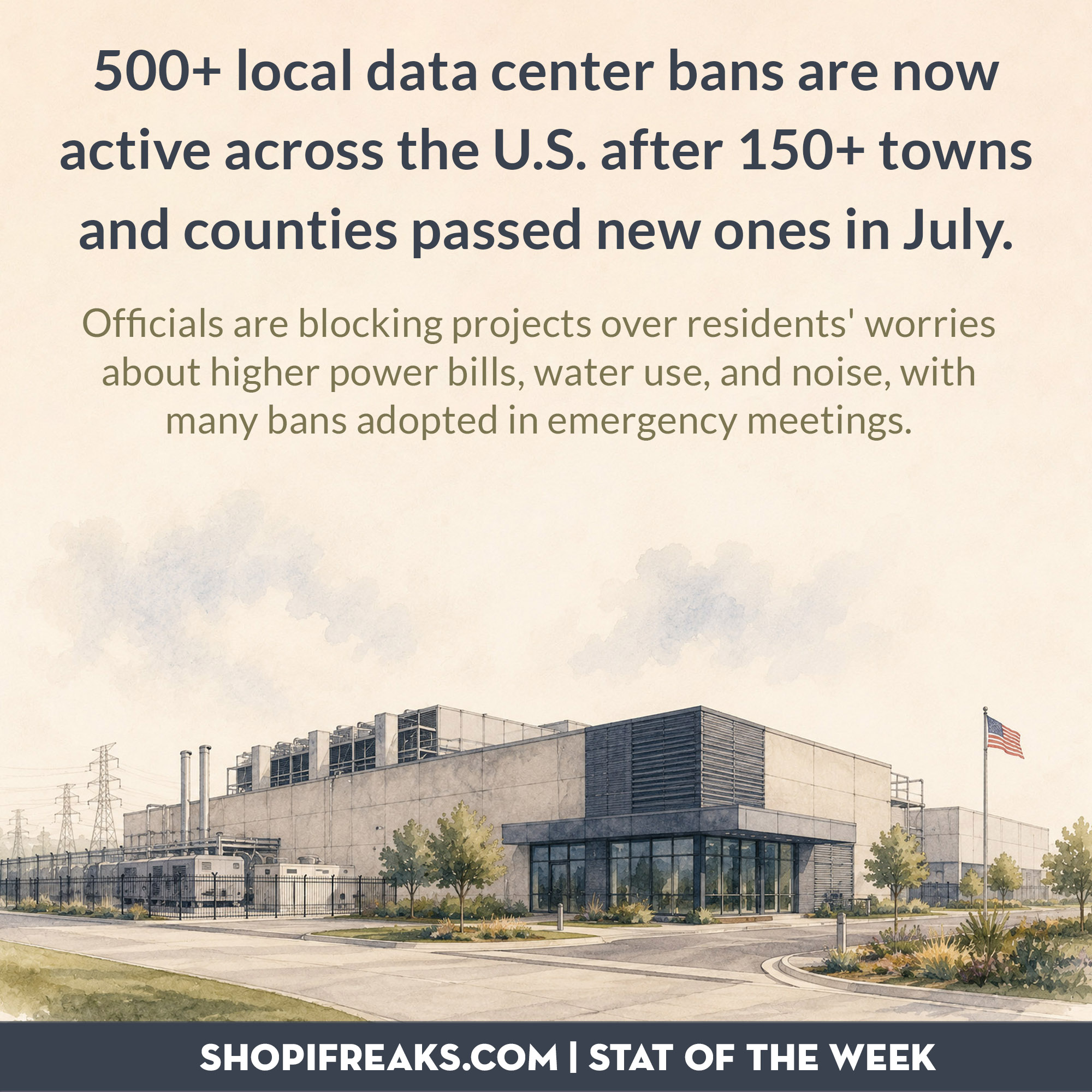
500+ local data center bans are now active across the U.S. after 150+ towns and counties passed new ones in July, according to The Information. Officials are blocking projects over residents’ worries about higher power bills, water use, and noise, with many bans adopted in emergency meetings. The Midwest and South hold more than 400 of the active bans, with Florida moving fastest in July, while New York paused approvals for hyperscale projects statewide in July and Texas followed with its own pause last week. Massachusetts and Nebraska also pulled back tax incentives for hyperscalers in the last month.
1. Google’s Ask Maps tool adds food ordering, hotel booking, and ticket purchasing (almost)
Google Maps will now let you order food, book hotels, and purchase tickets to local events through a new update to Ask Maps, its Gemini-powered assistant. In July, I reported that the code was discovered hidden in the latest Android version and that agentic features were likely on the way, which it turns out, they were.
Here’s what Ask Maps can do:
1) Help you order from restaurants. For example, as you’re walking out of your office, you can say, “order Pad Thai with chicken for me to pick up on my way home,” and it’ll find open restaurants along your route that serve the dish, taking into consideration your saved places or specific dietary needs. Once you select a restaurant, Ask Maps will automatically add the dish to your cart so you can review and complete your order.
The food ordering feature is rolling out to Square and Toast, with Uber Eats on the way, as Google co-develops its Universal Commerce Protocol for Food with partners. I appreciate that Google went straight to restaurant POS systems first instead of to middlemen delivery apps, so restaurants can participate in agentic commerce without the Uber Eats and DoorDash tax.
2) Discover local hotels and events. For example, if you’re traveling to Miami for a conference, you can ask Google, “Find me a decently priced, top-rated hotel with free parking,” and Google will be like, “LOL it’s not 1990. Here are some over-priced hotels that charge $80/night for parking, idiot.” From there, Ask Maps will compare real-time prices and check availability, as well as offer ideas for things to do nearby like concerts or comedy shows, with links to purchase tickets.
3) Integrate your e-mail and calendar history. Google’s Personal Intelligence feature lets you connect Ask Maps to Gmail and soon Calendar so it can take into consideration your existing flights, dinner reservations, and schedule when asking for suggestions. Google notes that “connecting to your Gmail is off by default” and that the feature is built “with privacy in mind.”
4) Remember your past conversations. So you can be like, “Hey Google, remember that romantic date you helped me plan for the girl on Tinder who ghosted me right before? Help me plan that same evening for my new date.”
Ask Maps is expanding to Australia, Brazil, Canada, Indonesia, Japan, and Mexico, but these new agentic features are US-only for now.
Google calls a lot of these features “agentic,” but it feels like it’s using the term loosely for now when Ask Maps lacks the ability to complete the purchase automatically on your behalf. It’s a start though. Perhaps this is just Google’s way of easing us into the tools and letting us get comfortable before asking to connect to Google Wallet.
When it comes to things like “agentic food ordering,” I’m all for it. I typically eat at the same local restaurants over and over again, and often order the same dishes. Whereas I want more input on the next book or pair of shoes I order. Food pick-up and delivery is a great first step into the world of agentic commerce.
2. X filed an appeal to revive its antitrust suit against former advertisers
Last week I reported that Elon Musk’s X and the World Federation of Advertisers ended the litigation over GARM, but it turns out that was only the beginning of the story. Now X wants to revive its antitrust suit against the advertisers involved in the dispute.
Here’s a brief timeline of events leading up to today:
- June 2019 – The World Federation of Advertisers launched the Global Alliance for Responsible Media (GARM), a coalition of brands and agencies including Adidas, Mars, Mastercard, NBCUniversal, P&G, Unilever, and Vodafone, to set voluntary standards to keep ads away from harmful content.
- October 2022 – Elon Musk bought Twitter for $44B, brought a kitchen sink into the office, and then promptly overhauled its content moderation policies, inviting lots of previously unwelcome content to the platform. As a result, advertisers started pulling their spending over concerns about their ads appearing next to posts about Nazis or anti-vaccine content.
- November 2023 – Musk told departing advertisers to “go fuck yourself” at the DealBook Summit in one of the most cringeworthy insults of the decade.
- August 2024 – X sued WFA and its member brands, alleging a “systematic illegal boycott” that cost it billions. Defendants named included Mars, CVS Health, Shell, Colgate-Palmolive, Lego, Nestlé, Tyson, Abbott, Ørsted, and Pinterest. Rumble, the free-speech YouTube alternative, filed its own parallel suit the same week, naming WFA, WPP, and GroupM.
- August 2024 – Three days later, WFA shut down GARM, saying it lacked the resources to fight the litigation. That was a mistake in my opinion. They should’ve raised the funds or fought the case with in-house counsel. What’s the difference if they lost if they were okay with shutting down GARM anyway? The publicity of the lawsuit would’ve been devastating to X.
- March 2026 – Judge Jane Boyle dismissed X’s antitrust suit, ruling it failed to show antitrust injury. Well, well, well.
- April 2026 – X appealed the dismissal.
- July 2026 – X and WFA settled, with WFA committing to never restart GARM or launch anything similar, and both sides saying the deal “resets the relationship.” Other terms undisclosed, and WFA declined to say what will happen to the member brands also named in the suit. (Which we now know.)
- August 2026 – X reached a court deadline to file an appeal against the advertisers or let the case die. It chose war.
That leads us up to today. X wrote in a filing (which is more fun if you read it in Elon Musk’s voice):
“This case involves an unusually brazen group boycott. That misconduct has drawn the attention of regulators and Congress. There is no valid reason that this effort by the direct victim to recover its massive economic losses from that boycott should not move forward.”
I’m going to guess that this appeal will also get thrown out. If not, I look forward to the brands’ argument, which should be: “We didn’t perform a collective boycott. We each decided individually that your platform was gross and didn’t want to advertise on it anymore.”
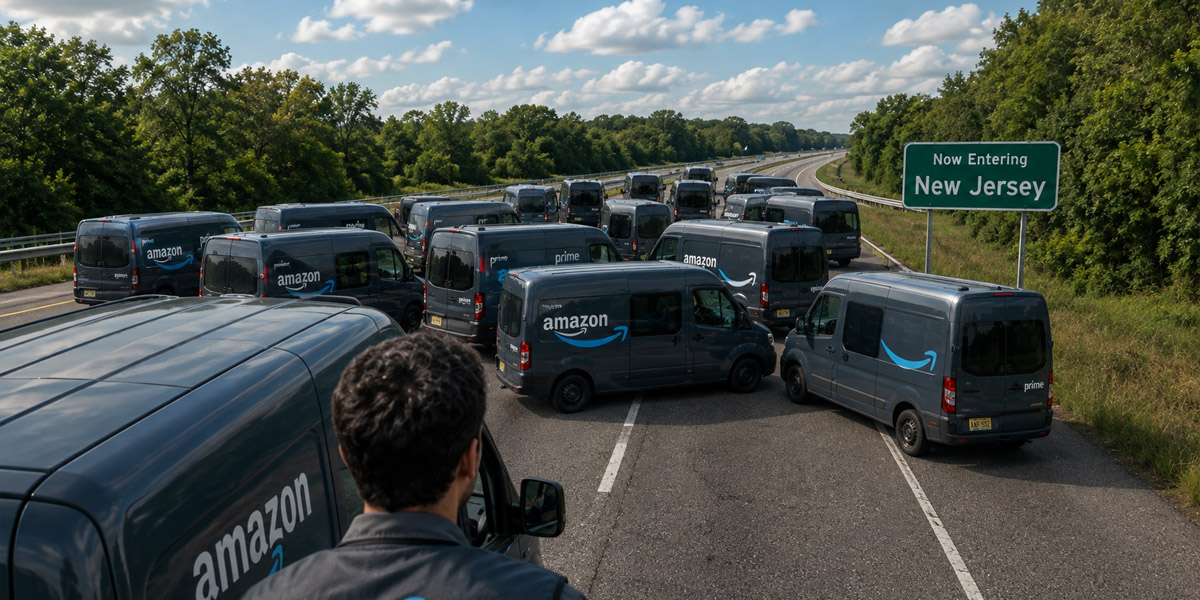
3. New Jersey is suing Amazon over its bullshit delivery driver practices
New Jersey Attorney General Jennifer Davenport is suing Amazon over its Delivery Service Partner program, arguing it is a monopsonist that sets pay and conditions for drivers it classifies as independent, while preventing them from unionizing and barring contractors from hiring one another’s drivers.
monopsonist (noun): one who is a single buyer for a product or service of many sellers
(Don’t be embarrassed. I didn’t know what that word meant either.)
The complaint alleges Amazon gives drivers uniforms, branded vans, and routes, monitors them with cameras and AI, flew drones over workers organizing a strike, and steers contractor hiring, with union supporters at one delivery station later turned down or fired by other contractors. It’s funny to use the word “alleges” in this context, because I remember covering almost all those practices in this newsletter.
Davenport goes on to say that Amazon’s “dominant buyer power” leads to “lower wages and worse working conditions” for “everyday workers in New Jersey — and likely across the country — who provide the delivery services Amazon demands.” She also notes that DSP drivers earn significantly less than those working for USPS, FedEx, or UPS.
In other words… Amazon calls these drivers “independent contractors,” but manages them like they’re employees, and that breaks a lot of labor laws. The allegations themselves are not groundbreaking, as folks have been making them against Amazon for years. However, this is the first time that a U.S. state has filed a monopsony conduct complaint.
Amazon of course denies the allegations. Company spokesperson Steve Kelly told Engadget:
“This complaint is not grounded in fact. The Attorney General’s characterization of the DSP Program and the claims about working conditions are just wrong. The truth is, DSPs are independent business owners who make their own decisions about hiring, fleet management, and capacity planning — and they choose whether to work with other companies besides Amazon.”
He then went on to blast the Attorney General’s office for choosing “a press conference over a conversation or real effort to understand the truth.”
I’m going to eagerly follow this case, and I look forward to reading the e-mails and documents that are made public in discovery. The outcome of the lawsuit could set off a chain of events, including similar state lawsuits, that eventually lead to a fundamental change in how Amazon runs its delivery network.
4. Shopify brings some of its AI workload in-house and saves 96% on compute costs
Shopify replaced the frontier model powering the part of Sidekick that answers merchant questions about their store data with a much smaller model it retrains every day on its own production failures. The result is a system Shopify estimates will cost around $1M a year instead of $27M, run 38% faster under load, need 14% fewer GPUs, and score better than the frontier model it replaced.
Quick backstory: Sidekick is Shopify’s AI assistant inside the admin, and one of the things it does is turn questions like “which products are almost out of stock” into queries against Shopify’s Admin GraphQL API, which can run up to 2,000 requests per minute. Until now, every one of those requests went to a general-purpose frontier model from firms like Anthropic or OpenAI. However, sending every query to a third-party frontier model is costly and unnecessary, as most typical queries don’t need that amount of GPU power to answer. Shopify also notes that those models don’t learn from their mistakes and that it has no control over fine-tuning them.
What changed: Shopify built what it calls a flywheel. Every day, a pipeline finds the conversations that scored worst, hands each failure to a panel of frontier reasoning models to critique, merges those critiques into a single fix, replays the conversation with that fix applied, and scores it again. If the repair works, that conversation becomes training data for the smaller model. If it doesn’t, it goes to human annotators who correct it by hand. Shopify also compressed the agent’s system prompt from roughly 6,000 tokens down to about 1,500 learned ones, which is where the speed and GPU savings came from.
To be honest, I don’t fully understand all the mechanics of chain-of-thought distillation or GRPO, but that’s not required to understand the impact of this change. The takeaway is that one of the largest agentic AI deployments in commerce just demonstrated that for a narrow, repetitive task, a small model trained on your own mistakes beats the most expensive model on the market at 4% of the cost. And not just “close enough for the price” — but actually “better.”
This reinforces two trends I’ve been seeing:
- More companies are pulling AI workloads in-house instead of renting frontier intelligence for every request, relying on the frontier models just for training instead of daily processing. In this case, Shopify downgraded the frontier models from answering every merchant question to just grading homework once a day, which is a much smaller bill. The labs are getting pushed from serving inference into training, and losing out on inference volume, which is the profitable part.
- AI costs are collapsing for companies willing to do the engineering. The ridiculous volume of datacenter buildouts happening in the U.S. assumes that businesses and users will rely on frontier-grade compute for every task, but the reality is that many AI tasks can be handled in-house on significantly less powerful machines. I’m even starting to see models small enough to run locally on laptops and phones without sending every request to the cloud. Shopify just proved how big of a savings that can yield, as well as how much more control it gives them over their proprietary tasks.
I’m not saying that OpenAI, Anthropic, and Google are disappearing anytime soon. I’m just pointing out that the business model and reliance on these companies for every AI query is shifting in front of our eyes. Stay tuned.
5. Perplexity’s agents can still shop on Amazon’s marketplaces
Perplexity can continue operating its shopping agents on Amazon’s marketplaces after the Ninth Circuit overturned a preliminary injunction that had barred it from doing so earlier this year. The appeals court also found Amazon unlikely to win its claim that the agents broke a federal anti-hacking law.
In case you missed what’s been going on, here’s a recap:
- November 2025 – Amazon sent Perplexity a cease-and-desist letter and then sued, alleging that Perplexity’s Comet browser covertly accessed customer accounts and disguised its automated traffic as a standard browser, in violation of the Computer Fraud and Abuse Act and Amazon’s TOS. Perplexity argued that its software was a tool “like a wrench,” and that “large corporations have no right to stop you from owning wrenches.” It also argued that Amazon’s real issue was that it couldn’t shove its advertising down users’ throats if agents did the shopping. See my full write-up about the case.
- March 2026 – Amazon won a temporary federal injunction against Perplexity to block Comet from accessing password-protected areas to make purchases after Judge Chesney ruled that the retailer provided strong evidence of unauthorized access. However, a week later, a U.S. appeals court suspended the ruling and Perplexity was given permission to re-engage in the practice.
- April 2026 – Perplexity’s appellate brief argued that Amazon showed no evidence of harm after eight months of the agent operating, and that account holders authorized the access themselves.
- June 2026 – The Ninth Circuit heard arguments from both sides that tested the limits and relevancy of the 1986 CFAA.
- August 2026 – Last week, the Ninth Circuit overturned the injunction, determining that Perplexity’s users, not Perplexity, were the ones accessing Amazon. Basically, Perplexity’s wrench argument won the case.
Amazon said:
“We respectfully disagree with today’s decision on the preliminary injunction. We remain confident in our case and are evaluating our next steps.”
Perplexity said:
“Perplexity will continue to fight for the right of internet users to choose whatever AI they want. We have always been confident the truth will prevail and the rights of users will not be chipped away.”
Did the courts just decide that website owners have no say in whether AI agents can access and shop on their platforms? Because if so, that feels like a dangerous precedent. As a website or app developer, I can build my software to only work on certain browsers or operating systems, but I have to allow all AI agents into my home?
The reality is that the merits of this case are blurry on both sides.
The fact that Amazon is having to argue their case around a 1986 computer hacking law, and that Perplexity has to compare its AI agents to wrenches, means that we don’t have proper laws in place to regulate this new chapter of commerce.
When this case first dropped last year, I thought both companies were in the wrong. Then I learned more about the case and sided with Amazon. Now I’m back to believing that both are wrong again. Or more clearly, there is no “right.” We’re arguing “right” or “wrong” against Stone Age laws that are only loosely relevant to the matter at hand, but are all that Amazon and Perplexity legally have to work with. That’s the bigger problem that this case has brought to light.
6. Amazon thinks some of its customers are AI bots
Amazon has been restricting some shoppers from reading more than eight customer reviews per product after its anti-scraping systems flagged them as bots, according to Fast Company. Once their account is flagged, the customer has to file an appeal to Amazon via e-mail and wait several business days for a response.
Fast Company shared the story of a customer named Fred Hall who was shopping for a dehumidifier in July, but couldn’t see past eight reviews. An Amazon customer service agent (probably an AI agent, which is the ironic part) told him that he’d “violated Amazon’s Conditions of Use regarding data gathering or extraction of community-generated content, such as Customer Reviews.”
Hall said he had been a longtime Prime subscriber and that he does not use any AI browsing or automation tools. He chalked the experience up to Amazon’s AI algorithm being “tuned a little too tight.” Amazon accepted Hall’s appeal a few days later, but never actually explained what led to his account being flagged as a bot.
Another customer named Sean Kaufman ran into a similar issue with Amazon. He told Fast Company:
“The thing that irritates me the most is that Amazon didn’t even bother to tell me my account had been restricted. Nothing was ever explained—before, during, or after—which has led to major confusion about the nature of this program.”
So what’s actually going on here?
Is Amazon trying to block Perplexity’s shopping agents (and other agents) with technology since it can’t seem to do it legally? And is this what we can expect from the future of e-commerce — terrible shopping experiences with unexplained restrictions and bans? 2FA, 3FA, and 4FA verification systems that make accessing your account tiring and cumbersome? A war between e-commerce platforms and AI agents that human customers have to pay the price for? If so, fuuuuuck that! Y’all need to get together in your secret billionaire bunkers and hash this out once and for all.
7. Reddit plans to test a video-focused experience later this year
Reddit is working on a new “video Reddit” experience that will let users watch videos from the app in a TikTok-esque format and listen to posts in the background, according to announcements the company made during its Q2 earnings call. Just what every Redditor ever wanted: Another TikTok!
CEO Steve Huffman told investors:
“There is an emerging content type elsewhere on the internet of, basically, podcasts where people read Reddit content. I think this version of, like, listened-to or spoken Reddit can be really engaging, as well. So that would be almost a different format entirely.”
If this sounds familiar, it’s because Reddit tried something similar in 2023 with split “Read” and “Watch” feeds, a TikTok-style video tab that let users swipe through a never-ending feed of videos. However, users didn’t like it much, and Reddit eventually sunset the toggle and integrated the continuous “Watch” feed mechanics directly into its native video player. It also tried a TikTok-style feed on its iOS app in 2021 after acquiring the short-form video platform Dubsmash in late 2020, but that was eventually phased out as well.
I can only imagine this “video Reddit” experience will lead to more advertising and e-commerce on the platform, as they’ve already been pushing hard into it this year. This upcoming video experience seems like a channel specifically designed to bring shoppable videos and live commerce front-and-center into the platform.
Don’t believe me? Let’s look at Reddit’s recent timeline of commerce-related events:
- April 2025 – The company launched Dynamic Product Ads, its first shoppable ad format.
- February 2026 – Reddit began testing AI shopping carousels that match community recommendations with advertiser catalogs inside search results.
- March 2026 – Reddit added Collection Ads, Community and Deal overlays, and a Shopify integration for certain merchants. A similar WooCommerce integration came later. Reddit also partnered with Pacvue, putting its ad inventory inside the platform enterprise brands use to buy retail media alongside Amazon, Walmart, and Target.
- June 2026 – Reddit made its advertising integration with Shopify available to all merchants. It also launched video in comments, which it says already accounts for more than 10% of video posts.
As annoying as it is to have yet another platform TikTok-ified and become flooded with shopping campaigns, I certainly understand it from Reddit’s perspective. I just don’t like it as a user. Does everything have to be a shopping portal now?
8. TikTok Shopping is crushing it worldwide in 2026
TikTok Shop moved an estimated $50.3B in goods worldwide in the first half of 2026, up 92% YoY, according to Momentum Works and Tabcut, which put the platform on track to comfortably clear $100B for the full year. The US contributed $11.8B of that GMV, up 103%, reclaiming the top spot from Indonesia.
Here’s what else the report found about the US market:
- The Shop tab now drives the majority of sales. It accounted for 51.4% of attributed GMV, ahead of Video at 40.4% and Live at 8.2%. For full-year 2025, that mix was Shop 36%, Video 50%, and Live 14%. Momentum Works wrote, “Shop, not video or live, is now where sales actually close.”
- Live isn’t losing popularity in the US; it’s just being outpaced. Live’s percentage share of GMV shrunk almost in half, but in dollar terms it grew from roughly $812M in H1 2025 to about $967M in H1 2026, up 19%. The Shop tab grew about three times as fast in the same period.
- The seller base is exploding. US stores hit 1.35M, up from 475k a year earlier and 803k at the end of 2025. Influencers reached 20M, up from 15.3M.
- Only 5,700 stores cleared $1M in GMV, with 506 above $10M. That’s 0.4% of stores at the $1M mark. In 2025, more than half of all US stores recorded zero sales.
- Prices are falling nearly everywhere. Average prices declined in 21 of 27 categories, up from 15 of 27 in 2025.
- The top of the leaderboard keeps turning over. 8 of the top 10 influencers by GMV were new to the ranking. Momentum Works describes the market as “easier to enter, but harder to win.”
- AI is about to make it worse. The report flags AI-generated videos and livestreams as likely to intensify competition further.
TikTok Shop entered the e-commerce race with discovery commerce, where viewers weren’t looking for an item, but a video in their feed made them want it. Now, its biggest sales channel is the Shop tab, a marketplace where people go to search for things they already know they want to buy. It’ll be interesting to see where the needle tips in one year from now.
9. Other e-commerce news of interest
Klarna’s full selection of payment options, including pay in full, interest-free installments, and longer-term financing, is now live for US merchants using J.P. Morgan Payments’ Commerce Platform. Any merchant already on the platform can turn it on through their existing setup rather than building an integration, which Klarna casts as putting BNPL within reach of smaller sellers that never had the engineering resources for one. The two companies signed the agreement in February 2025 and said at the time it would go live that year, but missed the deadline, with neither company explaining why. J.P. Morgan Payments is the largest merchant acquirer in the country and handles $2.6T in merchant transactions a year, so the integration is a big win for Klarna.
OpenAI began running product carousels in ChatGPT ads, displaying several items across one ad slot beneath a user’s conversation, according to screenshots viewed by Digiday. The carousel pulls from a retailer’s product feed, with OpenAI’s ad platform rather than the advertiser deciding whether a query gets a carousel or the single-product format. Each carousel currently shows items from only one retailer, which means an advertiser’s products aren’t mixed in with competitors, similar to how Google’s product carousel ads work. The carousel builds on the product feed campaigns OpenAI launched three months ago, which let retailers bulk-create ads from their catalogs instead of building them one at a time, and which were designed from the start to stack ads side by side.
In other OpenAI news… The company connected ChatGPT ads to AppsFlyer, a mobile attribution platform, so advertisers can attach deep links to their campaigns and see how many installs, purchases, and subscriptions follow, according to Adweek. Advertisers could previously only send ChatGPT ad traffic to a web address and optimize their campaigns against reach or clicks, with no app integration at all. Grubhub and more than 40 other brands across e-commerce, ride-hailing, and food delivery have been running the integration for four weeks in markets including the US, India, New Zealand, and Australia. Grubhub VP of Growth for Paid Media Brian Ryu said the company has spent meaningfully less on ChatGPT than on other search platforms because of the missing measurement, and will raise that spend if the ads perform.
Okay, two more quick OpenAI ads stories… OpenAI may be building a new agent-based ad format, according to Business Insider, which spotted a definition for “sponsored agents” in the company’s advertising policies document updated July 31. OpenAI describes them as conversational experiences where users interact with an AI-generated representative for an advertiser’s business, products, or services. The company hasn’t announced the format and declined to comment on it. Lastly, the company is turning on ChatGPT ads in Brazil and Mexico this week, adding to the US, Canada, the UK, Japan, Korea, Australia, and New Zealand.
Shoppers landing on Shopify storefronts from AI search converted at nearly 50% higher rates than those from organic search during Q1 2026, and their orders ran 14% higher in average value, according to Shopify’s own commerce data. The company attributes the gap to where those visits begin, with more than half of AI-referred sessions starting on a product page against about 20% for organic, which mostly brought visitors to collection pages or homepages. Shopify says referral sessions from chatbots including ChatGPT, Perplexity, Gemini, Copilot, Claude, and Grok grew more than 8x YoY, while orders from them grew nearly 13x, but didn’t offer a baseline for either figure. Organic search still sends more sessions than every AI platform Shopify tracks combined, despite not converting as well.
Shopify reported Q2 revenue of $3.58B, up 34% and ahead of the high-twenties growth it had guided to. Net income reached $1.5B, or $1.16 a share, against $906M a year earlier, and GMV climbed 32% to $115.57B. Shopify then guided to low-thirties revenue growth for Q3 against analyst consensus near 27%, which sent the stock up 19% in midday trading Wednesday. President Harley Finkelstein told analysts that traffic and orders reaching merchants through AI have tripled from a year ago, with the earliest gains among smaller sellers. I don’t usually cover stock-related news (outside of deals in Section 10) because otherwise this newsletter would be 3x as long, but this was a pretty big jump that felt newsworthy! Or maybe I’m just happy because I own way too much SHOP stock.
Disney is shifting the bulk of its consumer products business out of the Experiences segment, where it has sat alongside theme parks and cruises, and into the Studios group inside Disney Entertainment starting in October. Merchandise and licensing revenue tied to a film will then be booked next to the unit that made the film, which CEO Josh D’Amaro told shareholders puts the money from an IP closer to the people creating it. He also said the reshuffle makes the entertainment segment easier to compare against how rival studios report, which makes sense. The company also said it will begin publishing fan-made TikTok videos about Pixar, Marvel, Star Wars, and its other franchises inside Verts, the vertical video feed it added to Disney+ a few months ago. Lastly, Disney opened a Creator Ambassador Program that gives TikTok creators access to its content library along with rewards, event invitations, and career opportunities. Sounds like they really need some short-form video content!
Revolut partnered with OpenAI to bundle the company’s ChatGPT Go subscription into its retail subscription tiers, with the length of the free access set by which plan a customer holds. For example, Ultra and Metal members get 12 months, while Premium, Pro, and Mobile get 6 months, and so on. Revolut has been attaching travel, work, and health perks to its higher tiers, which the company said is to spare customers a pile of separate monthly bills, but we all know is just to make their membership programs more sticky. It’s a smart move for OpenAI too, as the bundling helps boost its paid subscription numbers as it builds up to its IPO. It also makes me wonder if we’ll see Walmart, Amazon, and other retail memberships begin including AI subscriptions in their plans too, similar to how they have in the past with streaming service subscriptions.
eBay told sellers in its August update that delivery delays won’t count against their seller rating so long as they ship on time using an eBay label, according to Liz Morton at Value Added Resource. Sellers read the condition as eBay quietly pulling a protection that has covered everyone for years, though the policy page still lists rating adjustments for late arrivals under protections for all sellers. A Seller Hub banner explains that eBay will field refund requests on delayed deliveries itself instead of taking the money from the seller and repaying it once tracking updates. The change arrives as eBay tests Managed Shipping, which puts it in charge of buying labels and picking carriers, a service that has caused many US sellers to indicate that they’ll leave the platform if it becomes mandatory.
Meta approved and ran dozens of paid ads carrying AI-generated child sexual abuse imagery from November 2025 to August 2026, according to a Wired investigation built on research from the Tech Transparency Project. The ads sat in Meta’s public Ad Library and reached users across the US, UK, and more than a dozen countries in Europe, one of them landing on over 2,500 accounts. TTP director Katie Paul said these weren’t posts that slipped past moderation but ads Meta reviewed and cleared before taking the money, and that some duplicated content it had already pulled for the same violation. Meta responded to the investigation by bravely recognizing that “sexual exploitation is horrific,” and claimed the majority of the ads predated its new AI technology, which is better at detecting and blocking them. However, hours before Wired published the investigation, TTP found roughly 30 more ads, many of which were posted after Wired first contacted Meta, with several still live and serving at the time.
TikTok is now letting advertisers generate 30-second AI clips, up from 15 seconds, after integrating ByteDance’s Dreamina Seedance 2.5 video model into its Symphony ad tools. The model accepts up to 50 image, video, and audio references, up from 9, and takes creative direction attached to specific timestamps, though access is limited for now to some paid advertisers in certain markets. TikTok said it hopes the longer video capabilities will allow its ad partners to build “fuller narratives” that feel more native to the platform’s feed, which at this point is mostly filled with AI slop anyway. The longer format follows the invitation TikTok extended to brands last month to publish microdramas and other episodic promotions in two hubs it calls the Minis Center and the Drama Center.
TikTok paused a new dating feature that ran for just one week and was made available to only a subset of users in the U.S. and a few other markets. The tool briefly lived in a part of the app called Hangout and invited users to chat rooms with “awesome people to meet.” However, the rooms got dirty fairly quickly. (More like “DikTok” if you know what I mean.) In addition to ending its dating test, TikTok paused its broader test of the social livestreaming Hangout section, which was likely also just streaming dicks. Livestream blind dates are already big on TikTok’s Chinese sister app, Douyin, and TikTok says only creators over 18 can show their penis host a livestream.
New York City Mayor Zohran Mamdani sent cease-and-desist letters to Amazon, Walmart, Temu, Target, Wayfair, and dozens of other retailers over the sale of “prohibited motorized scooters and e-bikes” that exceed the legal speed and wattage limits in the city or don’t have proper VINs, with $2,000 fines starting August 18 for anyone still selling them. The move came a week after a 17-year-old died after colliding with an SUV while riding an e-bike that Mamdani said was “capable of reaching more than 30mph,” which he called “a speed that should never be reached in our bike lanes.” Not to be insensitive, but does that mean Mamdani thinks NYC should ban cars from being sold to city residents, since they’re also capable of exceeding posted speed limits? Amazon said it will be “looking into the products in question” and has no issue working with the mayor and City Council on the issue.
TikTok held back a 2021 algorithm tweak from 10% of its U.S. users, which would’ve accounted for about 15M people at the time, to serve as a control group, according to a confidential document seen by Bloomberg. The change was designed to stop users from being overwhelmed with videos about suicide, sadness, loneliness, or other harmful content, but TikTok withheld it from millions of users to test whether the safer feed made the app less addictive. One of those 15M users was Chase Nasca, a 16-year-old whose feed served him 7,563 videos about suicide, self-harm, and depression in his final two weeks before he killed himself in February 2022. TikTok said the test was routine, but that it has since changed how it runs them.
In lawsuits this week…
- A New Mexico judge ruled that Facebook and Instagram amount to a “public nuisance,” which is usually a term courts use to describe physical contamination rather than software, and ordered Meta to put $567M into a youth mental health fund over five years.
- Four families sued Meta, Google, TikTok, and Snap in Delaware Superior Court over the suicides of their children, alleging the companies built recommendation systems to maximize engagement among kids while serving them content about anxiety, depression, and self-harm.
- Google will face a UK class action covering roughly 880k British businesses, which accuses the company of overcharging advertisers and abusing its dominance in mobile software, app stores, and search advertising, and seeks up to £5B.
- Anthropic asked a federal judge to throw out two claims in the $3B lyrics case brought by Concord, Universal Music Publishing Group, and ABKCO, arguing the complaint never cites a single instance of Claude reproducing a lyric, while leaving the torrenting and training claims unchallenged.
- Anthropic is facing a proposed class action in the Northern District of California alleging it kept charging full Claude Pro and Max subscription fees between March 4 and May 6, during a window of time when usage limits tightened and backend problems degraded Claude Code, without refunding anyone.
- Google and Meta each moved to dismiss lawsuits from narrators, broadcasters, and podcasters who say AI systems were trained on their voices, arguing the complaints never allege facts showing any specific plaintiff’s voice was actually used.
- OpenAI agreed to pay $3.2M to settle Justice Department claims that it favored temporary visa holders over Americans when hiring, by allegedly running the recruitment searches required for green card sponsorship in ways designed not to turn up qualified American applicants, such as keeping roles off its careers site and advertising them on late-night radio.
- Teads sued Google in the Southern District of New York, alleging that Last Look and Project Bernanke, two auction practices Google says it retired years ago, are still running under different rules and still being updated.
- OpenAI moved to dismiss Apple’s trade secrets suit, arguing Apple’s own practices disqualify the material from protection, since it had staff run work through personal iCloud accounts and then failed to cut off access when they left.
In layoffs and corporate shakeups this week…
- Etsy is laying off 220 people, around 12% of its staff, mostly across product and engineering, claiming the goal is flatter teams rather than cost cutting, just days after collecting roughly $1.4B from the Depop sale it plans to spend on share buybacks.
- TikTok’s US joint venture is closing its Nashville office and cutting 250 content moderation jobs, with workers learning by email Wednesday morning and several saying they were locked out of their devices before severance details arrived.
- Anthropic hired Mariano-Florentino Cuéllar, a former California Supreme Court justice who ran the Carnegie Endowment for International Peace, as its first chief global affairs officer covering policy and government relations, and Robert Mahari, previously associate director at Stanford’s CodeX legal informatics center, as head of Claude for Legal.
Indonesia pushed back the 0.5% income tax that marketplaces were supposed to start withholding from sellers this month, moving the start to November 1st and promising to refund anything already taken, marking the second delay of the rollout. The tax office said it made the call to protect household spending, and finance minister Purbaya Yudhi Sadewa told reporters the government will wait until purchasing power recovers, declining to name a date. Tokopedia, Shopee, Lazada, and Blibli had all been appointed collectors due to their marketplace size and had built systems for it, but those appointments are being revoked and the selection reopened later. The levy applies only to sellers turning over more than Rp500 million ($30k USD) a year and is designed to function as an advance payment against income tax the seller already owes rather than a new charge.
🏆 This week’s most ridiculous story… Google’s AI is leaking secret information to users that was only available in a private Google Doc. Or it isn’t, and everyone just wants to believe it is because Fuck AI. Klub Kofta Studio, the solo developer behind an indie game called Operation Octo, claimed on Reddit that Google AI revealed the name of his unannounced character to a gamer friend who searched up info about the release. The developer says that the AI came back with the name “Vantage Tripod,” which had only been written in his private Google Doc and nowhere else. Interestingly though, a Reddit commenter in the thread asked Gemini for 100 tripod mechanic names and got “Vantage Tripod” quickly, leaving coincidence on the table. When the gamer asked for the source, Google’s AI said it had simply made up the name. Is it a true story? I can’t be sure. Maybe it’s just viral marketing for the game. Is it scary to think about? Definitely.
10. Seed rounds, IPOs, & acquisitions
Whatnot, a live shopping marketplace built around real-time video auctions, raised $545M in a Series G round co-led by ICONIQ, Lightspeed, and Avra at a $20B valuation, up from $11.5B in last October’s Series F. The round brings Whatnot’s total equity raised to roughly $1.5B since it launched in 2019. Whatnot reports that its GMV for the first six months of this year has already cleared the $8B it did across all of 2025, and that the count of sellers above $1M in lifetime sales has more than doubled YoY. It plans to put the money toward seller tools, AI features that cut down on administrative work, marketing aimed at buyers who have never tried live shopping, and expansion into new categories and countries.
eBay completed its acquisition of Depop from Etsy for roughly $1.4B in cash, which covers the $1.2B purchase price plus $200M in net adjustments and interest, with further post-closing adjustments still to come. Depop will run as a separate business with its existing brand, platform, and customer experience left in place, while eBay looks for synergies across shipping, compliance, personalization, and trusted services. Etsy paid $1.625B for Depop in July 2021, so the sale marks a loss for Etsy. Now we’ll see if eBay can do any better with Depop, which probably would’ve been in a better position in 2026 if it had remained independent.
Nielsen, an audience measurement company that tracks TV, streaming, and radio viewership for networks and advertisers, agreed to acquire DoubleVerify, an ad verification company that measures whether digital ads were viewable, brand-safe, and served to humans instead of bots, for $13.60 a share in cash, valuing it at roughly $2.15B in enterprise value and marking a 30% premium over the stock’s prior 60 trading day average. DoubleVerify went public in April 2021 at $27 a share, so the exit price is roughly half what buyers paid then. Nielsen frames the acquisition as a way to sell audience measurement and ad verification as one product instead of requiring advertisers to reconcile the two across separate vendors, while pushing the company deeper into digital ad spend, where it’s never had much of a foothold. The deal should close by the first quarter of 2027 pending a shareholder vote and regulatory clearance.
Klaviyo agreed to acquire the team and IP of Agency, a startup building AI agents that handle marketing and customer conversations for brands, for undisclosed terms. The deal brings Klaviyo two agents, Composer, which reads campaign performance and then builds and tunes campaigns and automations, and Customer Agent, which handles conversations with a merchant’s own shoppers. Agency co-founder and CEO Elias Torres will become Klaviyo’s chief product officer once it closes, reporting to co-CEO Andrew Bialecki and running the agent product line, with the rest of the Agency team expected to join Klaviyo as well.
Malachyte, a behavior intelligence platform that reads shopper behavior to personalize product recommendations without cookies, logins, or purchase history, raised $10M in a seed round co-led by Bessemer Venture Partners and Gradient Ventures. The company was founded by ex-Spotify engineers Sidd Motwani, Ian Anderson, and Shivaditya Sinha, who previously built the recommendation infrastructure behind Spotify. Malachyte points to data showing that acquisition costs rose roughly 40% between 2023 and 2025 and that e-commerce brands now lose an average of $29 per new customer after marketing and returns. The company says its software can bring those costs down by recognizing every visitor from the first click.
OpenAI acquired NextSlide, a platform that turns prompts, notes, and documents into editable slide decks, for undisclosed terms. Founder Ahmed Beshry disclosed the deal on the NextSlide website and on LinkedIn, where he said it closed earlier this year and the announcement was running a few months late. Beshry started NextSlide in April 2025 and joined OpenAI in March 2026, alongside the rest of the NextSlide team. Neither company has said how big the team was, where it was based, whether it had raised outside money, or how the product will show up in ChatGPT.
Reliance Retail, the retail arm of Indian conglomerate Reliance Industries and the country’s largest retailer by revenue and store count, acquired Furrl, a Bengaluru fashion discovery startup whose AI turns brand catalogue photos into shoppable outfits matched to a shopper’s taste, in an all-cash deal for an undisclosed amount. Reliance will fold Furrl’s AI engine and shopping app into its own digital commerce products, and its entire team will join Reliance Retail Ventures, where founder Esha Tiwary will run new AI projects. Furrl shut down its consumer marketplace before the deal, telling customers its AI needed to sit inside a larger fashion ecosystem to reach its potential.
Pipedrive, a CRM for SMB sales teams, acquired Outfunnel, an Estonian platform that keeps customer records in sync between CRMs and marketing tools like Mailchimp and Klaviyo, for an undisclosed amount. Outfunnel, which serves more than 500 businesses and carries the top user rating on Pipedrive’s own marketplace, will keep running during a transition period while Pipedrive rebuilds its core capabilities natively over the coming months, so customers will no longer have to find and set up a separate integration. The company’s four employees are joining Pipedrive full time, and co-founder Andrus Purde, who ran marketing at Pipedrive in its early years and whose brother was one of its five founders, will return as a consultant.
OpenAI acquired a number of patents from Rain AI, a now-defunct chip startup backed by Sam Altman, for an undisclosed amount, according to The Information. Altman backed Rain’s 2018 seed round, and OpenAI signed a nonbinding letter of intent the next year to buy $51M of its chips once they shipped, but never took any because the deal hinged on a successful pilot that never happened. Rain ran into fundraising trouble in February 2025 and approached OpenAI about a sale, which also never happened. Well, it sounds like Sam Altman may have made good on his Rain investment one way or another, despite the failed startup. I look forward to learning what OpenAI does with those patents because it’s got to be something, right? Right?!
Cursor told staff at a Thursday all-hands that SpaceX’s $60B acquisition could be done as early as this week, and that the Cursor name may be phased out over the coming months, a decision that some employees questioned, according to The Information. Cursor leadership said an upcoming general-purpose agent code-named “Sand” could carry Grok Bot branding instead, but that existing tools such as the Cursor coding assistant aren’t being renamed for now. Following the acquisition, Cursor will no longer run as a standalone unit and will instead get split among several SpaceXAI teams, with staff moved onto SpaceX Slack workspaces and reporting lines within days of closing.
Pie, an AI platform that gets local merchants found in AI search and answers their inbound calls, announced an undisclosed investment from Amex Ventures, weeks after coming out of stealth in June with a $19.5M Series A. The company also unveiled a partnership with MoeGo, a scheduling platform used by more than 10,000 pet care businesses, extending a distribution model it also runs in auto repair, fitness, and beauty. Pie, which pitches itself to local merchants as a cheaper alternative to agencies, says it reached thousands of small business customers while in stealth and drove more than 100,000 phone calls to them.
Mintoak, an Indian fintech that sells merchant payment tools to banks, acquired ICC Loyalty, a Dubai platform that runs card rewards and redemption for banks, for an undisclosed amount. The move expands the company’s banking technology offerings beyond payments into customer engagement, loyalty, and rewards solutions, while strengthening its presence across the Middle East, Africa, Eastern Europe, and Asia. The combined business now serves more than 50 banks across 20+ countries and over 5M merchants, moving upward of $93B in payments a year.
RepSpark, a wholesale commerce platform for golf, outdoor, and lifestyle apparel brands, took a $22M strategic investment from Headlight Partners, a growth equity investor in B2B software. RepSpark offers digital ordering, catalog management, and receivables to more than 250 brands and 100k retailers and moves over $4B in B2B transactions a year. The company plans to put the fresh funds toward platform development, enterprise features, and AI tools, as well as expansion into other specialty retail categories.
Jeff Bezos filed a Form 144 with the SEC to sell 15M Amazon shares worth over $4B, his second-largest filing by dollar value after the $5.4B notice he submitted on his wedding day in June 2025. The sale falls under a Rule 10b5-1 plan he adopted in November 2025, months before the rally, and runs through Morgan Stanley. The filing landed the same day Amazon closed at a record and crossed $3T in market value for the first time, capping a run that began with Q2 results where AWS grew 37%, its fastest pace in 18 quarters. Amazon fell more than 2% on Tuesday after the filing surfaced.
SoftBank borrowed $10B from a group of banks including Goldman Sachs and JPMorgan to cover the last $10B of a $30B commitment it made to OpenAI earlier this year and must pay by October, which will bring its total investment to $64B for a 13% stake. The odd part of the deal is that SoftBank used its existing stake in OpenAI as collateral for the loan, whereas usually banks reserve margin loans for public stocks they can price and sell. SoftBank is now deeply invested in OpenAI at just under a $500B valuation, which will likely result in a decent payoff for the company after OpenAI goes public.
Thanks for being a Shopifreak!
If you found this newsletter valuable, please leave a review on Google and share the newsletter with your friends and colleagues to help us grow.
See you next Monday,
PAUL
Paul E. Drecksler
🌐 Shopifreaks.com
🧑💼 Add me on LinkedIn
📧 [email protected]
📱 +1-828-273-3031
⭐ Leave A Review
PS: I just got hired by Old MacDonald. I’m their new CIEIO.