
Hi Shopifreaks
Lots of e-commerce news and big announcements from Shoptalk 2026 this week. The edition after Shoptalk each year is always a big one!
The overall trend of this week’s edition seems to be that Big Tech companies are learning from their past mistakes and aiming to get commerce right this time on their platforms. Though time will tell if they do.
Without further ado, let’s dive right into this week’s jam-packed edition where I cover:
- Walmart’s unique Google Shopping strategy
- OpenAI revamps its shopping discovery
- Shopify enters round two with ChatGPT shopping
- Meta tests AI shopping with one-tap checkout
- Reddit introduces new ad features
- Apple Maps are getting ads
- TikTok rebrands its business offering
- Amazon drivers are pulling up at 3am
- Shopify launches a free AI photo & video app
- ChatGPT Ads are expanding to more countries
- USPS wants to impose an 8% fuel surcharge
- FedEx enters the one-day shipping game
All this and more in this week’s 271st Edition of Shopifreaks. Thanks for subscribing and sharing!
Stat of the Week
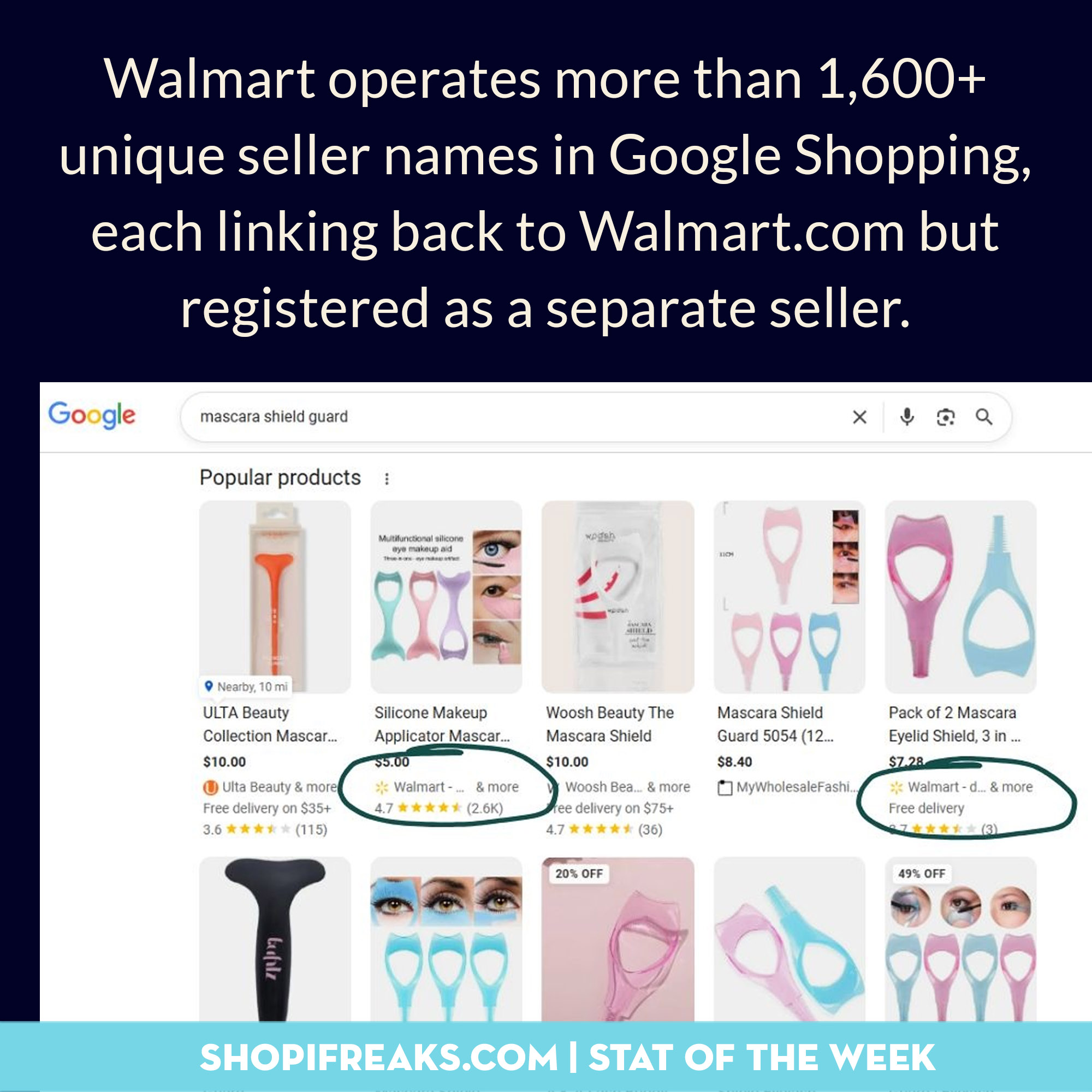
Walmart operates more than 1,600+ unique seller names in Google Shopping, each linking back to Walmart.com but registered as a separate seller, according to a Productrise analysis of over 1M product listings. The study notes that Google Merchant Center offers a multi-seller account setup designed to simplify marketplace management, in which individual third-party seller names are not displayed and all products are grouped under the main account’s name. However Walmart takes the opposite approach, using individual sub-accounts for each marketplace seller, allowing each seller’s name to appear separately in Shopping results, giving it a unique advantage in organic shopping results.
1. OpenAI launches a newly redesigned shopping experience
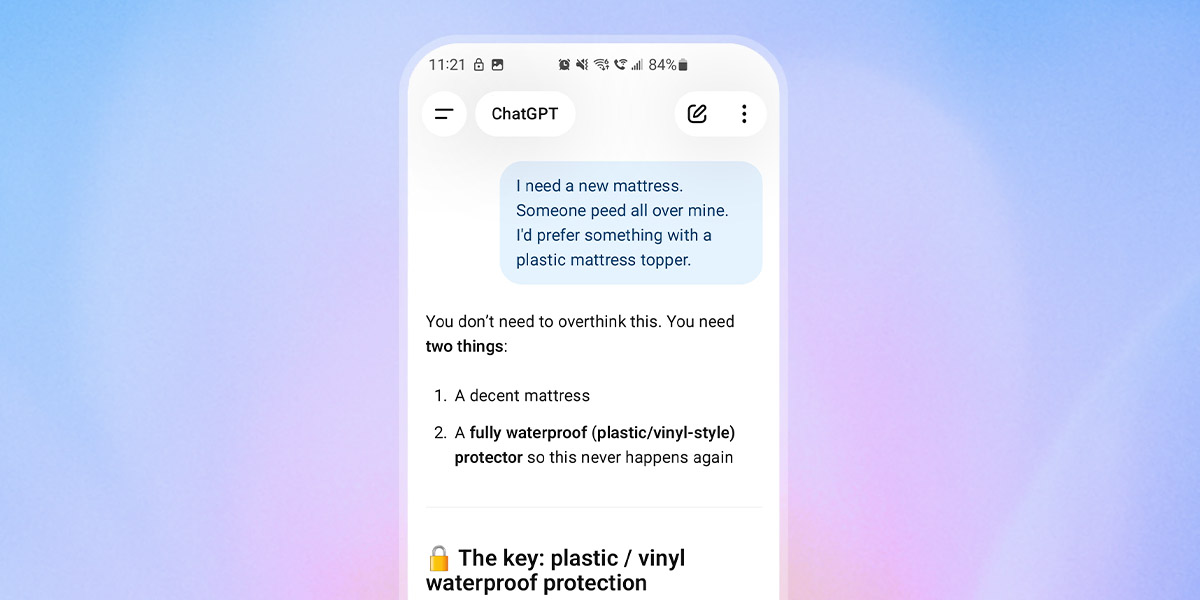
OpenAI launched a “richer, more visually immersive” shopping experience in ChatGPT that lets users browse products with images, compare options side-by-side with pricing and reviews, and refine results conversationally. The experience is powered by an expansion of its Agentic Commerce Protocol that connects merchant product feeds directly into ChatGPT.
The company wrote:
“Shopping on the web is easy if you already know what you want. But when you’re still deciding, it often means jumping between tabs, reading the same “best of” lists, and trying to piece together the right answer. ChatGPT solves that: figuring out what to buy… What used to take hours of searching and tab-hopping now happens in seconds.”
Earlier this month I reported that OpenAI abandoned its plans to introduce shopping directly inside the general ChatGPT chatbot, pivoting instead to a focus on having checkouts take place inside of specific apps.
Now it appears that the company is doubling down on product discovery, which frankly, it should have started with! Why did OpenAI think it could successfully complete purchases for users before it even mastered finding the right products for them?
Focusing on product discovery is absolutely the right move for OpenAI right now, especially as it looks to grow its advertising business tenfold, as product search and discovery lends itself perfectly to advertising. However, OpenAI still has a long road ahead to getting it right. See my post on LinkedIn for more details about that.
Target, Sephora, Nordstrom, Lowe’s, Best Buy, The Home Depot, and Wayfair have already integrated with ACP for discovery, while Shopify merchants are automatically included through Shopify Catalog with no additional setup required (more on that below). The update rolls out this week to all free, Go, Plus, and Pro users.
2. Shopify stores are now shoppable inside ChatGPT (again, LOL)
Shopify integrated its merchant catalog into ChatGPT, allowing shoppers to discover and purchase products from Shopify stores without leaving the chat. This sounds like déjà vu, doesn’t it? Didn’t we just read this news? Oh wait, that was Instant Checkout.
To be clear — this is NOT Instant Checkout, which as you know, OpenAI stepped back from. In fact, I wouldn’t even call it “agentic commerce,” although Shopify certainly does. I would define it more as “agentic discovery” with an “embedded checkout experience,” which is great in its own right. In fact, I actually think it’s better than Instant Checkout because it allows merchants to have more control over their individual shopping experiences, which is ultimately a win for shoppers too.
Shopify President Harley Finkelstein posted a video on LinkedIn explaining how it works:
-
A Shopper asks ChatGPT for a product recommendation.
-
ChatGPT surfaces the most relevant products through Shopify Catalog.
-
When a shopper decides to buy, the purchase happens on the merchant’s own storefront through an in-app browser.
-
Given that the checkout experience is pulling from the merchant’s store itself, the shopping experience carries through including subscriptions, bundles, and payment preferences.
Finkelstein said:
“For merchants, it is effortless. No additional complexity. Your products become shoppable by default, and your relationship with your customers is yours, always… Merchants just got access to hundreds of millions of potential new customers overnight, and shoppers just got access to an entirely new, totally bespoke shopping experience. This is the new era of commerce, powered by Shopify.”
Alongside the announcement, Shopify made its Agentic plan publicly available, which allows brands not selling on Shopify to add their products to Shopify Catalog and sell across AI channels, which now include ChatGPT, Microsoft Copilot, AI Mode in Google Search, and the Gemini app. I covered the Agentic plan in detail back in January when it was first announced, though it was on a waitlist back then and now it’s available to all merchants.
I wrote back in January about the Agentic plan:
“Shopify’s not becoming a marketplace. It’s instead turning the entire Internet into its marketplace. By creating a unified gateway and product data hub that connects merchants on any e-commerce platform to its integrations with commerce partners, Shopify is positioning itself to become the host of the Internet’s master product graph.”
Absolutely brilliant moves by Shopify all around.
3. Meta begins testing an AI shopping experience with one-tap checkout
Meta announced at Shoptalk 2026 that it will begin testing an AI-driven shopping experience on Facebook and Instagram that surfaces product details, brand information, AI-summarized user reviews, recommended products, and potential discounts in a pop-up after a user clicks an ad. The experience then presents a one-tap checkout built with Stripe and PayPal, with Adyen and Shopify integrations planned. The advertiser is in control of which checkout partner they use.
Bloomberg reported earlier this month that Meta was testing a product research experience inside of its chatbot, and it’s easy to see how this AI shopping experience could go hand in hand with that. Given the trove of data that Meta has on its users, including which ads they’ve clicked on and what products they’ve purchased, Meta has the potential to create the most accurately personalized shopping experience on the web. Even its ability to cater its AI-summarized product reviews and discounts is unmatched, as it knows which talking points can drive home the sale for each user and how price sensitive they are.
Meta is also expanding its affiliate program for creators, adding Amazon, eBay, and Temu in the U.S., Mercado Libre in Latin America, and Shopee in Asia on Facebook, with Amazon and Shopee affiliates coming to Instagram later this year. Retail partners will be able to choose which products they want featured and set the commission rates for sales that the creator receives when someone buys through their account. Instagram Reels creators will additionally gain access to product catalogs from businesses across 22 countries to help them find and feature shoppable products in their videos.
Smart moves all around by Meta. They’re a decade late in my opinion, but smart nonetheless. Rather than go the TikTok Shop route and build their own retail environment and checkout experience, which they’ve failed miserably at doing in the past, they’re going the partnership route — which fits perfectly with their advertising model.
4. Reddit introduces new advertising features to enhance DPA
Reddit launched several new shopping tools to enhance its Dynamic Product Ads experience, which is the catalog-powered advertising solution that it launched one year ago. Here’s what’s new:
- Collection Ads – This new ad format allows businesses to lead with a lifestyle hero image paired with shoppable product thumbnails in a single carousel, enabling a new way to discover various products from a single ad placement. The collection ads are catalog-powered, which means the product tiles are pulled dynamically from the advertiser’s existing product feed and price and availability are updated in real-time.
- Community & Deal Overlays – These are badges that appear on top of product images and display things like “Redditor’s Top Pick” or call out discounts and sale pricing.
- Alpha Shopify Integration – The integration simplifies product catalog ingestion and pixel installation for merchants. Reddit says the connection enables businesses to automatically identify which products to show to the right user, in the right context, to drive desired outcomes, without the merchant having to manually configure the ads. The Alpha status means the Shopify integration is not yet broadly available, so merchants will either have to contact a Reddit sales rep to get access or wait for a wider rollout, for which no timeline has been given.
Reddit says that it’s seen a 40% YoY increase in the number of high-intent shopping conversations on the platform and that 84% of shoppers feel more secure in their purchases after researching products on the platform — which I can relate to. Nothing inspires more confidence when shopping than a personal product endorsement from “BonerChamp420” and “RonaldDump69”.
On a separate note, Reddit CEO Steve Huffman announced that the company will be implementing “human verification” practices and introducing clear labeling for non-human accounts. Huffman made it clear that Reddit doesn’t “need or want your identity” and that anonymity is still supported on the platform. They just want to confirm that you’re human because “Reddit’s purpose is for people to talk to people.”
5. Apple brings ads to Apple Maps and restructures business tools
Some big stories from Apple this week, so I decided to consolidate them into one feature story. Here’s what’s new with Apple this week:
- Apple is introducing paid advertising in Apple Maps in the U.S. and Canada this summer, allowing businesses to claim their physical location and appear in ads above organic search results, positioning itself to compete directly with Google Business Listings and local ads. Apple says the ads will maintain the company’s existing privacy controls, with user location and ad interaction data staying on-device and not linked to Apple accounts or shared with third parties.
- Apple rolled out its largest-ever update to App Store Connect Analytics, adding more than 100 new metrics covering In-App Purchase and subscription performance, new cohort analysis tools that let developers track user behavior by download date, source, or offer start date, and two new peer group benchmarks measuring download-to-paid conversion and proceeds per download. The update also includes two new exportable subscription reports via the Analytics Reports API, support for up to seven simultaneous filters, and a new App Store Analytics Guide to help developers build data-driven growth strategies.
- The company is launching Apple Business on April 14 in more than 200 countries, consolidating Apple Business Connect, Apple Business Essentials, and Apple Business Manager into a single free platform that will replace all three existing services. The platform combines mobile device management, integrated email and calendar tools, brand profile management, and Tap to Pay on iPhone.
- Apple Music partnered with Ticketmaster to integrate live event discovery directly into the app, giving users personalized concert recommendations based on their listening habits through a homepage carousel, dedicated Concerts Tab, Artist Pages, and push notifications for nearby shows. Every event listing now includes a direct link to Ticketmaster for ticket purchases, expanding an existing relationship that already powers event listings across Apple Maps, Spotlight Search, Photos, and Shazam.
- Age verification is coming to UK iPhone users, who will be required to confirm their age to access apps rated 18 and older, with those who decline facing limits on web browsing and “communication safety” checks on messages and FaceTime calls. The UK is the first European market where Apple is introducing these controls, following government pressure on Big Tech companies to better protect younger users with its new Online Safety Act.
- Apple is testing a standalone app for its Siri voice assistant and a new “Ask Siri” feature designed to better control features within iPhones and Macs, tap into personal data, and interact with users in a conversational format through text and voice. The overhauled Siri, code-named Campo, is set to be unveiled June 8 at WWDC as part of iOS 27 and macOS 27, replacing the current Spotlight search system and adding a systemwide “Ask Siri” toggle across the company’s built-in apps, deeper web search results, and AI-generated news summaries powered by Apple News.
I would imagine that some of the urgency around creating new advertising and commerce channels has to do with Apple losing its App Store moat in the EU. With the region’s Digital Markets Act forcing the company to open iOS to third-party app stores and sideloading, Apple appears to be building alternative revenue streams in preparation, which perhaps it should have been concentrating on for the past decade anyway.
6. TikTik introduces new “Watch it. Love it. Want it.” positioning for business
TikTok for Business introduced a new global positioning strategy called “Watch it. Love it. Want it.” to better reflect how businesses are tapping into its platform to build and scale campaigns. Funny enough, OnlyFans could probably adopt an identical slogan, as it works perfectly for both platforms. (RIP Leo Radvinsky.)
TikTok wrote in its announcement:
“It captures what happens on TikTok every day. People come to be entertained and to discover what’s new. When something catches their attention, they don’t just scroll past — they watch. When they connect with it, they share it, talk about it, and make it their own. And when they love it, they act on it. For brands, that journey, from watching to wanting, happens in one place — on TikTok, where our global community of over 1 billion users comes together every day to watch content they love.”
The announcement notes how the distance between “I saw it” and “I bought it” or “I booked it” is shorter than ever on TikTok because of its integrated ecosystem that can take users from discovery and awareness to interest and action — all without ever leaving the app.
Alongside the new positioning, TikTok introduced a suite of new ad products designed to help brands tell higher-impact stories, beyond what they could do on television or through standard mobile video ads. Those updates include:
- Logo Takeovers – a new offer that allows advertisers to co-brand with TikTok on the logo launch page when users open the app. I bet that one’s expensive!
- Sequential Storytelling Ads – allow brands to deliver up to three ads to the same user within a designated 15-minute window on the For You feed. This one is absolutely brilliant!
- TopReach Format – allows advertisers to purchase the first ad users see when they open the app and the first in-feed ad within their For You Feed.
- Pulse Suite Updates – this ad format allows advertisers to run campaigns adjacent to trending content. The update aligns ads with a hand-selected group of creators or with moments when people are already talking about the brand or their product category.
Next week’s news: Meta CEO Mark Zuckerberg introduces new ad format where he’ll wear your logo on his shirt and post a picture on Facebook! LOL
7. Amazon tests 24/7 delivery and Prime shipping on 3rd party websites without login
Amazon is testing a new 24/7 delivery service that breaks the day into 10 distinct windows of time spanning 24 hours, according to documents viewed by Business Insider. Historically, the company’s delivery hours have run from 6am to 10pm.
The new system divides the day into overlapping windows, each roughly three hours long, with internal codenames like “Sunrise,” “Coffee,” and “Nightowl.” Maybe they should call the late-night shift “Careful.”
3am somewhere… “Who’s that coming up our driveway? Get the shotgun! Oh wait, it’s just Amazon…”
Jokes aside, this seems like an extremely dangerous value proposition for drivers and a disturbing behavior for customers. I personally do not want any delivery vehicles approaching my home during late night or early morning hours, and I can’t imagine that I’m alone in feeling that way.
While I don’t see the 24/7 delivery being a fit for certain neighborhoods, I could see it working well for dense urban areas and apartment complexes where packages are often delivered to front desks or lockers.
The initiative began as a pilot program with plans to potentially expand across Amazon’s entire logistics network later this year, according to the documents. As part of the test, Amazon has explored charging extra fees for the faster delivery, separate from the 1-hour and 3-hour delivery options that were made public last week. Amazon expects the model to generate roughly $260M in operating profit by 2027 if fully rolled out by September 2026.
Amazon is also testing a program that allows shoppers to receive Prime shipping on external merchant websites without logging into an Amazon account. The initiative, codenamed “Confidential Product” in seller invitations, is being piloted by a small group of merchants who use Amazon MCF to fulfill items sold on their websites.
Historically, Buy with Prime — the program Amazon launched in 2022 that allows Amazon merchants to sell their products directly from their own websites, while still offering Prime shipping benefits — required customers to login to their Amazon account from the merchant’s website, which was a key point of friction for some sellers. Now, Amazon can validate and sync Prime user accounts in the background so that the checkout experience remains completely branded to the merchant.
Amazon wrote:
“Confidential Product enables your DTC customers who are Prime members to receive fast, free Prime shipping directly on your website — without needing to sign into Amazon Prime. This pilot program works seamlessly with your existing checkout flow and all payment methods while maintaining your control over customer data and branding.”
I assume the account validation is based on e-mail address or mailing address, but the Business Insider article didn’t specify. If I were a merchant invited to participate in this trial, I’d be cautious about what customer information I was sending to Amazon in order to verify their Prime eligibility, and what Amazon is permitted to do with that information. Am I ultimately sending Amazon details about every customer that shops with me in order to validate the Prime members? I’d have concerns that would need to be addressed prior to participation.
8. Shopify launches Tinker for building brand assets and store visuals
Shopify introduced Tinker, a free mobile app that consolidates more than 100 AI tools into a single environment where merchants can generate logos, product images, social media videos, and 360-degree product views through conversational prompts. The app brings together models from OpenAI, Google, Anthropic, and other AI providers into a single app, pulling context from a merchant’s previous creations to maintain visual and brand continuity, which you wouldn’t get when working across disconnected tools.
Shopify wrote in its announcement:
“No prompt expertise required, no subscriptions to juggle, just browse by what you want to create and follow your vision wherever it takes you. First previewed at Winter Editions, early users have already been using it to bring ideas to life.”
How is it better than using ChatGPT or Google Gemini directly?
Shopify Director of Product, Rousseau Kazi, said:
“The magic of AI is out there, but most people don’t know which tool to use or what to ask for. We built Tinker to remove that friction. We write these very long prompts that are optimized for quality, and boil it all down to a few simple inputs for you to fill. “
He went on to describe the cost savings of using Tinker:
“If you want more artists, lower the cost of paint. And cost isn’t just money. It’s the time spent keeping up, the friction of signing up for everything separately, and the learning curve of figuring it all out. We wanted to lower all of it.”
My first thought was — that sounds like a lot of tokens! This could easily become a very expensive app for Shopify to maintain, which makes me wonder if they plan to monetize it in the future. AI companies already subsidize the cost of their premium models for users, including paid users, and now Shopify is taking that a step further by offering the models completely for free. The offer doesn’t seem sustainable, and maybe it’s not designed to be.
From my limited experience with Tinker so far, I can already say that it’s fantastic — relatively speaking to current AI video and photo generation tools on the market. I immediately see the value it brings to merchants. I’m personally not a fan of doing work on a mobile device, and I wish that the tools were offered via a desktop application or website — but given the price point, it’s hard to complain. I created a test video earlier today if you’d like to see Tinker in action.
Have you tried Tinker yet? If so, what are your thoughts? Hit reply and let me know.
9. Other e-commerce news of interest
OpenAI is expanding its advertising pilot to Canada, Australia, and New Zealand in the coming weeks, with plans for “many more markets” later this year, according to an update to a February blog post. The company says that early results are “encouraging” and that it’s seen “no impact on consumer trust metrics” and “low dismissal rates of ads” so far in its US pilot, which has crossed the $100M annualized revenue mark within six weeks of launch and now counts more than 600 advertisers. Ads are currently limited to Free and Go subscription tiers, with Plus, Pro, Business, and Enterprise plans remaining ad-free.
Amazon is developing large-format stores under a project called Kobe that combine a Walmart-style supercenter with a robotics-powered fulfillment center embedded in the back, with confirmed locations in Illinois and New Jersey, according to internal documents reviewed by Business Insider. The concept stores, which will be over 225k sq.ft. and carry over 250k products, rely on AI tools to help determine what each store should carry and are designed to handle in-store shopping, pickup, and delivery from the same building, with more than 100k sq.ft. dedicated to warehouse space, compared to Walmart’s traditional 18k to 36k sq.ft. of warehouse in its supercenters. Amazon’s plans for a supercenter store outside of Chicago were made public earlier this year, but now internal documents show that the company is advancing additional sites, while referencing longer-term plans to open dozens of stores, or more, if the early pilots are successful.
USPS proposed adding an 8% surcharge for fuel and other transportation costs to some of its package delivery options from Apr 26 until Jan 17, 2027 to align its costs of transportation with the market and help it cover the additional costs of doing business. The postal service wrote, “Transportation costs have been increasing, and our competitors have reacted with a number of surcharges. We have steadfastly avoided surcharges and this charge is less than one-third of what our competitors charge for fuel alone, so even with this change, the Postal Service continues to offer great value in shipping with some of the lowest rates in the industrialized world.” The proposal is subject to review by the Postal Regulatory Commission and could potentially lead to the adoption of a permanent policy to have its prices reflect market conditions.
Speaking of the rising cost of gas… DoorDash and Lyft have each launched temporary fuel relief programs for their gig workers as national average gas prices have climbed more than 30% over the past month to nearly $4 a gallon, as a result of supply disruptions from the US-Israel war with Iran. DoorDash is offering Dashers 10% cash back on gas via its Crimson Visa Debit Card plus weekly fuel relief payments of $5 to $15 based on miles driven, with eligible drivers saving up to $1.90 per gallon through April 26, while Lyft is offering tiered cash back and Upside savings worth between 23 cents and 98 cents per gallon for drivers through May 26. I support the initiatives by both companies, but retroactive relief programs and cash-back tied to debit card usage still require the drivers to front the money for gas, which I’d imagine may be a struggle for many drivers. Both companies are large enough now to strike deals with national gas brands to help fill driver’s tanks without them having to come out of pocket.
FedEx is launching a same-day shipping program with OneRail, a last-mile delivery company that covers nearly 99% of the U.S. and handles 80,000 same-day deliveries per day. The offer promises retailers same-day shipping with two-hour and end-of-day delivery windows and real-time tracking, with retailers able to set their own rates. OneRail CEO Bill Catania said, “This is going to be priced extremely competitively. Retailers and brands [will be] able to build a highly compelling value proposition to their customers.”
Google is transforming its Display & Video 360 demand-side platform from a campaign optimization tool into a full AI-powered media buyer, with Gemini now taking on media planning, automated campaign setup, and real-time CTV inventory management, as well as custom reporting through a new Ads Advisor agent embedded in the Google Ads Console. The company also announced a partnership with Kroger to integrate the retailer’s first-party shopper data into YouTube and Google’s partner inventory, adding SKU-level reporting so brands can directly measure how ads drive Kroger sales. Adweek notes that YouTube was the cornerstone of Google’s NewFronts pitch this year and is expected to earn nearly 12% of all CTV ad revenues in 2026.
Pubmatic is also betting that AI agents can successfully plan, execute, and optimize media campaigns through a new partnership with Untapped Growth, a collective representing 20 independent agencies. The company is deploying its AgenticOS platform, built in collaboration with Nvidia, to replace traditional programmatic campaign workflows with specialized AI agents that handle audience discovery, campaign creation, and optimization without requiring buyers to login into multiple platforms or route through a DSP. Pubmatic’s director of sales engineering, Harry Tong, said, “The legacy view of a supply chain within programmatic, where there is a buyer who logs into a DSP who connects to an SSP who connects to publishers on the back end—that supply chain is collapsing. SSP, DSP terms are already a bit obsolete.” One agency testing AgenticOS saw an 82% reduction in buy-side costs and close to a 90% reduction in campaign setup time, according to the company.
Amazon customers can now return unboxed items for free at more than 1,500 FedEx Office locations nationwide through a renewed partnership between the two companies. The new locations bring the total number of U.S. drop-off points to more than 10,000 and gives 80% of Amazon customers a return location within five miles of home, according to the company. 5 miles? That could be like an hour of driving, depending on where you live. The partnership comes as the two companies remain active rivals, with FedEx announcing same-day delivery services earlier this week and Amazon continuing to build out its own delivery network.
Poshmark rolled out its first major app refresh in 15 years, introducing an algorithmic “For You” discovery feed, a consolidated seller tools dashboard, and a shift from 1:1 square images to 3:4 portrait images, which sparked immediate backlash from sellers who say the new ratio crops their existing images and requires significant work to redo their images across all their listings. Hasn’t Poshmark learned by now that you can’t just change the image aspect ratio without any warning to sellers?! The 3:4 aspect ratio was previously tested last year and reversed after similar seller outcry, with Poshmark promising in January to give sellers adequate lead time before reintroducing it, which they didn’t do. Liz Morton of Value Added Resource reports that threads on r/Poshmark and r/BehindTheClosetDoor are filled with sellers threatening to protest the platform by enabling vacation mode or cross-listing their items on competing platforms like Mercari, eBay, and Depop — which they should likely be doing anyway, as no-one should put all their seller eggs in one basket.
Samsung and Amazon are partnering up to bring interactive video and shoppable content to their televisions, providing a full funnel experience for viewers to watch and ad and take action. The integration will let advertisers activate Samsung TV Plus inventory through Amazon DSP, tapping into Amazon’s browsing, streaming, and shopping signals, which are brought together via Amazon Marketing Cloud. Brands selling on Amazon can have Add to Cart functionality, while non-Amazon sellers can utilize actions like Send to Phone or Sign Up.
TikTok Shop sales from brands with at least $30M in annual revenue increased 97% YoY on the platform, according to the company. TikTok also said it logged more than 103B U.S. searches with e-commerce intent in 2025, total transaction volume rose 80% YoY, and that the number of creators earning commissions through TikTok Shop rose 146% YoY, with the company claiming that it has over 16,000 creators generating over six figures in sales. Large retailers and brands have been embracing TikTok more and more in recent months with Ulta Beauty and Sally Beauty recently joining the platform and PepsiCo launching its first product on TikTok.
Shopify quietly admitted that for years, removing a payment method from Shop Pay has automatically cancelled all active subscriptions tied to that card across every retailer in the Shopify ecosystem, with no warning to merchants, no cancellation intent signal from the customer, and no save flow to recover the subscriber, as spotted by Victor Castro, General Manager of Happy Viking. Merchants who experienced this type of churn had no way to distinguish customers who wanted to cancel from those who simply updated their payment info, and quite possibly could have cost them a lot of money over the years. Shopify neither offered an apology or recognized the issue itself as a problem, and merely e-mailed merchants about the “quick update” to their subscription business practices.
In lawsuits this week…
- The authors suing Anthropic for illegally downloading more than 500k copyrighted works to train Claude filed a motion for final approval of a $1.5B settlement, with qualifying plaintiffs set to receive $3,000 per work. If approved the settlement will be the largest copyright payout in history.
- Meta and Google were found negligent by a Los Angeles jury for designing social media platforms harmful to young people, awarding a plaintiff who said she had become addicted to Instagram and YouTube as a minor a collective $6M. The trial was meant to serve as a test case for the thousands of similar lawsuits consolidated in California state courts.
- One day earlier, Meta was ordered to pay $375M in civil penalties after a jury in New Mexico found the company misled consumers about the safety of its platforms and endangered children.
- Washington State Attorney General Nick Brown filed a lawsuit against Kalshi for allegedly violating the state’s Gambling Act and Consumer Protection Act by allowing residents to bet on elections, Supreme Court cases, wars, and other events, seeking to halt the activity and recovery money lost by residents. The lawsuit is the third active legal challenge Kalshi is facing at the state level, following action by Arizona and Nevada.
- Elon Musk texted Mark Zuckerberg last year to ask if he would be open to jointly bidding on OpenAI’s intellectual property before making an unsolicited offer for the company in February 2025, according to newly released court documents, to which Zuckerberg responded, “Want to discuss live?” The case relates to Musk’s ongoing lawsuit alleging he was deceived into funding OpenAI as a nonprofit focused on humanity’s benefit, only to watch it convert to a for-profit company.
- In other Elon Musk lawsuit news… A San Francisco federal jury found Musk liable for two statements he made on social media in 2022 claiming Twitter’s bot problem made the $44B acquisition untenable, which shareholders claim lowered the stock price so Musk could renegotiate or exit the deal. Damages have not yet been calculated, but could total around $2.5B, covering investors who sold Twitter shares between May 13 and October 4, 2022. Musk will of course appeal.
- Epstein victims filed a class action lawsuit against Google and the Trump administration for wrongfully disclosing and publishing personal information about them. The suit says that even after the government acknowledged the mistake and withdrew the information, Google continued to republish it, refusing victim’s pleas to take it down. Honestly, Google should just admit no wrong doing and settle the case with a healthy payout for each victim. They certainly deserve it, and Google can afford it.
In corporate shakeups this week…
- Apple hired Lilian Rincon, who spent nearly a decade at Google overseeing shopping and assistant products, as VP of product marketing for AI, as the company prepares to release an improved version of Siri rebuilt using Alphabet’s Gemini AI.
- Apple is also reportedly offering restricted stock units worth between $200k and $400k to members of its iPhone Product Design team, with the grants vesting over four years, so that they stick around. OpenAI has already hired more than 40 former Apple employees for its hardware projects.
- ShipMonk hired Hugh Joiner, a former senior executive at Amazon and Chewy, as its new Chief Technology Officer.
- OpenAI hired Dave Dugan, a former top advertising executive at Meta, as VP of global ad solutions to lead ad sales at the company as it works to strengthen its ties with major advertisers.
- OpenAI also appointed Kiran Mani, currently CEO of Indian streaming service JioStar and former Google executive, to a newly created managing director role overseeing its Asia-Pacific operations.
- Google’s top India counsel Bijoya Roy resigned after 16 months in the role, marking the latest in a series of senior departures in the country, with the company also still lacking a government relations head after its head of public policy quit last year.
- X hired Benji Taylor, the founder of self-custody wallet Family, as its new head of design, as the company prepares to launch X Money in April.
- Meta’s long-time content policy chief Monika Bickert, who oversaw the writing and enforcement of Facebook’s content policies, is leaving the company for a job at Harvard Law School.
- TrueLayer appointed Stefano De Lollis, a former executive at Satispay and Klarna’s Sofort Banking division in Italy, as Head of Ecommerce to lead its e-commerce strategy.
- Sam Altman stepped down from the board of Helion Energy, the fusion startup he has backed since 2015, saying the dual roles became untenable as OpenAI begins exploring a significant partnership with the company, though he will retain a financial interest in Helion. LOL, didn’t Altman used to brag about how he owns no equity in OpenAI to avoid conflicts of interest? So instead he uses his position at the company to enrich himself through his other ventures?
- Ross Nordeen, the last of xAI’s original 11 cofounders, has exited the company, following a months-long exodus of other founders. Musk acknowledged the disruption, saying xAI “was not built right first time around” and is now rebuilding, actively recruiting new talent including two senior hires from Cursor.
In hirings and firings this week…
- X let go of chief marketing officer Angela Zepeda and more than 20 nontechnical staff in marketing and other departments over the past several weeks, eliminating roles deemed redundant following the company’s merger with xAI last year and xAI’s subsequent merger with SpaceX in early February.
- Epic Games is laying off over 1,000 employees, citing a Fortnite engagement downturn that began in 2025 and left the company spending significantly more than it earns. The company also announced plans to cut over $500M in costs, primarily through reductions in contractor spending and marketing.
- Meta is cutting a few hundred employees across Reality Labs, its social media divisions, recruiting operations, and sales, following a separate round of 1,500 Reality Labs layoffs in January. Reuters reported earlier this month that Meta could cut at least 20% of total headcount this year, though a company spokesperson called the report “speculative reporting about theoretical approaches.”
- Solaris, a German embedded finance platform, is cutting 80 roles, about 20% of its 400-person workforce, as part of a restructuring to transform into an “AI-native bank” where AI agents handle operational processes and humans focus on control and governance.
- Revolut plans to expand its India global capability center to 5,500 employees by end of 2026, adding 1,600 new roles spanning product development, payment processing, and fraud investigations, as part of a £500M five-year commitment to its India operations. The expansion would bring roughly 40% of Revolut’s global workforce to India, where about a third of the company’s processes already run
OpenAI is pulling the plug on its Sora video platform, which it launched last September, discontinuing both the consumer app and developer API and removing video functionality from ChatGPT, as Sam Altman redirects computing resources and talent toward productivity, coding, and agentic tools. The shutdown also effectively kills a $1B Disney deal announced in December, under which OpenAI was set to license more than 200 characters for AI-generated video content, though Disney says it “respects OpenAI’s decision to exit the video generation business.” I remember when Disney sent Google a cease-and-desist letter for infringing on its IP with its video and photo AI-generation models, around the same time that it struck a deal with OpenAI. It’d be funny if now Disney came back to Google and was like, “Actually we were thinking…”
Google is rolling out two new tools for Gemini that allow users to import memories and full chat history from other AI apps, letting them carry over personal context such as preferences, relationships, and past conversations rather than rebuilding them from scratch. The memory import feature works by prompting users to copy a generated summary from their current AI app and paste it into Gemini, while the chat history tool accepts a ZIP file upload of prior conversation threads that can then be searched and continued inside Gemini. Google is also renaming its “past chats” feature to “memory” in the coming weeks, demonstrating how important chat history and conversation continuity has become to its AI assistant strategy. I do imagine that interoperability will become the standard amongst AI firms, or at least I’d like to imagine so, as it provides an equal benefit to every company, and is the best move for users.
Amazon is deploying AI agents to automate work across its sales, business development, and technical specialist teams following layoffs of hundreds of employees between October 2025 and January 2026. The agents include a technical specialist agent that aggregates knowledge across cybersecurity, networking, and other domains, and a partner coordination agent that handles tasks like updating customer records and vetting sales leads. The company says AI was not the primary reason for the cuts, which it attributed to reducing management layers and bureaucracy, but current and former employees say the automation efforts appear directly aimed at backfilling work in groups hit hardest by the reductions.
A federal judge in California indefinitely blocked the Pentagon’s effort to punish Anthropic by labeling it a supply chain risk and attempting to sever contracts with the country. US District Judge Rita Lin wrote, “Nothing in the governing statute supports the Orwellian notion that an American company may be branded a potential adversary and saboteur of the U.S. for expressing disagreement with the government,” making it clear in her ruling that the Trump administration’s actions violated Anthropic’s First Amendment and due process rights. Big win for American tech companies! Sen. Adam Schiff (D-CA) is currently drafting legislation to prohibit the military from using AI for fully autonomous weapons and mass domestic surveillance, which started the whole kerfuffle after Anthropic refused to allow such uses of its models.
The European Union agreed to overhaul its customs system, aiming to coordinate collection of duties and safety checks across countries as it struggles to manage the high volume of low-value e-commerce parcels entering the region each year. Moving forward, online platforms like Shein, Temu, and AliExpress that ship direct from China will be responsible for duties and product safety compliance, with fines for repeat violations ranging from 1% to 6% of the total value of goods imported into the EU in the prior 12 months. The reforms also scrap the existing duty exemption on parcels valued under €150 and replace it with an interim €3 handling fee per product category from July onwards, followed by an additional undisclosed fee from November 1. Last year the EU received 5.8B low-value parcels from China, and a European Commission study found that up to 65% of imported cosmetics and personal protective equipment did not comply with EU safety rules.
Meta issued stock options to six senior executives that require the company’s share price to rise as much as 88% to over $1,100 to unlock the lowest tranche, and as high as $3,727 for the most aggressive tranche, which would push Meta’s market cap above $9 trillion. The options cover CFO Susan Li, technology head Andrew Bosworth, product chief Chris Cox, operations boss Javier Olivan, President Dina Powell McCormick, and Chief Legal Officer C.J. Mahoney, but notably does not include CEO Mark Zuckerberg, and must hit their price targets by February 14, 2028 to vest. Good luck with that one! Tesla recently offered similar options to Elon Musk that would pay out around $1 trillion if certain operational targets are hit.
Amazon paid more than $120M to Windwave Communications, a small rural Oregon fiber-optic provider, between 2015 and 2022, while simultaneously negotiating tax breaks and land deals with local public officials who secretly owned the company, ultimately saving Amazon more than $435M in taxes. The officials had purchased Windwave from the nonprofit they ran for $2.6M using projections that assumed just 2% annual revenue growth, while Amazon’s payments to the company were already increasing thirtyfold between 2015 and 2021. The Oregon Department of Justice has filed civil charges against five buyers and three Inland board members, alleging the low valuation “was a fabrication,” while Amazon itself has been subpoenaed for documents about what it knew regarding Windwave’s ownership, though the company has not been charged and maintains it acted appropriately. I’d imagine investigators would find a very large ball of yarn if they started pulling at threads like this within Amazon, and I certainly hope they do.
The US Army launched an Unmanned Aircraft Systems Marketplace built with Amazon Web Services that lets Army units, government partners, and allied nations browse, compare, and order vetted drone systems in one place, aiming to combat the Pentagon’s notoriously slow and costly traditional procurement process. The storefront is designed to broaden the defense industrial base beyond the handful of giant contractors that currently dominate it and lower barriers for smaller innovators to compete for military contracts — such as Jonah Hill and Miles Teller. The launch comes as drone warfare has fundamentally reshaped the battlefield, with Ukraine producing an estimated 7M drones per year and deploying up to 10,000 per day. “Thanks for shopping on UAS Marketplace! It’s time to review your drone purchase…”
🏆 This week’s most ridiculous story… Mark Zuckerberg is building an AI agent to help him perform his job as CEO, according to Wall Street Journal sources. The plan is for everyone working at Meta to have their own personal AI agent, starting with himself. Could Zuckerberg perhaps build some ethics and morality into his agent? That would help compensate for his current operating system’s lack of either. Employees across the company said they have been encouraged to attend AI tutorial meetings several times a week, frequent AI hackathons, and create their own AI tools to speed up their work, with some calling the era at Meta fun and empowering and others saying the rapid change and intense focus on the use of AI has furthered anxiety about potential layoffs.
10. Seed rounds, IPOs, & acquisitions
OpenAI is raising an additional $10B from investors including Microsoft, Andreessen Horowitz, D.E. Shaw Ventures, MGX, TPG, and T. Rowe Price, bringing its record funding round to more than $120B. On the question of an IPO this year, CFO Sarah Friar said, “Over the long run, look, we have to build a company that’s ready to be a public company. This round derisks somewhat because we could be ready, but the market might not be ready for us. But I need to make sure the company is healthy and ready to face the public markets. We do view this as all part of an access journey.”
Amazon acquired Fauna Robotics, a New York-based humanoid robotics startup, for an undisclosed amount, with Fauna’s two co-founders and roughly 50 employees joining Amazon’s Personal Robotics Group. Fauna’s 42″ robot, Sprout, can walk, grip objects, hold conversations, and perform household tasks like cleaning and fetching items. Did Alexa just get a husband? The deal marks Amazon’s first move into the consumer humanoid market, distinct from its existing warehouse and fulfillment robotics, and puts it in competition with Tesla Optimus, Figure AI, Boston Dynamics, and humanoid projects in development at Meta, Apple, and Google.
Speaking of humanoid robots… Unitree, one of the world’s largest humanoid robot makers based out of China, filed for an IPO on the Shanghai stock exchange seeking to raise 4.2 billion yuan ($610M). The company disclosed that its operating revenue more than quadrupled last year to $247M while adjusted net profit grew more than seven-fold. Unitree sold 3,551 humanoid robots in just the first nine months of 2025, up from 410 units in all of 2024, and plans to use IPO proceeds for AI model research and hardware development.
SpaceX is aiming to file its IPO prospectus with regulators as soon as this week, targeting a June public listing that could raise more than $75B, surpassing all money raised by U.S. IPOs last year combined and making it the largest IPO in history. The company, last valued at $1.25 trillion, plans to pitch institutional investors on three core businesses: its space launch operations, its Starlink satellite Internet service, and its prospects as an orbital data center provider, while not focusing too heavily on xAI. Elon Musk is pushing for retail investors to receive up to a 30% share allocation during the IPO, which is significantly larger than the 5-10% share typically allocated.
Zalos, a London-based AI startup that deploys computer agents to automate repetitive finance workflows, raised $3.6M in a seed round led by 14 Peaks. The company’s platform turns screen recordings of finance workflows into AI agents that log into and operate within existing systems like NetSuite, Sage, and SAP to automate tasks like billing, reconciliations, and KPI reporting, with every action captured in a full audit log and no heavy integrations required. To differentiate itself from major AI firms like OpenAI and Anthropic, Zalos is positioning itself as the purpose-built alternative for finance operations, where the stakes of inaccuracy are higher than in general-purpose workflows.
Glimpse, an agentic AI startup that helps consumer brands automatically identify and dispute invalid retailer deductions on invoices, raised $35M in a Series A led by Andreessen Horowitz, bringing its total raised to $52M. The platform deploys AI agents that log into retailer portals, cross-reference internal supply chain records and promotion calendars, and file disputes on invalid deductions without requiring manual review. Glimpse claims it can improve brands’ profit-and-loss statements by as much as 10% by recovering revenue lost to erroneous charges, with one CPG company having seen 17,000 deductions reviewed in under 24 hours.
SoftBank Group secured a $40B unsecured bridge loan from JPMorgan Chase, Goldman Sachs, Mizuho Bank, Sumitomo Mitsui Banking Corp, and MUFG Bank to fund its $30B Vision Fund 2 commitment to OpenAI. The loan has a 12-month term, meaning it must be repaid or refinanced before then, leading many to believe that OpenAI’s IPO is all but guaranteed to happen sometime during the next year. Once the investment closes, SoftBank’s cumulative stake in OpenAI will reach approximately $64.6B at roughly 13% ownership, making it the largest outside investor in the company.
Klarna doubled its forward-flow and whole-loan sale agreement with Elliott Investment Management to $2B, while extending the original agreement’s duration from two to three years. Under the deal, Klarna will sell newly originated U.S. financing receivables to Elliott-managed funds on a rolling basis, while retaining underwriting and servicing on its end, which is projected to enable Klarna to facilitate up to $17B in financing loans over the remaining term.
DeleteMe, an online personal data removal service, acquired Block Party, a browser extension that helps users deep-clean their social media presence across more than a dozen platforms, for an undisclosed amount. Block Party originally launched as a Twitter harassment protection tool and later evolved into a broader cross-platform privacy tool, which turned out to be a great decision due to how expensive Twitter API access became after Elon Musk’s acquisition. Block Party will eventually be integrated into DeleteMe’s platform, but nothing will change for customers for the foreseeable future.
Granola, an AI meeting notes app that runs locally on a user’s computer rather than deploying a visible bot in calls, raised $125M in a Series C round led by Index Ventures, at a $1.5B valuation, up from $250M less than a year ago, bringing its total raised to $192M. Alongside the raise, Granola is launching Spaces, a team workspace feature with granular access controls, as well as a personal API and an enterprise API that let users integrate meeting note context into AI tools like Claude, ChatGPT, Lovable, and Replit. The company aims to grow beyond note-taking as the category commoditizes and position its expanding API and MCP server ecosystem as the foundation for enterprise AI workflows built on meeting context.
Isara, an AI research startup that builds software to coordinate swarms of thousands of specialized AI agents working together on complex analytical tasks like financial forecasting, biotech research, and geopolitical analysis, raised $94M from OpenAI and other backers at a $650M valuation. The San Francisco startup was founded last June by two 23-year-old AI researchers, Eddie Zhang and Henry Gasztowtt, and has since hired a dozen other researchers from companies including Google, Meta, and OpenAI. Zhang left OpenAI last year to start Isara, which aims to initially sell its software to investment firms and other financial-services companies for predictive modeling.
Meta acqui-hired the team behind Dreamer, a startup that built an operating system for AI agents and agentic apps, to join its Superintelligence Labs, while also licensing Dreamer’s technology. Dreamer launched its beta just one month ago and already attracted thousands of users who built agents for tasks like managing e-mail, creating learning tools, and tracking health goals. CEO David Singleton wrote, “Alexandr Wang was helpful to us from the very beginning, and when we showed Dreamer to Mark Zuckerberg and Nat Friedman at Meta earlier this year, it was clear right away that we see the same future—one where billions of people have the power to create software that makes their lives better.”
Reflection, a startup founded by former Google DeepMind researcher Misha Laskin that builds AI systems focused on reasoning and self-improvement, is in talks to raise $2.5B at a $25B pre-money valuation. The company is one of a handful of Nvidia-backed startups that aim to build a network of open source AI models that businesses, labs, and universities can use and repurpose according to their needs. JPMorgan Chase is in talks to invest up to $10B in the round through its newly formed Security and Resiliency Initiative, which was created in December to back U.S. companies in industries critical to the economy and national security.
Normal Computing, an AI hardware startup founded by former engineers from Google Brain, Google X, and Palantir, raised $50M in a round led by Samsung Catalyst. The company’s software platform, which is already used by more than half of the top 10 semiconductor companies, helps chip designers reduce costly errors ahead of tape-out, where advanced AI chip development can exceed $500M before a single unit ships. Normal is also developing its own “thermodynamic” processor prototype that uses the inherent randomness of physical systems to compute more efficiently than traditional GPUs, targeting the “AI energy crisis” that companies are currently up against.
XFX, a Miami-based foreign exchange infrastructure startup that helps businesses swap between stablecoins and fiat currencies, raised $17M in a Series A led by Castle Island Ventures, bringing its total amount raised to $26M. The company has built a currency matching engine focused on creating deep liquidity between the USD, Mexican peso, and Colombian peso to serve financial institutions, money transmitters, and crypto exchanges that need to move between stablecoins and fiat quickly. XFX plans to use the funds to hire quantitative traders and expand relationships with trading desks and banks.
Kleiner Perkins, a prominent Silicon Valley venture capital firm founded in 1972 that’s known for its early bets on Amazon and Google, raised $3.5B in fresh capital across two funds, marking a significant increase from its $2B fundraise less than two years ago. The firm has earmarked $1.5B of that raise for its 22nd early-stage venture fund, while the other $2.5B is for a separate vehicle designed to fund late-stage growth businesses. Over the past few years, the firm has managed to secure early stakes in Anthropic, SpaceX, Together AI, Harvey, and OpenEvidence.
Highlight AI, an intelligent operating system that captures and syncs team context across apps like Slack, Zoom, and Linear to eliminate coordination overhead, raised $40M in a Series A led by Khosla Ventures. Alongside the raise, the company appointed former Discord VP of Product Sergei Sorokin as CEO, who spent eight years at Discord helping grow it from 5 million to nearly 300 million monthly active users and building its revenue business from scratch.
Grab, a Southeast Asian super-app offering ride-hailing, food and grocery delivery, and financial services, acquired Delivery Hero’s Foodpanda delivery business in Taiwan for $600M in cash, marking its first entry into a region outside of SEA. Foodpanda in Taiwan generated $1.8B in GMV last year and was profitable before Delivery Hero group cost allocations. The company plans to complete the migration of users, merchants, and drivers to the Grab app by early 2027.
Swish, an Indian food delivery startup that owns its own kitchens, supply chain, and delivery network to fulfill orders within 10 minutes, raised $38M in a Series B led by Hara Global and Bain Capital Ventures, bringing its total amount raised to $54M across three rounds in 18 months. The company has grown from 5,000 to 20,000 daily orders in four months across 10 hyperlocal micro-markets in Bengaluru, with older kitchen clusters already profitable according to CEO Aniket Shah. The raise comes as larger Indian platforms including Swiggy, Zepto, and Zomato have scaled back or shut down their own rapid food delivery experiments due to operational complexity and cost pressures.
5c(c) Capital, a new venture fund founded by two early Kalshi employees, is raising up to $35M to invest in around 20 prediction market startups over the next two years. The fund will be backed by Kalshi CEO Tarek Mansour, Polymarket CEO Shayne Coplan, Marc Andreessen, Ribbit Capital founder Micky Malka, and former Multicoin Capital managing partner Kyle Samani, with its first close expected within the next month. The raise comes as Kalshi is seeking to raise $1B at a $22B valuation and Polymarket eyes a similar $20B valuation, even as both platforms face mounting legal pressure from state regulators.
Zipline, a U.S. autonomous drone delivery startup, added an additional $200M to its Series H round from Paradigm and other investors, bringing the total round to $800M at a $7.6B valuation. The funds will be used to accelerate expansion into at least four U.S. states this year, with Houston, Phoenix, and Seattle already announced as new markets. The company says it has seen its average basket amount increase by more than 20% during the last three weeks and plans to double the number of brands on the app over the next 30 days.
Accenture, a global consulting firm, made an undisclosed investment in DaVinci Commerce, an AI commerce platform that helps brands make their products discoverable and purchasable through LLMs and retail media networks. The deal includes a strategic partnership with Accenture Song, the firm’s creative, marketing, and customer experience division, aiming to help clients operationalize agentic commerce from discovery and merchandising through checkout, fulfillment, and loyalty.
Interloom, a Munich-based startup that builds “context graphs” from operational records to help AI agents navigate undocumented institutional knowledge, raised $16.5M in a round led by DN Capital, bringing its total amount raised to $19.5M. The company ingests millions of support emails, service tickets, and call transcripts to map how problems actually get resolved inside large organizations, and is already live with Commerzbank, Volkswagen, and Zurich Insurance. Founder and CEO Fabian Jakobi argues that about 70% of operational decisions have never been formally documented, making tacit knowledge the key bottleneck for enterprise AI agents regardless of how capable the underlying models become.
Mastercard is looking to divest much of the real-time payments business it acquired from Denmark’s Nets Group in 2019 for approximately $3.2B, its largest acquisition at the time, as competitive and regulatory pressures in European instant payments have weighed on the unit’s economic returns, according to the Financial Times. Sources said that Mastercard is likely to achieve a far lower sale price than what it paid for the asset, which generates about $370M of annual revenues and around $100M of earnings. The deal aims to free up capital to accelerate Mastercard’s move into digital assets, including its anticipated acquisition of stablecoin infrastructure provider BVNK at a valuation of up to $1.8B.
Happy Pay, a South African BNPL startup, raised $5M in a seed round led by Partech. The company is simultaneously building a BNPL solution and an advertising platform, aiming to subsidize interest and fees for consumers entirely through the sale of ads. The raise comes as South Africa’s BNPL sector faces rising delinquency, with TransUnion reporting that the number of consumers unable to meet their BNPL obligations doubled between 2024 and 2025.
ZeroToOne.AI, an enterprise AI platform that uses a proprietary Large Behavioral Model to predict consumer behavior in real time, acquired GroundTruth, a platform that captures and processes billions of daily interactions across the physical world, for an undisclosed amount. The deal combines ZeroToOne’s behavioral prediction engine, developed by Carnegie Mellon University researchers and claiming 85% prediction accuracy, with GroundTruth’s network of over 2,000 enterprise customers, giving ZeroToOne immediate distribution scale across some of the world’s largest brands. Early deployments of ZeroToOne’s technology across a subset of GroundTruth’s customer base have already shown a 70% reduction in media costs and a 45% increase in ROI.
Thanks for being a Shopifreak!
If you found this newsletter valuable, please leave a review on Google and share the newsletter with your friends and colleagues to help us grow.
See you next Monday,
PAUL
Paul E. Drecksler
🌐 Shopifreaks.com
🧑💼 Add me on LinkedIn
📧 [email protected]
📱 +1-828-273-3031
⭐ Leave A Review
PS: Why can’t you hear a psychiatrist going to the bathroom? Because the P is silent.